

Story Highlights
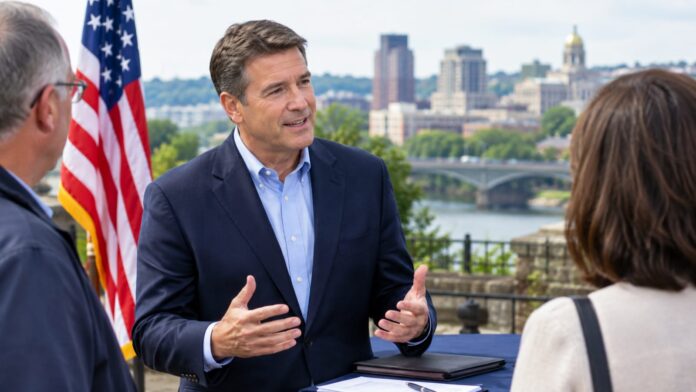
- Bob Brooks, a Democratic candidate for Congress, settles a $55,500 debt dispute with his former mother-in-law.
- The settlement comes just weeks before the election in Pennsylvania’s 7th Congressional District.
- Brooks’ campaign has not disclosed the terms of the settlement or whether he paid the full amount.
- This resolution raises questions about the implications for his congressional campaign against incumbent Rep. Ryan Mackenzie.
What Happened
Bob Brooks, a Democratic candidate vying for a congressional seat in Pennsylvania’s 7th District, has recently settled a long-standing financial dispute with his former mother-in-law, Carol Wiley. This settlement, finalized earlier this month, pertains to a debt of $55,500 that Brooks incurred back in 2004. The timing of this resolution is particularly noteworthy, as it comes just weeks before a highly competitive election where Brooks is challenging incumbent Republican Rep. Ryan Mackenzie. The case, which had been a point of contention for years, has now entered the public eye, raising questions about its impact on Brooks’ campaign and the broader electoral landscape in Pennsylvania.
According to court filings, Brooks and Wiley have settled a dispute surrounding the debt, which originated from a land transfer agreement made in 2004. The judgment finalizes the family dispute that entered the public eye amid one of the most competitive congressional races in the country. Brooks, a retired firefighter, is positioning himself as a candidate who understands the needs of working-class families. However, the emergence of this debt dispute could complicate his narrative as he seeks to unseat Mackenzie.
- Bob Brooks settled a $55,500 debt dispute with Carol Wiley, his former mother-in-law.
- The debt originated from a land transfer agreement made in 2004.
- The dispute became public in 2008 when Wiley claimed Brooks had not made any payments.
- Brooks’ campaign has not provided details on the settlement terms or payment status.
Why It Matters
The resolution of this debt dispute is significant for several reasons. Firstly, it highlights the personal challenges that candidates often face, which can become public during election campaigns. For Brooks, this financial issue could be perceived as a liability, potentially affecting voter perception and trust. As he seeks to unseat an incumbent, any negative publicity could hinder his chances of success. Furthermore, the lack of transparency regarding the settlement terms raises additional questions. Voters may wonder if Brooks has been forthright about his financial dealings, which could lead to skepticism about his overall integrity and reliability as a candidate.
Moreover, the resolution may alleviate some personal stress for Brooks, allowing him to focus on his campaign. However, the lack of transparency could lead to voter skepticism regarding his financial responsibility. Brooks’ ability to address this issue effectively could influence undecided voters, and the situation underscores the importance of personal integrity in political campaigns.
- The resolution may alleviate some personal stress for Brooks, allowing him to focus on his campaign.
- However, the lack of transparency could lead to voter skepticism regarding his financial responsibility.
- Brooks’ ability to address this issue effectively could influence undecided voters.
- The situation underscores the importance of personal integrity in political campaigns.
Political and Public Context
The backdrop of this dispute is critical to understanding its implications. Pennsylvania’s 7th Congressional District is considered a key battleground, with both parties vying for control. The district has seen a shift in voter demographics and preferences, making it a focal point for national attention. Brooks, a retired firefighter, is positioning himself as a candidate who understands the needs of working-class families. However, the emergence of this debt dispute could complicate his narrative. Additionally, the political climate in Pennsylvania is charged, with various issues at the forefront of voters’ minds, including economic recovery, healthcare, and public safety. The resolution of Brooks’ debt may not only affect his campaign but also reflect broader trends in how personal issues can influence electoral outcomes.
As the election date approaches, Brooks will need to navigate these challenges carefully. The political landscape is increasingly influenced by personal integrity and transparency, which are becoming critical factors for voters. The outcome of this election could set a precedent for how personal financial issues are perceived in future campaigns, particularly in battleground districts.
- The 7th District is a competitive battleground with shifting demographics.
- Brooks’ background as a firefighter is part of his campaign narrative.
- The political climate in Pennsylvania is influenced by key issues such as economic recovery and healthcare.
- Personal integrity and transparency are increasingly important to voters in this election cycle.
Dem House candidate finally settles 22-year debt fight with his former mother-in-law.
https://t.co/aZrWk7AL0y pic.twitter.com/xAbAx3ccaL— Doug Bell (@therealdougbell) September 21, 2026
What Happens Next
Looking ahead, the resolution of this debt dispute raises several questions about Brooks’ campaign strategy and future actions. It remains to be seen how he will address this issue in public forums and whether he will provide more transparency regarding the settlement. Additionally, Brooks will need to focus on building voter trust and demonstrating his commitment to the community. As the election date approaches, his campaign will likely intensify, and he may need to pivot his messaging to mitigate any potential fallout from this dispute. Furthermore, the outcome of this election could set a precedent for how personal financial issues are perceived in future campaigns, particularly in battleground districts.
Brooks may need to address the debt dispute directly in campaign events. His campaign strategy will likely focus on building voter trust and transparency. Future developments in the race could influence how personal issues are viewed in political campaigns, and the election outcome may impact the broader political landscape in Pennsylvania.
- Brooks may need to address the debt dispute directly in campaign events.
- His campaign strategy will likely focus on building voter trust and transparency.
- Future developments in the race could influence how personal issues are viewed in political campaigns.
- The election outcome may impact the broader political landscape in Pennsylvania.
