

Story Highlights
- Senator Ted Cruz indicated the Republican Party has not unified behind Vice President Vance as the presumed 2028 presidential nominee
- The Texas senator called for broader party discussion about core conservative principles including economic policy and foreign affairs
- Cruz acknowledged President Trump’s transformative impact on the GOP while noting the need for continued debate on party identity
- The senator indicated he may participate in future discussions about the party’s ideological direction and leadership
What Happened
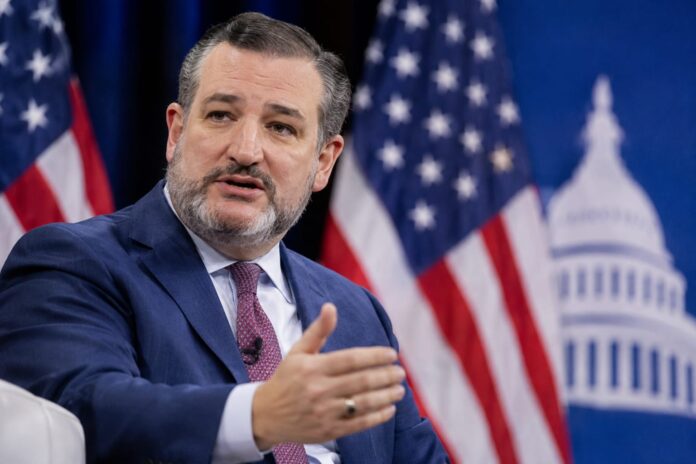
Senator Ted Cruz made clear that the Republican Party remains in a period of active discussion regarding its future trajectory and leadership after President Trump’s tenure concludes. When asked directly whether Republicans have settled on Vice President Vance as their 2028 standard-bearer, the Texas senator rejected that characterization, indicating the party would engage in a broader examination of its values and direction in the coming years.
The senator emphasized that no consensus has formed around a single nominee for the next presidential cycle. Instead, he outlined his vision for what he believes should constitute meaningful party debate going forward, spanning both economic policy frameworks and international relations strategy.
- Cruz stated the GOP has not coalesced behind Vice President Vance for the 2028 nomination
- The senator indicated Republicans will engage in broader discussions about core party principles and values
- Cruz noted the absence of a significant anti-Trump faction within the Republican Party structure
- The senator outlined economic and foreign policy as key areas for future party debate
Why It Matters
The Republican Party finds itself at a significant inflection point as it contemplates the post-Trump era. The current administration has fundamentally reshaped conservative political discourse and electoral strategy over the past decade, making the question of how the party sustains and evolves that legacy critically important for Republicans nationwide. Cruz’s comments signal that party leadership recognizes the necessity of internal dialogue about foundational principles rather than simply anointing a successor.
This discussion bears substantial consequences for conservative governance, messaging, and coalition-building. How Republicans resolve questions about the party’s economic philosophy—whether it remains committed to free-market principles or embraces a more interventionist approach—will determine policy direction for years ahead. Similarly, the party’s foreign policy positioning represents another crucial fault line that will shape both campaign rhetoric and actual governance if Republicans retain or regain power. For conservative voters and activists, these debates will directly influence which candidates and platforms receive party support and resources.
- Party leadership must articulate a coherent vision for conservative governance moving forward
- The outcome will determine resource allocation and candidate support in future election cycles
- Economic policy debates will affect how the party positions itself on issues from regulation to trade
- Foreign policy discussions will influence the party’s stance on international engagement and military commitments
Political and Public Context
The president’s electoral victories and policy achievements have substantially altered the Republican Party’s ideological composition and electoral coalition over the past several years. The transformation has been comprehensive, touching everything from trade policy to immigration enforcement to the party’s relationship with institutional establishments. Meanwhile, the rise of the Make America Great Again movement has reshaped which voices command influence within conservative circles and which candidates gain traction with Republican voters.
Cruz himself represents an interesting case study in this evolving landscape. Having competed against the eventual president in 2016, winning primaries in twelve states, the senator has nonetheless become an influential voice within the president’s broader coalition. His acknowledgment of the administration’s achievements while maintaining his own distinct policy perspective exemplifies the kind of internal diversity that may characterize Republican discussions about future direction.
- The president fundamentally reshaped Republican Party priorities and electoral coalition composition
- The Make America Great Again movement altered which voices hold influence within conservative politics
- Vice President Vance represents the administration’s chosen successor, though party consensus remains incomplete
- Internal Republican debate on economic versus foreign policy priorities remains unresolved
.@SenTedCruz (R-TX) on Monday suggested the Republican Party could embrace a directional shift after President Donald Trump leaves office, a transition that promises to leave a gaping hole in the GOP.
Cruz is known as a critical ally of Trump’s in the Senate, but he has also… pic.twitter.com/2A5kEUhafD
— Washington Examiner (@dcexaminer) August 26, 2026
What Happens Next
Over the next several years, Republicans will engage in substantive dialogue about party principles, leadership selection, and strategic direction. These conversations will intensify as the 2028 presidential cycle approaches, with various Republican figures positioning themselves within emerging ideological and electoral coalitions. The outcomes of these discussions will likely determine not only who receives the presidential nomination but also what policy priorities dominate Republican platforms.
Cruz indicated his intention to participate actively in these upcoming deliberations, suggesting he may emerge as a significant voice in shaping the party’s future course. Whether the party gravitates toward candidates emphasizing traditional free-market conservatism, America First nationalism, or some synthesis of both approaches remains to be determined. The next several years will prove crucial in establishing whether Republicans maintain focus on the core principles that animated recent electoral success or shift direction in response to evolving political dynamics.
- Republican primary debates in 2028 will feature multiple candidates articulating distinct visions for party future
- Party discussions will address foundational questions about economic policy and government scope
- Foreign policy positioning will emerge as another critical differentiator among potential nominees
- Leadership decisions made in coming years will substantially influence Republican strategy and governance for the remainder of the decade
