

Story Highlights
- The House of Representatives passed legislation aimed at curbing congressional stock trading, but critics argue it does not address fundamental conflicts of interest
- At least nine senators from both parties have disclosed stock transactions involving companies in industries overseen by their respective committees
- Proposed reforms including blind trusts and pre-disclosure requirements fall short of eliminating the underlying problem of lawmakers retaining financial interests in companies they regulate
- Investment firms have created funds designed to mirror lawmakers’ trading patterns, reflecting widespread concerns about congressional trustworthiness
What Happened
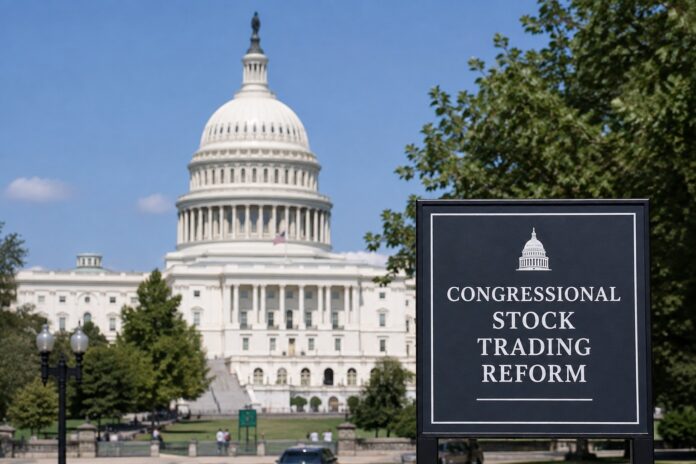
The House of Representatives recently approved legislation designed to address the practice of members of Congress buying and selling stocks in companies directly affected by the committees on which they serve. While supporters characterize the measure as a step toward greater accountability, policy analysts and ethics observers have raised substantial concerns that the bill leaves the central issue unresolved. The legislation represents an attempt to regulate congressional stock trading practices that have drawn increasing public scrutiny and concern about potential conflicts of interest.
The problem of congressional stock trading has evolved significantly over recent years. Investment firms have begun offering specialized funds designed to track and mirror the trading decisions of lawmakers, indicating that financial markets now view congressional stock transactions as a viable investment strategy. This development underscores how pervasive observers believe the practice has become and raises questions about whether elected officials’ investment decisions are genuinely independent of their legislative responsibilities.
- House passed stock trading legislation intended to curb transactions by members of Congress
- At least nine senators from both parties disclosed stock purchases in companies regulated by their committees
- A 2022 analysis identified 97 lawmakers or family members trading assets in industries potentially affected by their committee work
- Investment firms created funds mirroring lawmakers’ trades, demonstrating market confidence in their decision-making patterns
Why It Matters
The debate over congressional stock trading strikes at fundamental questions about representative democracy and public trust in government institutions. When elected officials retain financial interests in companies they vote on or oversee through committee assignments, a genuine or perceived conflict of interest emerges regardless of the officials’ actual intentions. Citizens depend on their representatives to make legislative decisions based primarily on the public interest rather than personal financial gain. The inability or unwillingness to fully address this concern creates an environment where citizens reasonably question whether their elected officials prioritize constituent welfare over investment returns.
The proposed reforms examined in legislative discussions—including blind trusts and pre-disclosure requirements—attempt to mitigate concerns but fall short of eliminating the underlying conflict. Blind trusts, while potentially reducing concerns about insider trading, do not prevent lawmakers from knowing which assets they own and therefore do not eliminate the incentive to take official actions benefiting their own investments. Similarly, requiring disclosure of stock trades before they occur increases transparency but does not prohibit conduct that fundamentally conflicts with legislative duty. These reforms represent what critics characterize as attempting to address the appearance of impropriety while leaving the reality intact.
- Citizens cannot be certain whether representatives serve the public interest or personal investment portfolios
- Lawmakers retaining financial interests in regulated companies creates persistent incentives for self-interested legislative behavior
- Current reforms enhance transparency without eliminating the underlying conflict that inspires public skepticism
- The availability of congressional-tracking investment funds demonstrates that financial markets view lawmakers’ trading as predictable and exploitable
Political and Public Context
Concerns about congressional stock trading have existed for decades, but the issue has achieved greater prominence in recent years as detailed reporting has documented specific instances of lawmakers trading in companies regulated by their committees. Individual examples have illustrated the scope of the problem—certain senators have been identified as purchasing stock in companies affected by committees on which they serve, representing situations that observers note are far from isolated occurrences. The bipartisan nature of the issue, with members from both major parties engaged in such transactions, suggests the problem transcends typical partisan divides and reflects systemic incentive structures within Congress.
The Harvard Law School Journal on Legislation has characterized the situation by noting that investors are essentially betting on the untrustworthiness of Congress—a characterization that observers view as particularly damning for an institution that depends on public confidence for legitimacy. This framing suggests that the stock trading behavior has become sufficiently routine and predictable that financial professionals can monetize it through dedicated investment strategies. The existence of such strategies represents a troubling validation that market participants believe congressional trading decisions are influenced by factors other than independent judgment about legislative merits.
- Congressional stock trading concerns have persisted for decades but intensified in recent years with detailed public reporting
- Both Democratic and Republican members have been identified engaging in stock transactions involving regulated companies
- Investment industry response through tracking funds demonstrates the market’s assessment of congressional decision-making patterns
- Harvard Law School scholars have characterized the situation as investors betting against congressional trustworthiness
What Happens Next
The passage of the House bill represents a starting point in the legislative process rather than a final resolution of the congressional stock trading issue. The legislation will face further consideration in the Senate, where members will evaluate whether the measure adequately addresses constituent concerns and public expectations about conflicts of interest. The debate in the Senate may focus on whether the House provisions sufficiently restrict congressional trading or whether additional measures are necessary to address the fundamental conflicts inherent in lawmakers retaining financial interests in regulated industries.
Future legislative proposals will likely continue wrestling with the core tension between allowing lawmakers to maintain investment portfolios like ordinary citizens and ensuring that legislative decisions are not influenced by personal financial interests. Some observers argue that more comprehensive solutions may be necessary, potentially including requirements for broader divestment or more stringent blind trust provisions. The public’s continued interest in this issue, combined with ongoing reports of lawmakers trading in regulated companies, suggests that pressure for more substantive reforms may persist regardless of whether the current House bill becomes law.
- Senate consideration of House-passed legislation will determine whether measure advances or faces revision
- Future proposals may address whether broader divestment requirements or strengthened blind trust provisions are necessary
- Continued public reporting on congressional stock transactions may generate sustained political pressure for more comprehensive reforms
- The debate will continue focusing on how to balance lawmakers’ investment rights with public expectations about conflict-of-interest standards
