

Story Highlights
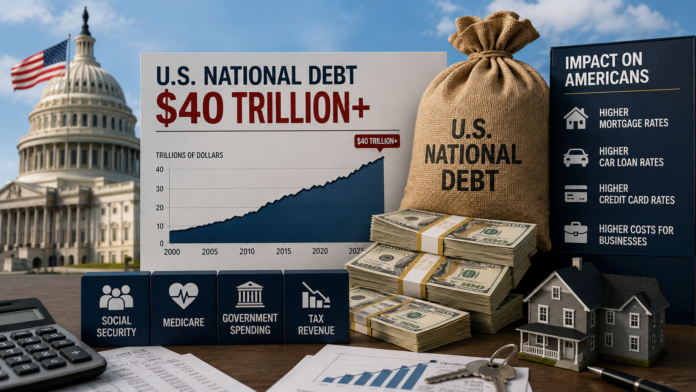
- U.S. national debt surpassed $40 trillion for the first time.
- Federal borrowing can contribute to higher costs for consumers and businesses.
- Mortgage, auto, credit-card and business borrowing can be affected by higher rates.
- Reducing the debt’s growth would require difficult choices on taxes and spending.
What Happened
America’s national debt passed $40 trillion for the first time on Wednesday, Aug. 19, according to the source. The figure reflects years of federal borrowing in which government expenses have grown faster than revenues. Social Security and Medicare are among the major areas adding to federal spending, while previous tax cuts have reduced government revenue. As debt accumulates, the government must also devote more money to paying interest on what it owes.
The consequences extend beyond Washington’s budget. Higher federal borrowing can increase competition for available credit, encourage investors to demand higher rates on longer-term loans and contribute to inflationary pressure. Those factors can translate into more expensive mortgages, car loans, credit cards and business financing. The Yale Budget Lab estimates that the increase in federal debt over the past decade has added about $2,500 annually to the cost of a mortgage on a typical home.
- The debt crossed $40 trillion on Aug. 19.
- Government interest costs rise as the debt grows.
- Higher borrowing costs can affect consumers and businesses.
- Mortgage expenses have been linked to rising federal debt.
Why It Matters
The debt figure matters because federal finances can influence everyday household budgets. When government borrowing contributes to higher interest rates, Americans can face increased costs when purchasing homes, financing vehicles, carrying credit-card balances or borrowing for businesses. That makes the national debt an issue not only for federal policymakers but also for consumers making major financial decisions.
The issue is also significant because the United States has historically been able to use borrowing to support economic activity and investment. The key concern is whether economic growth can keep pace with debt accumulation. The source notes that debt is currently growing faster than the economy, making the financial consequences more visible and increasing the pressure for policymakers to address the underlying imbalance.
- Higher rates can raise household borrowing costs.
- Businesses can face more expensive financing.
- Debt becomes less manageable when growth lags borrowing.
- Fiscal decisions can directly affect affordability.
Political and Public Context
The debt reflects a long-running policy debate over the balance between federal spending and taxation. Government expenses, particularly programs such as Social Security and Medicare, continue to require substantial funding, while successive tax reductions have lowered revenue available to cover those obligations. The resulting gap has contributed to continued borrowing and a larger interest burden.
The politically difficult part is deciding how to slow that trajectory. Raising taxes could increase federal revenue, while changes to major entitlement programs could reduce future spending. But both approaches carry significant political risks, making agreement on a durable solution difficult. The source notes that lawmakers have historically struggled with the combination of spending reductions and tax increases that could materially improve the government’s fiscal position.
- Social Security and Medicare are major federal expenses.
- Tax policy directly affects federal revenue.
- Spending cuts and tax increases remain politically difficult.
- Debt reduction involves competing policy priorities.
What Happens Next
The immediate focus will remain on whether the economy can grow quickly enough to keep the debt burden from expanding faster than national output. The government can continue rolling over its debt, unlike a household facing a fixed repayment deadline, but that flexibility does not eliminate the cost of accumulating interest obligations.
Longer-term decisions will ultimately determine whether debt growth slows. Policymakers would need to weigh changes to federal spending, taxation and entitlement programs against their effects on households and the broader economy. Until those choices are made, consumers and investors will continue to watch interest rates and borrowing costs as important indicators of the debt’s economic impact.
- Watch future federal spending decisions.
- Watch proposals involving taxes and revenue.
- Monitor interest rates and consumer borrowing costs.
- Track whether economic growth keeps pace with debt.
