

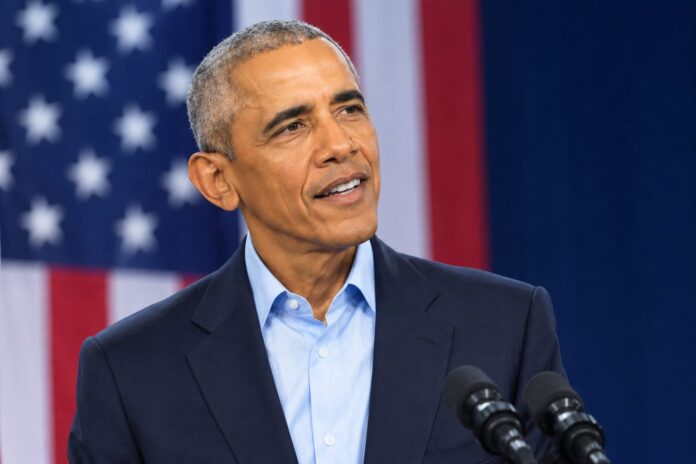
Story Highlights
- Former President Obama released endorsement videos for Democratic candidates David Jolly (gubernatorial race) and Angie Nixon (Senate race) in Florida less than two weeks before the midterm elections
- Obama emphasized both candidates’ commitment to progressive priorities including affordable housing, healthcare costs, education, minimum wage increases, and electoral reform
- Nixon has previously secured support from Senator Bernie Sanders, while Jolly, a former Republican congressman, switched to the Democratic Party last year
- The endorsements come as Nixon faces Republican incumbent Senator Ashley Moody and Jolly faces Republican Representative Byron Donalds
What Happened
Former President Obama released endorsement videos for two Florida Democratic candidates on Saturday morning, amplifying support for their campaigns during the final stretch before midterm elections. The videos were shared by both candidates on social media platform X, introducing Obama’s backing to their respective supporters and highlighting his involvement in shaping the Democratic messaging in a crucial swing state.
In the endorsement materials, Obama characterized Jolly as an independent-minded leader focused on addressing cost-of-living pressures facing Florida families. For Nixon, Obama emphasized her long track record of community organizing and legislative advocacy, drawing parallels to his own early career in activism. Both videos framed the electoral choice as a fundamental question about which candidates would prioritize the needs of working Floridians.
- Endorsement videos released Saturday morning via social media platform X
- Obama highlighted specific policy positions: affordable housing, healthcare costs, education quality, $15 minimum wage, and redistricting reform
- Nixon faces incumbent Republican Senator Ashley Moody; Jolly faces Republican Representative Byron Donalds in November
- Jolly previously served one House term as a Republican before becoming an independent in 2019 and registering as a Democrat last year
Why It Matters
Obama’s endorsements carry significant weight in Democratic political organizing, particularly in Florida, a state he won twice during his presidential campaigns. His explicit support signals to party activists and donors that these candidates represent the direction the Democratic Party seeks to advance. For Nixon and Jolly, the endorsements provide credibility with progressive voters and access to Obama’s substantial fundraising network and organizational infrastructure.
The timing of these endorsements underscores the competitive nature of both races. Obama’s involvement suggests Democratic leadership views Florida as winnable territory and these particular candidates as viable pathways to electoral success. The former president’s focus on bread-and-butter economic issues—housing affordability, healthcare, education—reflects the Democratic Party’s broader messaging strategy heading into the midterms, emphasizing material improvement in voters’ daily lives.
- Obama won Florida in both 2008 and 2012, making his endorsement particularly relevant to state Democratic strategy
- Nixon previously secured endorsement from Senator Bernie Sanders, who campaigned with her the week before Obama’s announcement
- Both races represent flips from Republican to Democratic control, making these endorsements strategically significant for party momentum
- The endorsements help mobilize grassroots Democratic organizing in a state considered essential to national political outcomes
Political and Public Context
Jolly’s political trajectory represents a notable shift in Florida Republican politics. Having served one term in the House as a Republican, he departed the GOP in 2019 to become an independent, citing disagreements with the party’s direction. His decision to formally join the Democratic Party and run for governor last year positions him as a bridge candidate appealing to moderate and independent voters dissatisfied with both major parties’ current trajectories.
Nixon’s political background reflects the progressive wing of Democratic activism. Her emphasis on community organizing and grassroots mobilization aligns with the democratic socialist strand of party politics, evidenced by her previous endorsement from Senator Sanders. The convergence of endorsements from both Obama and Sanders suggests a party attempting to unite its ideological spectrum behind candidates it views as viable general election choices.
Florida’s electoral significance cannot be overstated. As a perennial swing state with substantial population growth, political developments there influence national Democratic strategy and resource allocation. The Senate race holds particular importance given the chamber’s narrow margins and the necessity of defending or gaining seats in purple-leaning states.
- Jolly’s conversion from Republican to Democrat reflects broader patterns of party realignment among moderate former Republicans
- Nixon’s grassroots organizing background contrasts with Jolly’s legislative experience, creating a geographically diverse ticket
- Florida has been trending Republican in recent cycles, making Democratic victories there increasingly challenging
- Senate incumbency in the person of Ashley Moody, appointed to replace Marco Rubio, represents a test of appointed versus elected officeholders
Obama endorses Nixon, Jolly in last-minute campaign boosthttps://t.co/YAGs4ZbOXQ
— The Hill (@thehill) October 24, 2026
What Happens Next
The remaining weeks before Election Day will determine whether Obama’s endorsements translate into measurable shifts in voter behavior and campaign momentum. Democrats will likely leverage these videos in television advertising, digital media, and grassroots organizing efforts to reach persuadable voters and energize their base. The endorsements may prompt additional high-profile Democratic figures to visit Florida or release their own public statements of support.
The midterm results in these races will provide early indicators of broader national trends and the effectiveness of Democratic messaging focused on economic security. If Jolly and Nixon succeed, their victories would represent significant gains in a traditionally Republican-leaning state. Conversely, if they fall short despite Obama’s backing, the losses may signal challenges for Democratic strategy in other competitive regions.
- Final weeks before Election Day will focus on translating endorsements into voter turnout and campaign advertising
- Results in these races will serve as indicators of Democratic viability in competitive swing states heading into future election cycles
- Both campaigns will likely expand advertising and ground operation efforts in response to the Obama endorsement boost
- Outcomes will be analyzed for insights into moderate voter behavior, independent voter preferences, and the effectiveness of progressive messaging in purple states
