

Story Highlights
- Researchers have documented a significant increase in AI-generated advertisements deployed across US midterm election campaigns heading toward November elections
- Both individual candidates in competitive races and outside political groups are utilizing artificial intelligence to create campaign advertisements
- Verification efforts have tracked dozens of AI-generated ads to understand deployment patterns and methods across campaigns
- The trend represents a notable shift in how campaigns are approaching voter outreach and political messaging in recent election cycles
What Happened
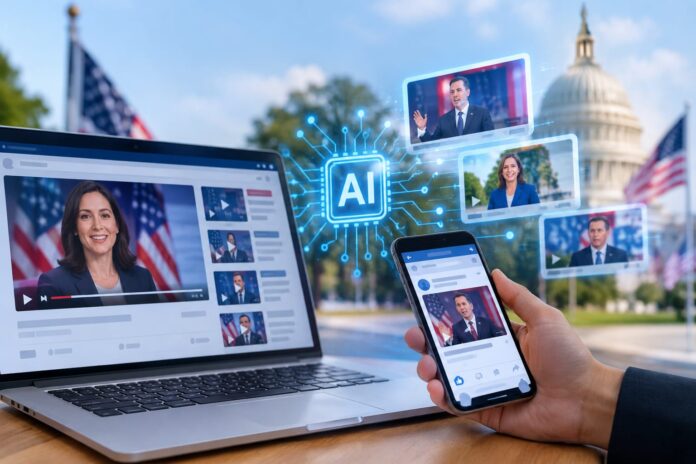
Artificial intelligence-generated advertisements have become increasingly prevalent in US midterm election campaigns, with research indicating their use has expanded significantly. The surge reflects a growing adoption of AI technology by both campaign organizations and independent political groups seeking to reach voters through targeted digital content. Verification teams have undertaken comprehensive tracking efforts to document and analyze the scope of AI ad deployment across multiple races and regions. This expansion demonstrates how the political landscape is rapidly evolving as candidates and outside organizations recognize the efficiency and scalability that AI-generated content can provide to their campaign strategies.
The deployment of these AI-generated advertisements spans across diverse campaign strategies and funding sources. Some ads originate directly from candidates competing in key electoral races, while others are funded and distributed by outside political organizations operating independently of specific campaigns. This dual approach demonstrates how various stakeholders within the political ecosystem are leveraging AI capabilities to craft and disseminate messaging to voters. The breadth of adoption across different types of political entities suggests that AI has become a mainstream tool in modern campaign infrastructure.
- Researchers tracking campaign advertisements identified dozens of AI-generated ads across midterm races
- Outside political groups and individual candidates both funding and deploying AI-created content
- BBC Verify undertaking verification efforts to assess methods and prevalence of AI ad usage in campaigns
- Trend accelerating ahead of November election cycle with continued growth expected
Why It Matters
The expansion of AI-generated campaign advertising carries significant implications for how voters receive and process political information during election cycles. As artificial intelligence technology becomes more sophisticated and accessible, campaigns gain enhanced capabilities to personalize messaging, target specific demographic groups, and rapidly produce content at scale. This development raises important questions about authenticity, transparency, and the information environment voters navigate when making electoral decisions. The ability of campaigns to generate convincing political content at reduced costs fundamentally alters the dynamics of campaign resource allocation and competitive advantage.
The prevalence of AI ads also affects campaign resource allocation and competitive dynamics in ways that reshape electoral competition. Campaigns that effectively integrate AI technology into their digital strategies may gain advantages in reach and efficiency compared to those relying solely on traditional advertising approaches. The participation of outside groups in funding AI-generated content further complicates the landscape, as voters may encounter advertisements without clear understanding of their origins or funding sources. This information asymmetry raises concerns about voter manipulation and the integrity of the democratic process itself.
- Voters increasingly exposed to AI-generated political messaging during election season without clear disclosure
- Campaign efficiency and resource allocation shifting as AI technology reduces content production costs significantly
- Outside groups gaining expanded capabilities to influence electoral races through scaled advertising and targeted messaging
- Transparency and authenticity concerns emerging regarding AI-generated campaign content and voter deception risks
Political and Public Context
The adoption of AI in campaign advertising reflects broader technological trends reshaping political communication across the electoral landscape. As artificial intelligence capabilities expand across industries, political campaigns increasingly recognize AI’s potential for automating content creation, personalizing messaging, and optimizing advertising strategies. This evolution mirrors similar technological transitions in previous election cycles, where campaigns gradually adopted new platforms and tools as they became available to political practitioners. From social media integration to programmatic advertising, campaigns have consistently embraced emerging technologies to enhance their electoral competitiveness.
Public discourse around AI in politics has intensified as the 2026 midterm elections approach and awareness of AI capabilities grows. Election integrity advocates, technology experts, and policy makers have expressed varying levels of concern regarding AI-generated content’s potential to mislead voters or spread disinformation through sophisticated manipulation techniques. Simultaneously, some observers note that AI tools, when used responsibly, can enhance campaign communication efficiency and allow campaigns to reach voters with relevant messaging tailored to specific communities and interests. This debate reflects fundamental tensions between technological innovation and democratic safeguards in the modern political environment.
- Technological adoption by campaigns following historical patterns of integrating new communication tools and platforms
- Election integrity discussions focusing on potential risks and safeguards related to AI-generated political content
- Outside group spending increasing as AI technology reduces barriers to creating campaign advertisements and messaging
- Ongoing debate about regulation and transparency requirements for AI-generated political content and disclosure standards
Republicans are going all in on AI-generated ads.
Democrats, meanwhile, are shunning them and suggesting the ad campaigns are emblematic of a party that doesn’t care about the truth and can’t be trusted. https://t.co/iOCnPNjGVk
— The Washington Post (@washingtonpost) October 24, 2026
What Happens Next
The continued growth of AI-generated advertising in upcoming election cycles appears likely as technology becomes more refined and widely adopted by political campaigns and their allies. Campaigns will probably continue experimenting with AI tools to optimize their digital strategies, potentially increasing the volume and sophistication of AI-created content voters encounter. This trajectory suggests that artificial intelligence will play an increasingly central role in how political messages are conceived, produced, and distributed to target audiences throughout future election cycles. The normalization of AI in campaign communications represents a fundamental shift in political campaign infrastructure.
Questions remain regarding potential regulatory responses to AI in campaign advertising and how policymakers will address emerging concerns. Policymakers may consider implementing transparency requirements that would compel campaigns and outside groups to disclose when advertisements are AI-generated, similar to existing disclosure requirements for political advertising. Verification efforts by research organizations and media outlets like BBC Verify will likely expand as the technology becomes more prevalent, with increased focus on identifying, tracking, and analyzing AI-generated political content for authenticity and accuracy. The outcomes of these regulatory and oversight discussions could significantly shape how campaigns approach AI technology in future election cycles and establish precedents for digital political communication standards.
- Anticipated continued growth in AI ad deployment through November midterm elections and beyond
- Potential regulatory initiatives requiring disclosure of AI-generated campaign content by campaigns and outside groups
- Expanded verification and tracking efforts by research organizations and media outlets like BBC Verify
- Ongoing evolution of campaign strategies as AI capabilities advance and adoption increases across political landscape
