

Story Highlights
- Approximately ninety-nine percent of international internet traffic travels through undersea cables, making them critical infrastructure for global connectivity
- A single U.S. company possesses the capability to both manufacture and deploy undersea cables, creating a unique market position
- Global demand for undersea cable capacity has reached unprecedented levels as cloud computing and artificial intelligence applications expand worldwide
- The domestic manufacturer operates a seventy-three-year-old factory and maintains specialized cable-laying vessels to meet growing infrastructure needs
What Happened
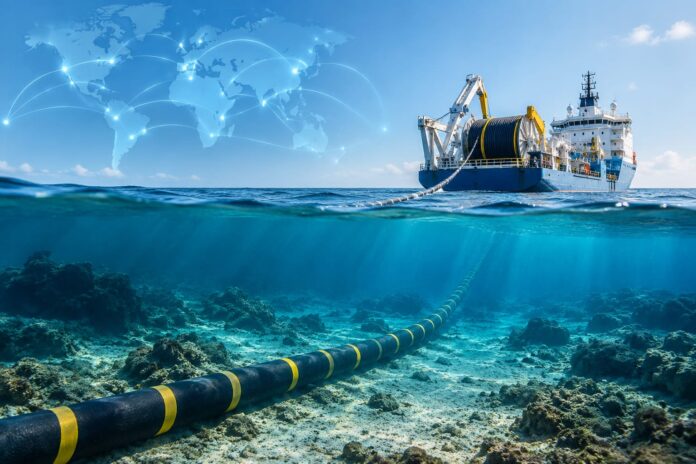
The undersea cable industry is experiencing extraordinary growth as nations and technology companies increasingly depend on submarine fiber optic infrastructure to transmit data across continents. A significant portion of the world’s digital communications—approximately ninety-nine percent of international internet traffic—relies on cables laid across ocean floors. This infrastructure has become essential for supporting cloud computing platforms, artificial intelligence services, and the broader digital economy that underpins modern commerce and communication.
In response to this surge, the U.S. cable manufacturing and deployment sector is working to expand its capacity. The nation’s sole integrated manufacturer of undersea cables has adapted its operations to handle unprecedented demand levels. The company operates manufacturing facilities that have been in continuous operation for over seven decades, demonstrating the established nature of this specialized industry segment. Beyond manufacturing, the company also maintains sophisticated cable-laying vessels—multimillion-dollar ships equipped with advanced technology—to install these cables on ocean floors around the world.
- Ninety-nine percent of international internet traffic flows through undersea cable networks
- Only one U.S. company operates both cable manufacturing and installation capabilities
- The manufacturer’s primary facility has operated for seventy-three years
- Demand surge driven by expansion of cloud computing and AI infrastructure requirements
Why It Matters
The undersea cable infrastructure represents a fundamental component of global digital connectivity and economic activity. As more businesses, financial institutions, and government services migrate to cloud-based platforms and artificial intelligence systems, the demand for high-capacity, reliable data transmission channels increases proportionally. These cables enable everything from international banking transactions to streaming services, video conferencing, and social media communications that billions of people depend on daily.
The concentration of manufacturing and deployment capability within a single domestic company carries significant strategic implications. This creates both an opportunity and a vulnerability within the American industrial base. Having domestically-based capacity ensures that critical infrastructure can be maintained and expanded according to national priorities, but the reliance on a single provider also highlights potential capacity constraints during periods of exceptional demand. The company’s ability to scale operations effectively will directly impact how quickly new cable routes can be established and how rapidly international data transmission capacity can be increased.
For major technology companies including Google, Microsoft, and other cloud service providers, undersea cable availability directly affects their capacity to expand services globally. These companies have become increasingly invested in cable projects, recognizing that controlling data transmission infrastructure provides competitive advantages and operational reliability for their platforms and customers.
- Undersea cables enable critical global financial, commercial, and communications infrastructure
- A single U.S. manufacturer creates potential capacity bottlenecks during high-demand periods
- Cloud computing and AI expansion directly correlates with submarine cable infrastructure requirements
- Technology companies require reliable cable capacity to expand services internationally
Political and Public Context
The undersea cable industry exists at the intersection of private sector technology development and national infrastructure strategy. Over recent years, government agencies and policymakers have increasingly recognized submarine cables as strategic assets comparable to traditional infrastructure like highways and power grids. The cables that transmit international data determine bandwidth availability, latency characteristics, and the geographic routing of information flows that affect economic competitiveness and national security considerations.
The investment in undersea cable infrastructure has accelerated as major technology companies recognize the business imperative of controlling or ensuring access to data transmission pathways. These companies have begun funding cable projects independently or through partnerships, rather than relying entirely on traditional telecommunications carriers. This shift reflects the strategic importance of data transmission to technology companies’ business models and their desire to ensure reliable, high-capacity connections between data centers and international markets.
The domestic manufacturing base for undersea cables has significant policy implications. Maintaining indigenous capability to produce and deploy this critical infrastructure aligns with broader policy objectives around supply chain resilience and technological independence. The longevity of the existing manufacturing facility demonstrates the value of sustained industrial capacity, even when demand cycles fluctuate.
- Undersea cables are increasingly recognized as strategic national infrastructure assets
- Major technology companies have shifted toward funding cable projects directly rather than relying solely on traditional carriers
- The domestic manufacturing base represents an important component of technological and economic resilience
- Policymakers view submarine cable infrastructure through both economic and security frameworks
What Happens Next
The undersea cable manufacturer will likely continue expanding its production and deployment capabilities to meet growing demand. The company faces decisions regarding facility modernization, workforce expansion, and technological upgrades necessary to accelerate output while maintaining quality standards. These investments require significant capital and planning, but market demand appears sufficiently robust to justify such expenditures.
Future demand will depend on how rapidly cloud computing and artificial intelligence technologies are adopted globally, the geographic distribution of new data center construction, and the extent to which technology companies continue investing in submarine cable infrastructure. Regulatory considerations may also emerge regarding cable routing, environmental impacts, and strategic concerns about data transmission pathways. International coordination on cable projects is likely to continue, as many cables cross multiple maritime jurisdictions and require cooperation among nations.
The company’s ability to innovate in cable technology—including potential improvements in transmission capacity, durability, and installation efficiency—will determine its competitive position and capacity to serve growing demand. Industry observers will likely monitor whether additional U.S. manufacturers enter the market or whether this sector remains concentrated in a single domestic provider.
- Continued capacity expansion necessary to match demand growth from cloud and AI applications
- Technology companies expected to maintain or increase investment in submarine cable infrastructure
- Regulatory and environmental considerations may affect future cable routing decisions
- Innovation in cable technology and installation methods will influence industry competitiveness
