

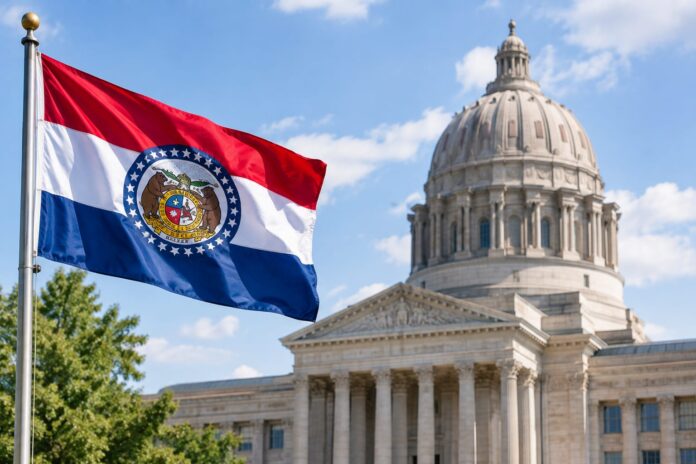
Story Highlights
- The Supreme Court has ruled to maintain Missouri’s 2022 congressional map for the 2026 elections.
- This decision prevents the implementation of a newer map that could have favored Republican candidates.
- The ruling reflects a commitment to stability in electoral representation.
- Legal disputes surrounding the congressional maps have been resolved, ensuring continuity for voters.
What Happened
On a significant day for Missouri’s electoral landscape, the Supreme Court issued an order on Friday that mandates the state to utilize its 2022 congressional map for the upcoming 2026 elections. This ruling effectively blocks the state from adopting a newer map that had been proposed for 2025, which many believed would have provided an advantage to Republican candidates in the midterm elections. The unsigned order from the justices did not include any noted dissents, indicating a strong consensus among the court members regarding the decision.
The Supreme Court’s directive was clear: lower courts are not to prohibit the use of the 2022 map nor require the state to adopt the 2025 map. This ruling brings an end to the immediate legal disputes that have surrounded Missouri’s congressional redistricting efforts, allowing voters to proceed with the same boundaries they have used in previous elections. This decision is particularly important as it ensures that voters will not face confusion or disruption in their electoral process.
- The Supreme Court issued its ruling on Friday.
- The decision blocks the use of a proposed 2025 congressional map.
- The ruling was unanimous, with no noted dissents.
- Missouri voters will use the same congressional districts as in the 2024 and 2022 elections.
Why It Matters
This ruling is significant for several reasons. First and foremost, it ensures stability in Missouri’s electoral representation. By upholding the 2022 map, the Supreme Court has prevented potential partisan shifts that could have arisen from the proposed 2025 map. This stability is crucial for fostering voter confidence, as it allows constituents to know who their representatives will be without the uncertainty that often accompanies redistricting efforts.
Moreover, the decision reflects a broader commitment to maintaining established electoral boundaries. In an era where political polarization is rampant, ensuring continuity in representation can help bridge divides and promote a sense of community among voters. The ruling also underscores the importance of adhering to legal processes in redistricting, reinforcing the notion that changes to electoral maps should not be made lightly or without thorough consideration. This commitment to stability can help mitigate the risks of political manipulation in future elections.
- The ruling prevents potential partisan shifts in representation.
- It fosters voter confidence and continuity in representation.
- The decision reinforces the importance of established electoral boundaries.
- It highlights the need for adherence to legal processes in redistricting.
Political and Public Context
To fully understand the implications of this ruling, it is essential to consider the context in which it was made. Missouri’s redistricting process has been fraught with challenges and controversies, particularly in recent years. The proposed 2025 map was seen by many as a strategic move to benefit Republican candidates, which sparked significant debate and legal challenges. The political landscape in Missouri has been increasingly polarized, making the stakes of redistricting even higher.
Additionally, the Supreme Court’s decision comes at a time when the nation is grappling with broader issues related to electoral integrity and representation. The ruling serves as a reminder of the importance of maintaining fair and transparent electoral processes, especially in a political climate where trust in institutions is waning. The court’s decision to uphold the 2022 map also aligns with previous rulings that have emphasized the need for stability in electoral representation, reinforcing the idea that electoral maps should reflect the will of the voters rather than political maneuvering.
- Missouri’s redistricting process has faced numerous challenges in recent years.
- The proposed 2025 map was viewed as a strategic advantage for Republicans.
- The ruling reflects broader national concerns about electoral integrity.
- Previous court decisions have emphasized the importance of stability in representation.
Breaking news: For the third time, the Supreme Court blocked Missouri from using a new congressional map that favors Republicans, ending a legal fight that created major confusion before the midterms. https://t.co/RrtYkQo5FV
— The Washington Post (@washingtonpost) September 25, 2026
What Happens Next
Looking ahead, the Supreme Court’s ruling sets the stage for the upcoming 2026 elections in Missouri. With the 2022 congressional map firmly in place, candidates will need to strategize based on the established boundaries. This decision also raises several questions about the future of redistricting in Missouri and beyond. The ruling may influence how other states approach their own redistricting processes, particularly those that have faced similar legal challenges.
One key question is whether there will be further attempts to challenge the 2022 map or propose new boundaries in the future. Given the contentious nature of redistricting, it is likely that discussions around electoral maps will continue to be a focal point in Missouri politics. Additionally, the ruling may prompt lawmakers to consider reforms to the redistricting process to ensure fairness and transparency moving forward.
- Candidates will strategize based on the established 2022 boundaries.
- Future challenges to the 2022 map may arise.
- The ruling could influence redistricting processes in other states.
- Ongoing discussions about electoral maps will likely continue in Missouri politics.
