

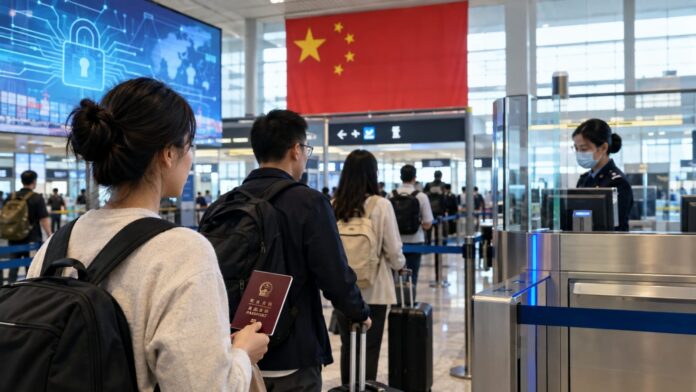
Story Highlights
- New travel regulations could bar citizens from leaving China for up to three years.
- Authorities claim the rules are necessary for national security.
- Critics argue these measures further control citizens’ freedoms.
- Reports indicate that some citizens have faced travel restrictions for years without clear justification.
What Happened
In a significant move that has raised eyebrows both domestically and internationally, China has implemented new travel restrictions that could prevent its citizens from leaving the country for up to three years. This decision comes amid ongoing concerns regarding national security and the government’s increasing control over its populace. The new regulations, which took effect on a recent Tuesday, stipulate that citizens deemed to have ‘harmed’ China’s national security or interests while abroad may face these travel bans. Furthermore, individuals who violate technology import and export regulations could also find themselves unable to leave the country.
Chinese authorities have framed these new rules as necessary measures to ‘safeguard national sovereignty and security.’ They assert that the regulations do not target ‘ordinary citizens’ but are instead aimed at preventing high-risk activities and protecting national interests. However, critics argue that these measures are yet another tool for the Chinese government to exert control over its citizens, particularly those who may express dissent or engage in activities deemed unfavorable by the state.
- New travel restrictions took effect on a recent Tuesday.
- Citizens can be barred from leaving for up to three years for actions deemed harmful to national security.
- Violations of technology import and export regulations can also lead to travel bans.
- Authorities claim the rules are not aimed at ordinary citizens but rather at high-risk individuals.
Why It Matters
The implications of these new travel restrictions are profound, particularly in a globalized world where mobility is often seen as a fundamental right. The potential for the Chinese government to restrict travel based on vague criteria raises serious concerns about personal freedoms and human rights. Critics, including legal experts and human rights advocates, argue that these regulations could be used to silence dissent and punish those who criticize the government while abroad. This could lead to a chilling effect on free speech, as citizens may think twice before expressing their opinions or engaging in activism outside of China.
Moreover, the new rules could have broader implications for China’s international relations. As the country continues to assert its influence on the global stage, these restrictions may be perceived as a sign of insecurity and paranoia on the part of the Chinese government. This could further alienate China from other nations, particularly those that value individual freedoms and human rights. The potential for increased scrutiny of Chinese nationals abroad could also lead to diplomatic tensions, as foreign governments may feel compelled to respond to the treatment of their citizens.
- Potential for increased control over citizens’ actions abroad.
- Chilling effect on free speech and dissent among Chinese nationals.
- Possible diplomatic tensions with countries that prioritize human rights.
- Increased scrutiny of Chinese nationals in foreign countries.
Political and Public Context
These new travel restrictions are not occurring in a vacuum. They are part of a broader trend of increasing governmental control over various aspects of life in China. Over the past few years, the Chinese government has implemented a series of measures aimed at tightening its grip on society, including the expansion of surveillance systems and the suppression of dissent. The recent crackdown on freedoms in Hong Kong, particularly following the pro-democracy protests in 2019, has also set a concerning precedent for how the Chinese government treats its citizens.
Reports have surfaced indicating that many Chinese nationals have faced travel restrictions for years, often without clear explanations. For instance, one young citizen, identified only as Pipi, recounted how his passport application was rejected after he participated in the Hong Kong protests. His experience highlights the opaque nature of the travel restriction process and raises questions about the criteria used to determine who is deemed a ‘risk’ to national security.
- Increasing governmental control over citizens’ lives in China.
- Recent crackdown on freedoms in Hong Kong following pro-democracy protests.
- Reports of long-standing travel restrictions faced by citizens.
- Concerns about the opaque criteria for determining travel bans.
What Happens Next
The future of travel for Chinese citizens remains uncertain as these new regulations take effect. Observers are keen to see how the government will enforce these rules and whether they will lead to an increase in reported cases of denied passport applications or travel bans. There are also questions about how these restrictions will impact China’s international relations, particularly with countries that prioritize human rights and individual freedoms.
As the global community watches closely, it remains to be seen whether these measures will provoke a backlash from citizens or lead to increased scrutiny from foreign governments. The potential for increased diplomatic tensions is also a concern, as countries may feel compelled to respond to the treatment of their citizens abroad. Additionally, the long-term implications for Chinese nationals living overseas, who may now face increased pressure from their government, are yet to be fully understood.
- Monitoring of enforcement and impact of new travel restrictions.
- Potential backlash from citizens against government control.
- Increased scrutiny from foreign governments regarding treatment of Chinese nationals.
- Long-term implications for Chinese nationals living abroad.
