

Story Highlights
- Kenyans are facing a significant milk shortage impacting their beloved chai tea.
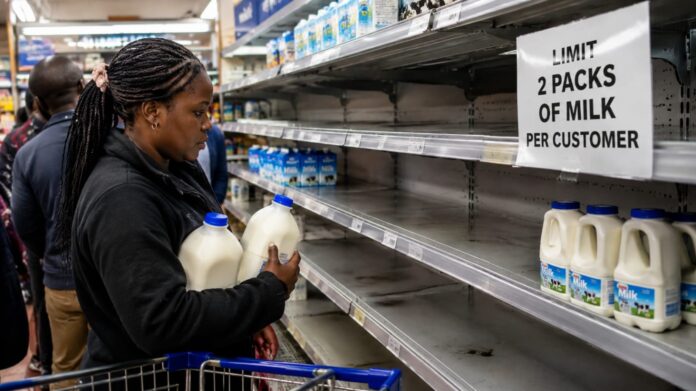
- Supermarkets are experiencing empty shelves and rising prices for milk products.
- The government attributes the shortage to drought and supply chain issues.
- Local businesses, particularly restaurants, are feeling the pinch as customer demand remains high.
What Happened
Kenyans have long cherished their milky tea, known as chai, which is a staple in many households and social gatherings. However, a troubling milk shortage has left many consumers and businesses in a state of disarray. The situation has escalated to the point where supermarket shelves are nearly bare, and retailers are forced to limit the amount of milk each shopper can purchase. This has led to rising prices, further exacerbating the issue for consumers who rely on milk for their daily chai.
The government has pointed to a combination of factors contributing to this shortage, primarily focusing on the impact of drought conditions that have severely reduced pasture availability for dairy cows. This has hindered milk production across the country. The Kenya Dairy Board (KDB), which oversees the dairy sector, has reported a notable decline in formal milk deliveries to processors, indicating that the situation is more severe than initially anticipated.
- Formal milk deliveries fell from 84.4 million litres in June to 81.3 million litres in July.
- Preliminary investigations suggest further declines in deliveries occurred in August.
- The Consumer Federation of Kenya (Cofek) has noted a downward trend in milk supply since the beginning of the year.
- Fresh milk prices have increased from 70 to 80 Kenyan shillings per litre.
Why It Matters
The milk shortage in Kenya is not just a minor inconvenience; it has significant implications for consumers and businesses alike. For many Kenyans, chai is more than just a beverage; it is a cultural staple that plays a vital role in daily life. The inability to access milk for chai has left many feeling frustrated and disappointed. Restaurant owners, like Muthoni Macharia in Nairobi, are particularly affected, as they rely on a steady supply of milk to meet customer demand. The loss of business during peak hours due to milk shortages can be devastating for small enterprises.
Moreover, the rising prices of milk are putting additional strain on consumers, particularly those from lower-income households. As the cost of living continues to rise, many families are forced to make difficult choices about their spending. The situation has sparked public concern, with some individuals even suggesting unfounded conspiracy theories about supermarkets intentionally creating a shortage to drive up prices.
- Consumers are facing higher prices for milk, impacting their budgets.
- Small businesses are experiencing a loss of revenue due to decreased milk availability.
- Public sentiment is shifting towards distrust of retailers and the government.
- Chai lovers are left with limited options, affecting their daily routines.
Political and Public Context
The current milk shortage in Kenya is part of a broader context of agricultural challenges faced by the country. Kenya is known as one of Africa’s leading milk producers, with a well-established dairy industry that has historically provided a reliable supply of milk to urban and rural areas alike. However, the recent drought conditions have highlighted the vulnerabilities within the agricultural sector, particularly in relation to climate change and its impact on food production.
In addition to the immediate effects of the milk shortage, there are long-term implications for the dairy industry. The rising cost of animal feed, which has increased by 45%, is a significant factor contributing to the decline in milk production. This situation raises questions about the sustainability of dairy farming in Kenya and the need for more resilient agricultural practices to withstand climate-related challenges.
- The dairy industry has historically been a cornerstone of Kenya’s agricultural economy.
- Climate change is increasingly affecting agricultural productivity across the region.
- Rising costs of animal feed are compounding the challenges faced by dairy farmers.
- Public trust in the government and regulatory bodies is being tested amid the crisis.
Kenya’s chai tea lovers are not happy as the nation’s cows run dry. Supermarket shelves are emptying, sellers are rationing supplies, and prices are rising. Here’s what this means for consumers and what to watch next. Stay informed and plan accordingly. https://t.co/V930AKNvyY pic.twitter.com/V5hEbWtLaB
— Drew Grimaldi (@Grimillionaire) September 4, 2026
What Happens Next
The future of the milk supply in Kenya remains uncertain as the government and industry stakeholders grapple with the ongoing challenges. Immediate measures may need to be implemented to stabilize the situation, including potential interventions to support dairy farmers and ensure a more consistent supply of milk. The government may also need to address the rising costs of animal feed to alleviate some of the financial pressures on producers.
As the situation develops, consumers will be watching closely to see how retailers respond to the crisis. Will they be able to restore normal supply levels, or will the shortages continue to persist? Additionally, there are open questions about how the government will address public concerns and restore confidence in the dairy sector. The coming weeks will be critical in determining the trajectory of milk availability in Kenya.
- Government interventions may be necessary to support dairy farmers.
- Retailers will need to manage consumer expectations and supply levels.
- Long-term strategies for sustainable dairy farming may be developed.
- Public sentiment towards the government and retailers will need to be addressed.
