

Story Highlights
- President Trump is moving forward with renovations to the historic White House bowling alley.
- The project reflects a commitment to preserving presidential history.
- Renovations contrast sharply with past criticisms of similar projects under previous administrations.
- Funding for the project has already been allocated, showcasing the administration’s proactive approach.
What Happened
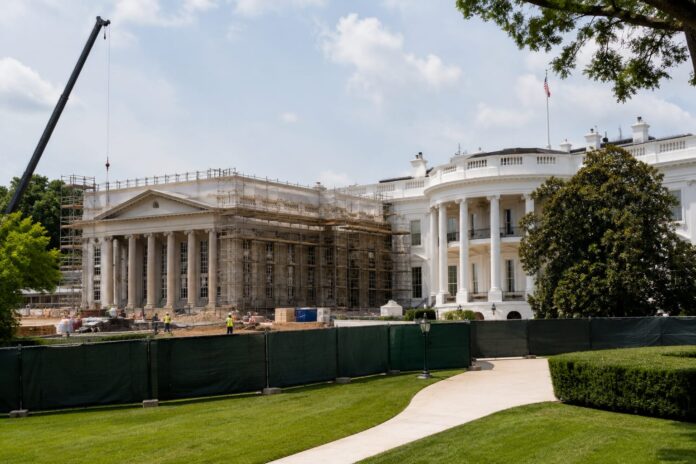
In a move that underscores his administration’s commitment to preserving the rich history of the White House, President Trump has announced plans to renovate the iconic Harry S. Truman Bowling Alley. This historic venue, built in 1947 as a birthday gift to Truman from his friends and supporters, has been a cherished part of the White House for decades. The president’s decision to invest in this renovation comes on the heels of a recent Supreme Court ruling that allows him to continue work on his ambitious $400 million ballroom project, which includes a military bunker and a drone port.
The bowling alley, which was relocated by former President Dwight Eisenhower in 1955 to its current location in the Eisenhower Executive Office Building, has undergone renovations in the past, notably by former President Bill Clinton in 1994. However, the current plans aim to enhance the facility further, ensuring it remains a vibrant part of White House culture.
- A contract for nearly $253,000 has been awarded for lighting work on the bowling alley.
- The General Services Administration granted the contract to Charles Mann Enterprises, a company founded by a former NFL player.
- Additional funding of $8,880 was allocated for escort services to facilitate construction access.
- The renovations are part of a broader initiative that includes the ballroom project, expected to be completed by summer 2028.
Why It Matters
The decision to renovate the bowling alley is significant for several reasons. Firstly, it reflects President Trump’s dedication to maintaining and enhancing the historical aspects of the White House, a commitment that resonates with many Americans who value tradition and heritage. By investing in such a project, the administration is not only preserving a piece of history but also reinforcing the importance of leisure and recreation within the presidential lifestyle.
Moreover, this renovation stands in stark contrast to the criticisms faced by previous administrations regarding similar projects. For instance, when former President Barack Obama proposed an overhaul of the bowling alley in 2014, it was met with swift backlash from Republicans, who questioned the priorities of the administration amidst economic challenges. The optics of such renovations were deemed inappropriate at the time, leading to the cancellation of the project shortly after it was announced.
- The renovation showcases a commitment to preserving presidential history, which may bolster public support.
- It contrasts with past criticisms of similar projects, highlighting a shift in public perception.
- The project may enhance the recreational facilities available to White House staff and guests.
- It reflects a broader trend of investing in presidential legacy projects during Trump’s administration.
Political and Public Context
Understanding the context of this renovation requires a look at the historical significance of the bowling alley itself. Originally built as a gift for President Truman, the bowling alley has served as a unique venue for both leisure and informal gatherings among White House staff and guests. Over the years, it has become a symbol of the lighter side of presidential life, contrasting with the often serious nature of political affairs.
In 2014, when the Obama administration proposed renovations, the backlash was immediate and intense. Critics argued that with the nation facing significant debt and economic challenges, the focus should be on more pressing issues rather than on upgrading a recreational facility. This sentiment was echoed by Republican leaders, who used the proposal as a rallying point to criticize the administration’s priorities.
- The bowling alley was built in 1947 and has historical significance as a presidential leisure space.
- Previous renovation attempts under Obama faced significant political backlash.
- The current renovations are part of a broader trend of investing in presidential legacy projects.
- Trump’s administration has prioritized maintaining historical sites within the White House.
Trump Admin Drops $250K for New Lighting in the Ultra-Exclusive White House Bowling Alley https://t.co/o16IejdI35
— People (@people) September 1, 2026
What Happens Next
Looking ahead, the renovation of the bowling alley is expected to proceed smoothly, given the funding has already been allocated and the contractor is in place. The administration’s proactive approach to this project suggests that it will be completed in a timely manner, allowing the bowling alley to continue serving its purpose as a recreational space for White House staff and guests.
As the renovations progress, it will be interesting to observe how public perception evolves, especially in light of the contrasting reactions to previous proposals. The administration may also leverage this project to further emphasize its commitment to preserving American history and culture, potentially using it as a talking point in future campaigns.
- Renovations are expected to be completed in a timely manner, enhancing the bowling alley’s facilities.
- The administration may use the project to bolster public support for its historical preservation efforts.
- Future updates on the project will likely be communicated to the public to maintain transparency.
- Open questions remain regarding the overall impact of the renovations on public perception of the administration.
