

Story Highlights
- The Supreme Court ruled 5-4 in favor of President Trump’s White House ballroom project.
- The decision allows construction to continue despite legal challenges from preservationists.
- Chief Justice John Roberts dissented, raising concerns about the legality of the project.
- Trump emphasizes the ballroom’s importance for security and as a modernized space for events.
What Happened
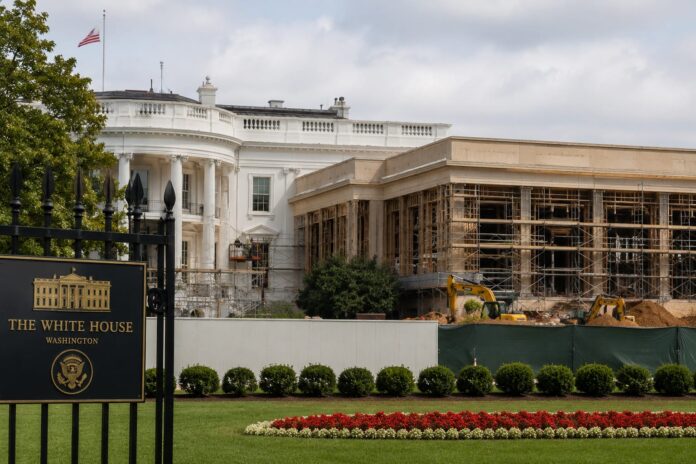
The U.S. Supreme Court has delivered a significant ruling that allows the Trump administration to proceed with the construction of a $400 million ballroom at the White House. This decision is seen as a major victory for President Trump, who has long advocated for a larger events space within the presidential residence. The ruling, which came down in a narrow 5-4 vote, blocked lower court decisions that had sought to halt the construction of the above-ground portion of the project.
In a surprising twist, Chief Justice John Roberts sided with the three liberal justices in dissenting from the majority opinion. He expressed concerns that the construction might be unlawful due to a lack of congressional approval. The legal challenge was initiated by the National Trust for Historic Preservation, which argued that the president did not possess the unilateral authority to move forward with such a significant construction project.
- The Supreme Court ruled on August 31, 2026.
- The National Trust for Historic Preservation filed the lawsuit against the project.
- Trump demolished the historic East Wing of the White House last autumn to make way for the ballroom.
- The ballroom is expected to be substantially finished by November 2026 and fully completed by August 2028.
Why It Matters
This ruling is not just a legal victory; it represents a broader affirmation of President Trump’s vision for a modernized White House. The ballroom is intended to serve as a multifunctional space for events, enhancing the presidential residence’s capacity to host gatherings and ceremonies. The president has emphasized the necessity of this project, particularly in light of security concerns following an alleged assassination attempt during a high-profile event earlier this year.
Moreover, the decision underscores the ongoing tension between the executive branch and preservationist groups. While the National Trust for Historic Preservation argues that the construction could cause irreversible damage to a historical landmark, the administration maintains that the ballroom is essential for the safety and functionality of the White House. This ruling could set a precedent for future projects that involve significant alterations to historic sites, potentially reshaping the landscape of preservation law in the United States.
- The ruling allows the Trump administration to continue with its modernization efforts at the White House.
- It highlights the ongoing debate over executive power and historical preservation.
- The decision may influence future legal challenges to presidential projects.
- Supporters of the project argue it enhances national security and modernizes the White House.
Political and Public Context
The legal battle surrounding the White House ballroom is part of a larger narrative regarding the preservation of historical sites in America. The National Trust for Historic Preservation has been vocal in its opposition to the project, citing concerns over the potential loss of historical integrity. This organization has a long history of advocating for the protection of significant landmarks across the country, and their involvement in this case reflects a broader commitment to preserving America’s architectural heritage.
In recent years, there have been numerous instances where the balance between modernization and preservation has been tested. The Trump administration’s approach to the White House has been characterized by a willingness to make bold changes, which has drawn both praise and criticism. The demolition of the East Wing, a historic part of the executive residence, has been particularly controversial, with many preservationists arguing that such actions undermine the historical significance of the site.
- The National Trust for Historic Preservation has previously challenged other projects involving historical sites.
- Trump’s administration has faced scrutiny for its approach to historical preservation.
- Other recent projects have also sparked debates over modernization versus preservation.
- The ruling may influence how future administrations approach similar projects.
If the National Trust for Historic Preservation can’t challenge the destruction of the East Wing, asks @profnoahfeldman, who can? Also: How is the White House like a crocodile? (via @opinion) https://t.co/a4A0LX32sz
— Bloomberg (@business) September 2, 2026
What Happens Next
Looking ahead, the ruling paves the way for the Trump administration to continue its ambitious plans for the White House. Construction on the ballroom is expected to ramp up, with substantial completion anticipated by November 2026. However, the dissenting opinion from Chief Justice Roberts may signal ongoing legal challenges that could arise as the project progresses. Preservationists may seek to appeal the ruling or pursue alternative legal avenues to halt construction.
Additionally, the implications of this decision extend beyond the immediate project. It raises questions about the future of executive power in relation to historical preservation and the extent to which presidents can unilaterally make significant changes to federal properties. As the nation moves forward, the balance between modernization and preservation will likely remain a contentious issue, with various stakeholders advocating for their respective interests.
- Construction on the ballroom will continue, with a focus on meeting the projected timeline.
- Legal challenges from preservationists may persist, potentially leading to further court battles.
- The ruling could influence future presidential projects involving historical sites.
- Public opinion may shift as the project progresses and its benefits become more apparent.
