

Story Highlights
- Representative Debbie Dingell has drafted the Hands Off Our Great Lakes Act to nullify an executive order renaming Lake Ontario to Lake America
- The legislation seeks to restore the original name and prevent the executive action from taking legal effect
- The dispute emerges amid broader trade tensions between the United States and Canada
- Michigan lawmakers and cross-border stakeholders have raised concerns about the impact on U.S.-Canada relations and regional economic partnerships
What Happened
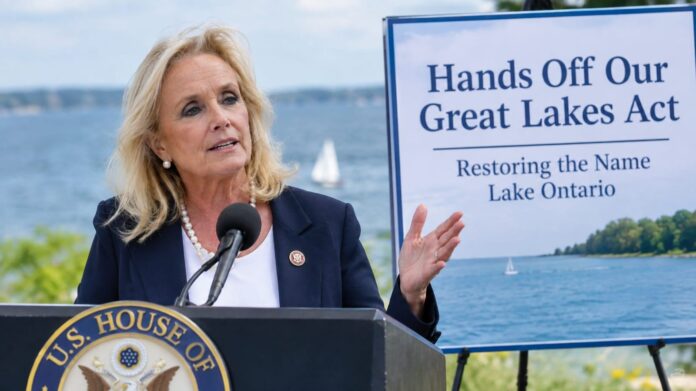
Representative Debbie Dingell of Michigan introduced legislation designed to overturn an executive order that renamed Lake Ontario to Lake America. The one-page measure, known as the Hands Off Our Great Lakes Act, would render the executive order null and void while restoring the historical name of the shared waterway. According to documents reviewed by Politico, the bill explicitly states the order shall have no force or effect and confirms the restoration of Lake Ontario’s original designation.
Dingell announced her legislative action through social media on Thursday evening, signaling immediate opposition to the renaming decision. The Michigan Democrat characterized the action as part of broader efforts to maintain the integrity of the Great Lakes region and protect decades of cooperative management between American and Canadian governments. The timing of the legislation reflects escalating tensions in the trade relationship between Washington and Ottawa, which has intensified over tariff disputes and other economic matters.
- Representative Debbie Dingell introduced the Hands Off Our Great Lakes Act on Monday
- The executive order renamed Lake Ontario to Lake America
- The legislation would nullify the executive order and restore the original name
- Annual trade volume between the U.S. and Canada totaled approximately $872.3 billion in 2025
Why It Matters
The effort to reverse the lake renaming carries significant implications for U.S.-Canada relations and cross-border governance. Lake Ontario represents a shared natural resource that has been managed cooperatively by both nations for generations through various environmental and regulatory agreements. Any unilateral action affecting the lake’s designation raises questions about respect for international agreements and bilateral protocols governing the Great Lakes.
Michigan’s economy depends heavily on Canadian trade and cross-border partnerships. The state serves as a critical hub for commerce, manufacturing, and transportation between the two countries. Dingell emphasized that Canada represents not merely a trading partner but an ally and neighbor whose relationship transcends individual policy decisions. The controversy surrounding the renaming reflects deeper concerns among lawmakers and regional stakeholders about maintaining productive diplomatic and economic ties during a period of trade friction.
The Great Lakes themselves hold immense strategic and environmental value. These freshwater resources support millions of residents, sustain commercial fishing and shipping industries, and provide critical water supplies for agriculture and municipalities across the region. Preserving cooperative management frameworks and historical designations maintains continuity in environmental stewardship that benefits both nations.
- Lake Ontario supplies drinking water and supports commerce for millions of Americans and Canadians
- The renaming could complicate existing bilateral environmental and resource-management agreements
- Michigan’s economy generates billions through trade with Canada and would be affected by rising tariffs
- Cross-border relationships and diplomatic goodwill are essential for regional stability and prosperity
Political and Public Context
The renaming decision emerged during an intensifying trade dispute between Washington and Ottawa. The administration imposed significant tariff measures on Canadian goods, prompting retaliatory responses from the Canadian government. According to the U.S. Trade Representative’s office, the trade conflict centers on negotiations regarding economic policy and commercial arrangements between the two countries.
Dingell’s opposition reflects broader Democratic concerns about maintaining international alliances and cooperative relationships. However, the dispute also touches on questions about executive authority, the symbolism of geographic nomenclature, and the appropriate scope of presidential power regarding naturally designated features. The renaming initiative has drawn reactions from stakeholders across the political spectrum, with some viewing it as symbolic nationalist expression and others seeing it as unnecessary disruption to established international protocols.
Regional representatives and business leaders in the Great Lakes states have raised concerns about the potential impact on cross-border commerce and diplomatic relations. The economic interdependence between Michigan, other Great Lakes states, and Canadian provinces creates a constituency with vested interest in maintaining stable relationships and predictable trade environments.
- Trade tensions between the U.S. and Canada escalated with tariff impositions and retaliatory measures scheduled for September
- The lake renaming occurred during broader negotiations affecting hundreds of billions in bilateral commerce
- Environmental protection and Great Lakes stewardship have historically enjoyed bipartisan support
- Cross-border business communities and labor organizations have expressed concerns about economic consequences
Following an executive order signed by President Donald Trump, the U.S. Department of Interior will now refer to Lake Ontario as Lake America. Now, House Democrats are looking for ways to reverse this decision. https://t.co/FBBk7PKT4c
— FOX 35 Orlando (@fox35orlando) August 28, 2026
What Happens Next
The Hands Off Our Great Lakes Act will progress through the legislative process, though its prospects depend on the political composition of Congress and the administration’s response. The legislation would require passage through both chambers and would face potential veto or opposition from the executive branch. The timeline for consideration remains unclear, and competing legislative priorities may affect its position in the schedule.
The underlying trade dispute between the United States and Canada continues to evolve, with significant tariff implementations scheduled for early September. The resolution or escalation of these economic tensions could influence the political dynamics surrounding the renaming controversy and related legislative efforts. Additionally, further diplomatic engagement between Washington and Ottawa may address both trade matters and symbolic gestures affecting bilateral relations.
Regional stakeholders, including business leaders, environmental advocates, and elected officials from Great Lakes states, will likely continue mobilizing around these issues. The long-term outcome may depend on broader developments in U.S.-Canada relations, trade negotiations, and congressional action on related economic and diplomatic matters.
- The bill requires consideration and passage through House and Senate committees and floor votes
- The administration could veto or block the legislation through executive action
- Canadian retaliatory tariffs are scheduled to take effect September 8, potentially intensifying economic pressure
- Diplomatic negotiations between U.S. and Canadian officials may address the renaming and broader trade concerns
