

Story Highlights
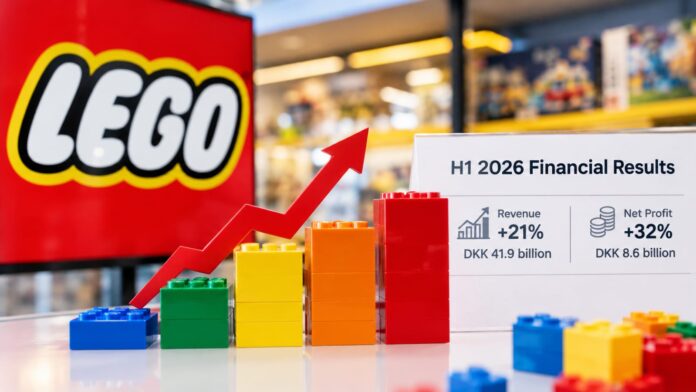
- Danish toymaker Lego reported a 21% revenue increase to 41.9 billion Danish kroner (approximately £4.8 billion) in the first half of 2026
- Strategic partnerships with major cultural events including the FIFA World Cup, Formula One racing, and popular film franchises significantly boosted consumer demand
- Net profit climbed 32% to 8.6 billion Danish kroner (£1 billion) with the launch of 330 new products featuring innovative technologies
- Strong growth across the Americas, Europe, and Asia-Pacific regions demonstrated the global appeal of brand collaborations and culturally relevant product offerings
What Happened
The Lego Group achieved substantial financial growth during the first half of 2026, with revenues climbing 21% to 41.9 billion Danish kroner. The company’s financial performance was characterized by robust expansion across multiple geographic markets and product categories. Sales to consumers through retail channels increased by 22%, reflecting heightened market demand for the company’s expanding portfolio. Net profit growth outpaced revenue growth, rising 32% to 8.6 billion Danish kroner, demonstrating improved operational efficiency and pricing power in the marketplace.
The toymaker’s success was substantially driven by strategic licensing agreements with major global entertainment and sporting properties. World Cup-related building kits featuring international football players generated significant consumer interest, with specialty sets retailing for up to £159.99. The company simultaneously expanded its offerings through collaborations with Formula One racing, the KPop Demon Hunters film franchise, and Star Wars properties. Additionally, the company introduced 330 new products during this period, including its advanced Smart Play kit featuring bricks capable of emitting sounds and light effects, demonstrating technological innovation within the traditional building toy category.
- Revenue increased 21% to 41.9 billion Danish kroner (£4.8 billion) in the first six months of 2026
- Net profit rose 32% to 8.6 billion Danish kroner (£1 billion) with 330 new products launched
- Consumer sales increased 22% driven by World Cup, Formula One, KPop Demon Hunters, and Star Wars collaborations
- Strong performance in Americas, Europe, and Asia-Pacific regions offset declining sales in China
Why It Matters
Lego’s performance demonstrates the enduring commercial viability of strategic brand partnerships in the toy industry. The company’s ability to secure licensing agreements with major global sporting events and entertainment franchises provides sustained differentiation in an increasingly competitive marketplace. The 21% revenue growth and 32% profit increase indicate that consumers across multiple demographics and geographic regions remain willing to invest in premium building toy products when those products offer cultural relevance and connection to their interests and passions.
The financial results also highlight shifting consumer entertainment preferences, particularly among adult demographics seeking alternatives to screen-based activities. The company’s acknowledgment of growth among both children and adults, particularly the demographic segment termed kidults, reflects broader market trends toward tactile, creative entertainment options. The performance suggests that successful toy manufacturers can leverage adult consumer spending patterns while simultaneously benefiting from adult purchases of products for younger recipients, creating a synergistic revenue multiplication effect within single product lines.
- Strategic licensing partnerships provide sustained competitive differentiation and drive consumer demand across geographic markets
- Growth among adult consumers represents a significant emerging market segment with substantial discretionary spending capacity
- Cultural relevance and brand experiences create premium pricing opportunities that expand profit margins beyond simple volume growth
- Diversified product portfolio including innovation in smart toy technology positions the company for sustained market leadership
Political and Public Context
The toy industry has experienced notable resurgence in recent years as consumer preferences have shifted toward products offering tactile engagement and creative expression outside digital environments. This market dynamic aligns with broader cultural movements emphasizing screen-time reduction and hands-on recreational activities. Lego’s particular success within this environment reflects the company’s historic brand positioning as a premium, innovation-focused manufacturer capable of adapting to contemporary consumer interests while maintaining its core product identity.
The company’s geographic performance variations provide insight into global economic conditions and market maturity differences. Strong growth in developed markets across the Americas and Europe, combined with expansion in Asia-Pacific regions, contrasts with stalled sales in China, suggesting market saturation or competitive pressures in that specific geographic area. This performance distribution reflects broader patterns in the toy industry where developed Western markets continue supporting premium product positioning while Asian markets present more complex competitive environments.
- Resurgence in toy industry demand driven by consumer preference shift toward non-digital entertainment alternatives
- Premium brand positioning enables pricing strategies that support profit growth exceeding revenue growth rates
- Geographic performance variations demonstrate different market maturity levels and competitive conditions across regions
- Innovation in smart toy technology represents evolutionary product development maintaining relevance within traditional toy categories
Lego sales rise as World Cup products draw new customers https://t.co/EQ7jJQBF2U https://t.co/EQ7jJQBF2U
— Reuters (@Reuters) August 25, 2026
What Happens Next
Lego’s management indicated expectations of cost pressures in the second half of 2026 related to increased fuel costs for transportation logistics and rising raw material expenses. These cost increases reflect broader global supply chain dynamics and commodity price fluctuations, particularly related to petroleum products affecting both plastic production and transportation operations. However, management communicated that anticipated cost increases would not produce material negative impacts on overall business performance, suggesting confidence in pricing power and operational resilience.
The company is simultaneously implementing substantial sustainability initiatives that may influence future financial performance. Solar energy installations at manufacturing facilities, including a major 160,000-panel installation at the Billund headquarters expected to produce 99 gigawatt-hours annually, represent significant capital investments designed to address long-term energy cost pressures. The company’s transition toward paper-based packaging and increased incorporation of recycled plastic materials in building bricks reflect both consumer preferences and supply chain cost management strategies. These environmental initiatives position the company for potential regulatory advantages while potentially offsetting rising virgin plastic costs driven by Middle East market disruptions.
- Management expects cost pressures in second half of 2026 from fuel and raw material expenses with expected contained impact on profitability
- Major solar energy installations beginning operation in 2026 position the company for long-term energy cost reduction and sustainability goals
- Packaging transition to paper-based materials expected to complete in 2026, reducing environmental impact and production costs
- Increased recycled plastic incorporation in products addresses cost pressures from virgin plastic price inflation while supporting sustainability positioning
