

Story Highlights
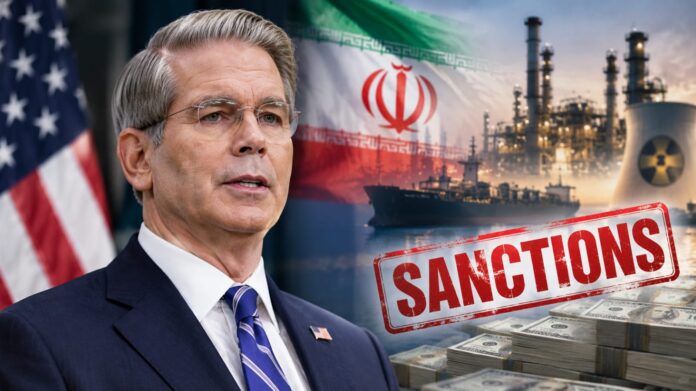
- Treasury Secretary Scott Bessent announced a comprehensive new sanctions package targeting Iran’s economy, described as an economic offensive aimed at dismantling Tehran’s military infrastructure
- The administration’s strategy targets not only Iran but also its major trading partners, particularly China, which serves as the Islamic Republic’s largest buyer of oil
- The economic campaign seeks to force Iran to end regional conflicts and reopen critical shipping lanes including the Strait of Hormuz
- The initiative represents a significant escalation in the White House’s foreign policy approach, combining military achievements with financial pressure
What Happened
The Trump administration intensified its economic campaign against Iran with Treasury Secretary Scott Bessent’s announcement of sweeping new sanctions measures. The Treasury secretary characterized the initiative as beginning an economic offensive aimed at squeezing Tehran’s financial system and its international supporters. Bessent indicated that military operations have already achieved substantial results, with nearly complete destruction of Iran’s military production capacity and significant degradation of its nuclear program capabilities.
The economic strategy extends beyond direct sanctions on Iranian entities to include pressure on countries and companies that continue supporting the Islamic Republic. The Treasury secretary’s announcement came as the regional military situation approached a critical juncture, with the administration viewing economic measures as the next phase of its comprehensive approach to Iranian containment and regional stability.
- Treasury Secretary Scott Bessent unveiled new sanctions as part of a comprehensive economic offensive
- The initiative targets Iran’s economy and nations providing financial or trade support to Tehran
- China identified as a primary focus due to its role as Iran’s largest trading partner and oil buyer
- The campaign aims to force closure of conflicts and restore critical maritime commerce routes
Why It Matters
The economic offensive represents a critical pivot in the administration’s Iran strategy, moving from military operations to sustained financial pressure. By targeting both Tehran directly and its international commercial relationships, the White House aims to create comprehensive economic isolation that forces behavioral change. The inclusion of Iran’s trading partners, particularly China, demonstrates a broader commitment to reshaping regional dynamics and challenging competitors who benefit from Iranian commerce.
The sanctions package carries significant implications for global energy markets, international trade relationships, and maritime security. By targeting the Strait of Hormuz and oil commerce, the administration seeks to reshape Middle Eastern geopolitics while constraining adversaries that profit from the status quo. The strategy also signals to regional allies the administration’s commitment to sustained pressure on Tehran and its supporters, potentially strengthening coalition-building efforts against Iranian influence.
- Economic isolation of Iran aims to force diplomatic concessions and end regional military engagements
- China faces potential secondary sanctions due to its substantial oil trade with Iran, escalating great power competition
- Global energy markets and maritime security face potential disruption as administration pursues Strait of Hormuz reopening
- Regional allies receive signal of sustained American commitment to containing Iranian power and influence
Political and Public Context
The administration’s escalating approach to Iran reflects a broader strategic framework emphasizing decisive action and economic leverage as tools of foreign policy. This approach builds on previous military operations while introducing financial mechanisms designed to achieve strategic objectives through comprehensive economic pressure. The inclusion of third-party traders and allies of Iran demonstrates a willingness to employ broader economic tools to reshape international behavior, consistent with the administration’s overall economic nationalism and strategic competition philosophy.
The timing of the economic offensive occurs amid broader administration initiatives on multiple policy fronts, including trade relationships with Canada and other nations. The Treasury secretary’s characterization of the initiative as a financial offensive suggests the administration views this moment as crucial for establishing long-term dominance over Iranian capabilities and influence. The strategy reflects confidence that economic mechanisms, combined with prior military achievements, can produce desired geopolitical outcomes without sustained military engagement.
- Previous military operations degraded Iranian military production capacity and nuclear program capabilities
- Administration employs integrated approach combining military, economic, and diplomatic tools
- Strategy reflects broader administration philosophy on economic leverage and strategic competition
- Timing aligns with multiple ongoing administration initiatives on international trade and relationships
The Trump administration escalated economic pressure Monday, seeking to isolate Iran from its trade partners and imposing 50% tariffs on Canada. https://t.co/oHrcpSdMBZ pic.twitter.com/Q3pQmA9CmU
— CBS Evening News with Tony Dokoupil (@CBSEveningNews) August 24, 2026
What Happens Next
The implementation of the new sanctions package will require coordinated administration action across Treasury, State Department, and other agencies responsible for enforcement and international engagement. Success of the initiative depends partly on international cooperation or at least acquiescence from major trading partners, particularly those with significant economic relationships with Iran. The administration will likely need to manage responses from countries affected by secondary sanctions and address diplomatic tensions that arise from the aggressive economic stance.
The Treasury secretary’s announcement suggests additional escalations may follow if initial sanctions fail to produce desired behavioral changes from Iran or its trading partners. The administration appears positioned to expand the scope of economic measures, potentially targeting additional sectors or third parties involved in Iranian commerce. The effectiveness of this approach will ultimately determine whether economic pressure alone can achieve strategic objectives or whether additional measures become necessary.
- Implementation of sanctions package requires coordination across multiple federal agencies and international partners
- Administration likely to monitor Iranian compliance indicators and adjust sanctions scope accordingly
- Potential diplomatic tensions with countries affected by secondary sanctions measures
- Future escalation possible if current sanctions fail to produce desired Iranian behavioral changes
