

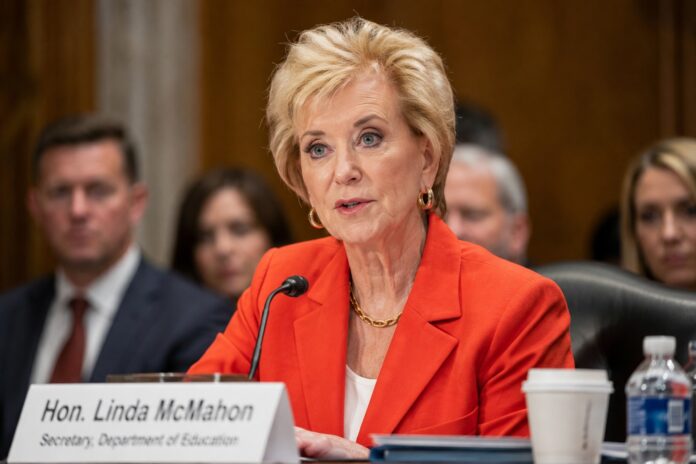
Story Highlights
- Education Secretary Linda McMahon emphasized that artificial intelligence can serve as a beneficial tool for K-12 students when implemented with proper oversight and monitoring by educators
- McMahon highlighted a visit to Alpha School in Austin, Texas, where students interact with AI chatbots for several hours daily under teacher supervision
- The Education Department released guidance on technology use in classrooms, stressing the importance of intentional implementation and measurable educational outcomes
- According to RAND Corporation data, 54 percent of students and 53 percent of English, math and science teachers reported using AI for school purposes, representing significant growth from prior years
What Happened
Education Secretary Linda McMahon communicated her perspective on artificial intelligence in American schools during a recent media appearance, discussing both the opportunities and necessary safeguards associated with classroom AI implementation. McMahon referenced her recent observations at a private school in Austin, Texas, where AI technology is already integrated into daily student instruction. At this institution, students engage with AI chatbots during structured portions of their school day while teachers maintain direct oversight of their interactions and progress.
The Education Department simultaneously advanced this message through official guidance on technology integration in classrooms. The guidance framework, released earlier in the week, addressed not only artificial intelligence but broader technology use in educational settings. Department officials emphasized that the successful implementation of any educational technology depends on multiple interconnected factors, including the quality of the tool itself, the specific educational purpose it serves, and the conditions under which it operates in real classroom environments.
- McMahon visited Alpha School in Austin, Texas to observe AI implementation firsthand
- Students at the school interact with AI chatbots for several hours daily under teacher monitoring
- Education Department released comprehensive guidance on classroom technology and AI use
- The guidance framework was distributed to K-12 school leaders by the department’s assistant secretary
Why It Matters
The Education Secretary’s advocacy for thoughtful AI implementation carries significant implications for American K-12 education. Schools across the nation are increasingly facing decisions about whether and how to integrate artificial intelligence into their curricula. McMahon’s measured approach—emphasizing both potential benefits and the necessity of careful implementation—provides a framework for policy discussions at federal and state levels. Her position suggests the federal government will not mandate blanket AI adoption but rather encourage strategic, evidence-based implementation that prioritizes student outcomes.
The focus on measurable results addresses a critical concern in educational technology adoption. Historically, schools have sometimes invested in new technologies without rigorous assessment of their actual impact on student achievement. By insisting that educators track whether AI integration produces better outcomes, and by suggesting that underperforming programs should be discontinued, the Education Department is attempting to prevent wasteful spending on ineffective tools. Additionally, the acknowledgment of parental rights regarding AI instruction respects family preferences in educational decisions, recognizing that not all families may wish their children to interact extensively with AI systems.
- Schools nationwide face decisions about AI integration without federal mandates requiring adoption
- The emphasis on measurable outcomes could prevent schools from investing in ineffective technology implementations
- Parents retain the option to opt children out of AI-centered instruction if they observe negative outcomes
- The framework allows educators to personalize instruction for students at different performance levels through AI-assisted monitoring
Political and Public Context
The discussion of artificial intelligence in education occurs within a broader national conversation about technology’s role in American society and institutions. Public attitudes toward AI integration vary considerably, with some stakeholders enthusiastically embracing its potential to enhance learning, while others express concerns about privacy, screen time, and the appropriate role of automation in education. Survey data reveals that AI adoption in schools has accelerated significantly in recent years, with the RAND Corporation finding substantial increases in reported usage among both students and teachers compared to data from prior years.
The Education Department’s measured approach reflects an attempt to thread a needle between those advocating rapid AI adoption and those opposing it entirely. This middle-ground position acknowledges legitimate benefits while respecting concerns about implementation quality and educational effectiveness. The emphasis on educator oversight and intentional implementation aligns with broader conversations in education policy about maintaining teacher autonomy and judgment in classroom decisions. The timing of the guidance also comes as schools nationwide are navigating post-pandemic educational recovery and considering various tools to address learning gaps and improve educational outcomes.
- Fifty-four percent of students reported using AI for school in 2024, according to RAND Corporation research
- Fifty-three percent of English, math and science teachers reported using AI, marking 15-plus percentage point increases from previous years
- Public opinion on classroom AI remains divided between enthusiasts and those with implementation concerns
- The guidance framework addresses broader educational technology integration beyond artificial intelligence specifically
Chief Minister chaired a review meeting of the School Education Department today at Civil Secretariat, Srinagar.
The meeting focused on improving the Gross Enrolment Ratio (GER) at the higher secondary level and reviewed the phased plan to upgrade 714 High Schools into K-12… pic.twitter.com/E2ZUay2bI0— JK24x7 News (@JK247News) August 24, 2026
What Happens Next
The Education Department’s guidance and the Education Secretary’s public advocacy are likely to influence how schools approach AI implementation over the coming months and years. School districts will need to develop or refine policies governing technology use, and administrators will face decisions about whether to pilot AI systems, expand existing programs, or maintain current practices. The framework provided by the federal government suggests that implementation decisions should remain localized, with schools determining which applications of AI align with their educational missions and student needs.
Future developments will likely involve closer monitoring of AI’s educational impact through research and evaluation efforts. Schools that adopt AI systems will need to track measurable outcomes to justify continued use and investment. The recognition of parental choice also suggests that schools may need to develop communication strategies explaining their AI initiatives to families and providing clear opt-out mechanisms. Additionally, teacher training and professional development will become increasingly important as more educators integrate AI into their instructional practices, requiring investments in preparation and ongoing support.
- Schools will develop or revise technology policies incorporating federal guidance on AI implementation and oversight
- Research institutions and school districts will conduct longitudinal studies measuring the actual impact of AI on student learning outcomes
- School leaders will need to communicate AI initiatives to parents and families while ensuring transparent opt-out procedures
- Professional development for educators will likely expand to address effective and appropriate classroom AI integration
