

Story Highlights
- A passenger’s laptop caught fire during descent on American Airlines Flight 2398, resulting in injuries to multiple passengers
- The aircraft landed safely at Dallas Fort Worth International Airport after crew members contained the device
- The FAA has documented 58 verified lithium battery incidents this year, with laptops representing a significant portion of historical cases
- Aviation regulators emphasize that lithium batteries pose serious fire risks when damaged, overheated, or improperly stored
What Happened
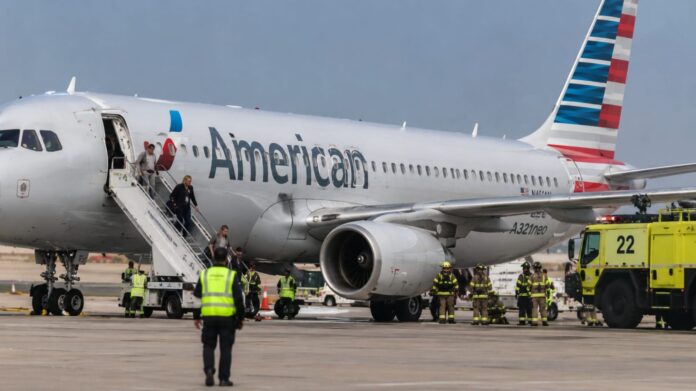
An incident involving a lithium battery fire occurred aboard American Airlines Flight 2398, an Airbus A321, as the aircraft descended toward Dallas Fort Worth International Airport on Friday. The flight originated from Atlanta, Georgia, and was in the final stages of landing when a passenger’s laptop caught fire in the rear section of the cabin. According to communications obtained from air traffic control, the pilot reported a cabin fire to authorities and indicated that flight attendants were actively working to extinguish the flames.
Emergency response procedures were activated immediately upon landing. One passenger received medical treatment for burns sustained during the incident, though that individual was released after receiving care at the airport. Reports indicated that approximately four to five passengers experienced burns related to the laptop fire. After the aircraft touched down, emergency personnel met the plane at the gate following standard safety protocols. The airline confirmed that the device was successfully contained mid-aircraft and praised the crew’s professional response to the emergency situation.
- Flight 2398 originated from Atlanta and landed safely at Dallas Fort Worth International Airport
- One passenger was treated for burns and released; approximately four to five passengers sustained burn injuries
- Pilot reported cabin fire to air traffic control; crew contained the device before landing
- Incident occurred during landing on Friday
Why It Matters
This incident underscores the significant safety risks associated with lithium batteries during commercial air travel. Lithium-ion batteries, which power most modern laptops and electronic devices, are capable of entering thermal runaway conditions where they overheat uncontrollably and ignite. The Federal Aviation Administration has issued warnings that these batteries can catch fire as a result of various factors, including physical damage, exposure to excessive heat, water contact, overcharging, or improper packing and storage. The ability of such batteries to ignite rapidly and intensely makes them a particular concern in the confined environment of an aircraft cabin.
The injuries sustained by passengers demonstrate the real physical consequences when such incidents occur at altitude. While this flight successfully landed without catastrophic damage, the scenario highlights the vulnerability of aircraft and passengers to lithium battery fires. The confined space of a cabin, combined with the limited options for emergency response at high altitude, means that even a relatively contained fire can pose significant risks. The fact that multiple passengers sustained injuries indicates the intensity and spread of the flames before the device was successfully contained by crew members.
- Lithium batteries can overheat and ignite when damaged, exposed to water, overcharged, or improperly stored
- Multiple passengers sustained burn injuries, demonstrating the hazardous nature of such fires in confined aircraft cabins
- Crew response prevented potential escalation to a more dangerous situation during flight operations
- The incident highlights the need for passenger awareness regarding proper device handling during air travel
Political and Public Context
Regulatory authorities have been tracking an alarming trend in lithium battery incidents on commercial flights. The FAA has documented 58 verified incidents involving lithium batteries this year alone, with these cases involving smoke, fire, or extreme heat events. When examining historical data, lithium battery incidents have represented a growing concern, with 84 cases specifically related to laptop batteries recorded over the past two decades. This data suggests that while individual incidents may seem isolated, they represent part of a broader pattern that has prompted increased regulatory attention.
International aviation authorities have similarly raised awareness about lithium battery hazards. The United Kingdom’s Civil Aviation Authority has warned that power banks and portable chargers are causing an increasing number of serious incidents on flights worldwide, with these devices now representing among the biggest fire risks on aircraft. In May, a European airline flight from Egypt was diverted to Rome after a power bank was discovered charging in a passenger’s checked luggage, forcing reschedule of the flight and demonstrating the seriousness with which authorities now treat such incidents. Current regulations in the United States require that lithium batteries, including those in laptops, must be stowed in carry-on baggage only, as this allows for better monitoring and faster crew response in case of emergencies.
- FAA documented 58 lithium battery incidents in 2024 involving smoke, fire, or extreme heat
- Historically, laptops account for 84 verified lithium battery incidents over the past 20 years
- International aviation authorities, including the UK’s Civil Aviation Authority, have issued warnings about power banks as growing fire risks
- Current regulations require lithium batteries to be stored in carry-on baggage only, not checked luggage
Pilot reports possible burn injuries after passenger's laptop catches fire on American Airlines flight https://t.co/or0Kv5CLnC
— CBS News (@CBSNews) August 23, 2026
What Happens Next
The incident will likely prompt increased scrutiny of lithium battery safety protocols across the aviation industry. Both the FAA and American Airlines will conduct investigations into the specific circumstances that led to the laptop fire, including whether the device was defective, damaged, or improperly stored. The findings from such investigations contribute to the broader understanding of how and why these fires occur, potentially leading to enhanced safety measures or updated guidance for passengers and crew members.
Going forward, passengers can expect continued emphasis from airlines and regulators regarding proper handling and storage of electronic devices with lithium batteries. Educational campaigns may intensify to ensure that travelers understand the risks and follow guidelines for transporting such devices. Airlines may also review crew training protocols to ensure that personnel are equipped to respond quickly and effectively to fires involving electronics. Additionally, manufacturers of laptops and other battery-powered devices may face increasing pressure to improve battery safety features and incorporate better mechanisms to prevent thermal runaway conditions.
- FAA and American Airlines will conduct investigations into the specific circumstances of the fire
- Potential increased regulatory focus on lithium battery transport and storage procedures
- Airlines may expand crew training and passenger education regarding device safety
- Manufacturers may face pressure to develop improved battery safety features and thermal management systems
