

Story Highlights
- Pennsylvania Senator John Fetterman expressed alarm over socialism’s increasing prominence within the Democratic Party, citing recent primary victories by democratic socialist and progressive candidates
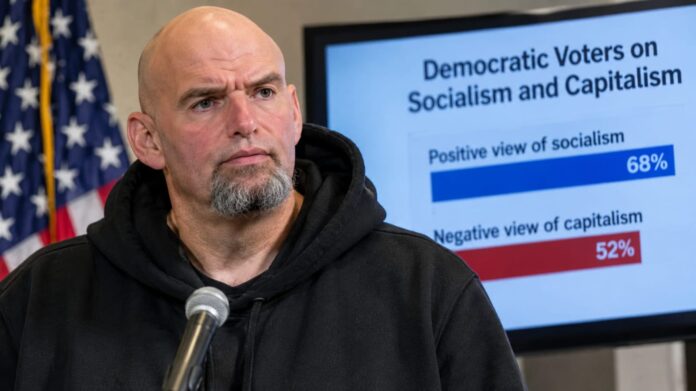
- A CBS News poll showed 58 percent of Democrats hold positive views on socialism, while 50 percent view capitalism negatively
- Fetterman characterized the trend as damaging to the party and reaffirmed his commitment to free market capitalism principles
- The senator has previously criticized what he termed the rising influence of far-left candidates proposing radical policy changes
What Happened
Senator John Fetterman of Pennsylvania has issued a stark warning about the trajectory of his party, pointing to data indicating a significant shift in Democratic attitudes toward economic systems. The senator, known for occasionally departing from party orthodoxy, responded to polling data that revealed substantial support for socialist ideas among Democratic voters. According to the CBS News poll, a decisive majority of Democratic respondents indicated positive views toward socialism, while a strong plurality expressed negative views of capitalism.
Fetterman’s warnings come in the context of several high-profile primary election victories by candidates who identify as democratic socialists or progressive insurgents. These electoral successes have occurred across multiple states, suggesting a meaningful trend rather than isolated incidents. The senator characterized the Democratic Party’s direction as fundamentally misaligned with his own economic beliefs and expressed concern about the party’s ideological trajectory.
- CBS News poll data showing 58 percent of Democrats view socialism positively versus only 32 percent viewing capitalism positively
- Recent primary victories by democratic socialist and progressive candidates in states including New York, Los Angeles, Michigan, and Colorado
- Fetterman’s public statements on social media and cable news expressing alarm about the party’s ideological shift
- The senator’s continued self-identification as a free market capitalist despite Democratic Party trends
Why It Matters
Fetterman’s pronouncements carry particular significance because he represents a purple state and has demonstrated the ability to win in competitive electoral environments. His warnings about party direction suggest internal anxiety among moderate Democrats about the party’s long-term viability and electoral competitiveness. The Pennsylvania senator’s willingness to publicly criticize his own party’s ideological trajectory reflects broader concerns within the Democratic establishment about whether the party risks alienating centrist and working-class voters in competitive regions.
The polling data underlying Fetterman’s concerns reveals a substantial generational or demographic divide within the Democratic coalition. The fact that a majority of Democrats now view socialism favorably represents a significant shift from the party’s historical positioning as a center-left organization. This ideological realignment could have profound implications for the party’s messaging, candidate recruitment, and policy priorities heading forward. The competitive disadvantage that such a shift might create in general elections across swing states appears to be driving Fetterman’s public intervention.
- Potential electoral vulnerability in swing states where voters hold more traditional views on capitalism and free markets
- Deepening internal party division between moderate and progressive factions regarding fundamental economic philosophy
- Impact on the party’s ability to recruit and support centrist candidates in competitive districts and states
- Broader implications for how the Democratic Party messages its economic vision to independent and persuadable voters
Political and Public Context
The senator’s warnings reflect a broader tension within the Democratic Party between its progressive and moderate wings that has intensified over the past several election cycles. Progressive activists and candidates have gradually increased their influence within party structures, particularly in primary elections where turnout tends to skew toward more ideologically committed voters. Meanwhile, moderate Democrats have grown increasingly concerned about the electoral implications of these shifts, particularly in regions outside major urban centers.
Fetterman’s criticism of what he characterized as the dirtbag left represents a particularly sharp intra-party rebuke. He has previously noted that some nominees emerging from Democratic primaries have advocated for positions including the abolishment of law enforcement agencies, immigration enforcement structures, and border security measures. These policy positions diverge significantly from the views held by many working-class and moderate voters who have traditionally formed part of the Democratic electoral coalition. The senator’s public positioning as a critic of these trends suggests he believes the party risks significant electoral damage if the ideological shift continues unchecked.
- Historical context of Democratic Party positioning as a mainstream center-left party concerned with protecting capitalism with regulatory guardrails
- Rise of democratic socialism and progressive candidates winning primary contests over establishment-backed moderate candidates
- Previous statements by Fetterman criticizing specific policy proposals including abolishment of law enforcement and border agencies
- Contrasting attitudes toward capitalism and socialism across different demographic groups and geographic regions within the Democratic coalition
Sen. John Fetterman criticized a new poll showing Democrats view socialism more favorably than capitalism, calling the results "lunacy" and reaffirming his own identity as a "free market capitalist." MORE: https://t.co/Lw1hx4e3Vj pic.twitter.com/d0ON8hc0m0
— NEWSMAX (@NEWSMAX) August 18, 2026
What Happens Next
The immediate question confronting the Democratic Party involves how party leadership will respond to concerns raised by senators like Fetterman regarding the party’s ideological direction. Party moderates may seek to strengthen support for centrist candidates in upcoming primary contests, potentially leading to intensified intra-party competition. The 2024 election cycle could provide a significant test of whether voters in competitive regions embrace or reject the party’s apparent ideological shift.
Fetterman’s public positioning may also influence how other moderate Democrats communicate about economic policy. His willingness to explicitly defend capitalism and criticize socialism could embolden other centrist party members to articulate similar messages. Alternatively, progressive Democrats may intensify efforts to reframe socialism and reshape party messaging around economic justice themes. The outcome of these internal party dynamics will likely shape the Democratic Party’s electoral strategy, candidate recruitment priorities, and policy messaging for the foreseeable future.
- Potential increased primary challenges between moderate and progressive candidates in 2024 and subsequent election cycles
- Democratic Party leadership responses to concerns about ideological direction and electoral competitiveness
- Messaging strategies adopted by moderate Democrats in response to Fetterman’s public warnings
- Electoral outcomes in competitive states and districts that may indicate voter preferences regarding capitalism versus socialism
