

Story Highlights
- Former President Trump predicted that progressive policies abandoned by Democrats before elections would resurface immediately after victory
- The prediction came during discussion of Rep. Alexandria Ocasio-Cortez’s comments about distancing Democrats from pandemic-era rhetoric on crime and social issues
- Trump’s remarks highlight what he views as Democratic political calculation and insincerity on major policy questions
- The assessment reflects broader Republican messaging about Democratic flip-flopping on law-and-order and public safety issues heading into midterm campaigns
What Happened
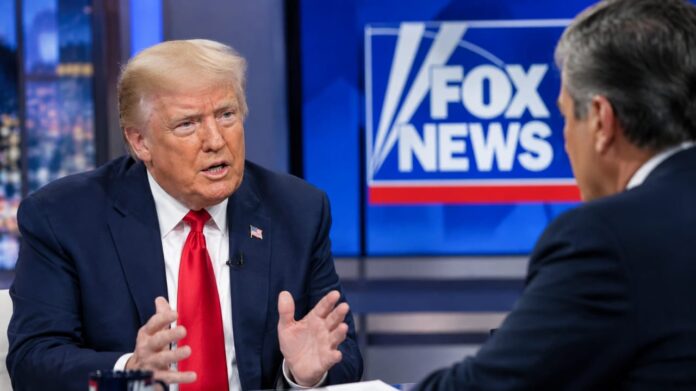
During a Fox News appearance, the former president offered his perspective on Democratic positioning ahead of upcoming elections. The discussion centered on recent comments from the New York representative in which she referenced pandemic-era political discourse, specifically invoking a characterization of that period as a phase that had concluded. She indicated that while certain rhetoric from that time frame would not be used in current political discussions, the underlying conversations about social issues had produced valuable policy insights.
The former chief executive characterized these Democratic efforts as an attempt to distance the party from previously embraced positions, particularly regarding crime and public safety. His analysis suggested that voters possessed sufficient memory of recent Democratic advocacy to remember the prior policy stances without requiring reminders. He went further to assert that once electoral victory was secured, the progressive agenda would quickly return to prominence.
- Rep. Alexandria Ocasio-Cortez discussed pandemic-era political rhetoric and its evolution
- Trump characterized Democratic statements as strategic distancing from earlier positions on crime and social issues
- The former president predicted immediate policy reversals following electoral success
- Fox News host Alexis McAdams framed the discussion around midterm election strategy
Why It Matters
The former president’s assessment touches on a central campaign narrative that resonates with conservative voters: the perception that Democratic candidates abandon their base’s policy priorities during election seasons only to return to them once in office. This messaging strategy aims to undermine Democratic credibility on issues where polling shows public opinion has shifted rightward, particularly regarding public safety, crime prevention, and law-and-order priorities.
The prediction carries particular weight given ongoing concerns about crime rates in major Democratic-led cities and the political vulnerability this creates for the party. By suggesting that Democratic moderation on these issues represents mere tactical repositioning rather than genuine policy evolution, Trump’s commentary reinforces conservative arguments about Democratic insincerity. This framing becomes especially potent as candidates across the political spectrum attempt to present themselves as tough on crime during election cycles when voters prioritize safety concerns.
Additionally, the remarks underscore how the progressive movement’s own internal debates about past rhetoric and strategy have become ammunition in broader political warfare. What the New York representative characterized as necessary evolution and refinement of approach gets reframed as hypocrisy and electoral calculation, potentially damaging Democratic efforts to reset their image on public safety issues.
- Conservative voters receive reinforcement of narratives about Democratic policy reversals and electoral opportunism
- Democratic positioning on crime and safety issues faces renewed scrutiny as candidates attempt rebranding before elections
- Progressive internal discussions about pandemic-era rhetoric become liabilities in general election contexts
- The debate influences voter perceptions of Democratic authenticity and commitment to public safety priorities
Political and Public Context
The remarks emerge within a broader political environment where crime and public safety have become central campaign issues, particularly benefiting Republicans. Polling consistently demonstrates that voters across demographic groups express concern about rising crime rates and perceive Democratic-controlled jurisdictions as insufficiently committed to law-and-order priorities. This represents a significant shift from the social justice emphasis that dominated Democratic messaging during the 2020 election cycle and the immediate pandemic period.
Democratic candidates have increasingly acknowledged this political reality, with many distancing themselves from earlier rhetoric about defunding police and emphasizing their commitment to public safety instead. The progressive movement’s own reflection on this period, as evidenced by the New York representative’s acknowledgment that certain rhetoric from that era would not be employed today, reflects this electoral pressure. However, critics argue this repositioning rings hollow without fundamental changes to underlying policy commitments, a tension that the former president’s prediction directly addresses.
The dynamic also reflects generational and ideological divisions within the Democratic coalition. While progressive activists maintain commitments to criminal justice reform and systemic change, electoral-focused Democratic operatives recognize that such messaging creates vulnerabilities during general election campaigns. This internal tension between base priorities and general election positioning has provided Republican candidates with fertile ground for attacking Democratic authenticity and consistency.
- Crime and public safety rank as top voter concerns in multiple national and regional polls
- Democratic candidates have shifted messaging away from earlier progressive rhetoric on policing and criminal justice
- Internal Democratic divisions between progressive activists and electoral operatives create vulnerability to Republican attacks
- The 2020 election cycle’s social justice emphasis contrasts sharply with 2022 midterm-focused public safety messaging
🚨WOKE STAYS WOKE🚨
President Trump was asked about AOC.
His view on AOC and “woke”:
“People know the woke. And the woke will become woke again, as soon as they get elected.”
The President predicts she’ll run for president. pic.twitter.com/kjHRzyl6SO
— Gina Beana Fofina (@Ginasassyass) August 15, 2026
What Happens Next
The assessment positions Republican candidates to continue highlighting Democratic statements and policy positions from the pandemic era, using them to challenge the sincerity of current messaging shifts. Conservative campaign operations will likely compile records of Democratic advocacy for progressive policies, creating visual and rhetorical comparisons to current positioning. This strategy aims to undermine Democratic credibility with swing voters who may be persuadable on law-and-order issues.
Democratic response will need to navigate the difficult terrain of acknowledging that perspectives have evolved while arguing that underlying commitment to both public safety and criminal justice reform remain intact. The New York representative’s approach of characterizing the pandemic period as a distinct moment with its own context may serve as a model for other Democrats seeking to move beyond that era without appearing to abandon core constituencies.
Looking forward, the question of whether Democratic promises on public safety hold after elections will become a central issue in future campaigns. If Democratic-controlled jurisdictions implement policies perceived as insufficiently tough on crime following electoral victories, the former president’s prediction will gain additional credibility among voters and provide ammunition for continued Republican attacks on Democratic authenticity regarding law-and-order priorities.
- Republican campaigns will likely emphasize documentary evidence of Democratic pandemic-era rhetoric and policy positions
- Democratic messaging will focus on distinguishing between evolved perspectives and unchanged core commitments
- Voter assessments of Democratic follow-through on public safety promises will shape subsequent electoral cycles
- The credibility of Democratic repositioning on crime and safety will remain subject to post-election policy implementation
