

Story Highlights
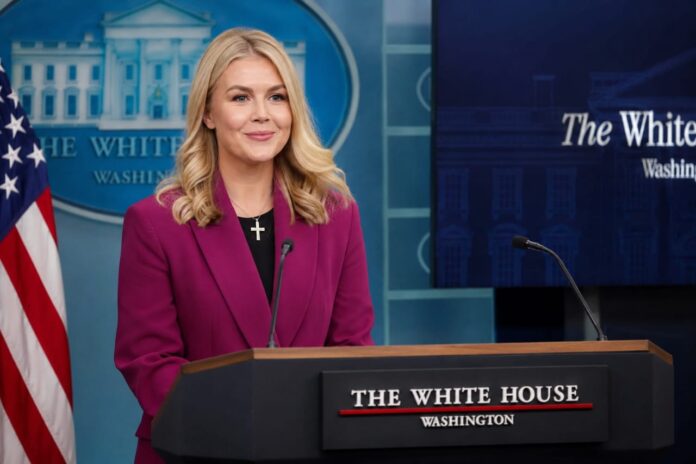
- White House Press Secretary Karoline Leavitt announced her departure at month’s end, creating significant disruption within the administration
- Leavitt becomes the fifth high-profile female staffer to leave the Trump administration since March, raising questions about retention and workplace environment
- Sources indicate the president maintains close contact with key personnel and expects immediate returns from maternity leave, reflecting demanding leadership style
- Multiple candidates are being considered as replacements, including former DHS press secretary Katie Zacharia and CNN political commentator Scott Jennings
What Happened
The White House experienced significant turmoil following the announcement that Press Secretary Karoline Leavitt would be departing her position at month’s end. The 28-year-old official returned from maternity leave on July 16 after giving birth to her second child on May 1, but her return came amid reported plans to eventually leave the administration. Sources close to the president indicated that Leavitt had been contemplating her departure for some time but was seeking the appropriate moment to communicate this decision.
According to reports, the president maintained regular contact with Leavitt during her maternity leave, inquiring about her return timeline. Her decision to come back to the White House came at the president’s insistence, cutting short her time away from the office. The departure has sparked considerable concern within the administration about leadership continuity and the stability of key communications roles during a period of intensive policy implementation.
- Leavitt returned to work July 16 after maternity leave following May 1 childbirth
- She is the fifth high-profile female staffer to depart the administration since March
- President maintained regular contact with Leavitt during her absence, encouraging early return
- Multiple internal candidates and external figures are being evaluated as potential replacements
Why It Matters
The exit of a press secretary represents a significant blow to any administration’s communications infrastructure. The press secretary serves as the primary conduit between the White House and the media, shaping public perception of administration policies and leadership direction. Leavitt’s departure at a critical juncture creates a vacuum in messaging at a time when the administration is pursuing ambitious policy goals and managing complex national issues.
Insiders described the situation as particularly challenging given that Leavitt was one of only two female staffers capable of both supporting the president’s vision while bringing independent judgment to her role. The loss of such personnel creates ripple effects throughout the organization. Sources indicated that the working environment within the administration is characterized by extreme demands for loyalty and rapid results, creating conditions that make sustained tenure difficult for many officials. This pattern raises concerns about whether the administration can maintain the institutional continuity necessary for effective governance.
For female leaders in particular, the departure highlights the unique pressures of serving in high-visibility roles where professional demands intersect with personal responsibilities. The need to balance ethical obligations with loyalty expectations creates additional strain beyond what male counterparts may experience.
- Loss of experienced press secretary disrupts communications strategy during policy implementation phase
- Fifth departure of high-ranking female official signals potential workplace sustainability issues
- Administration faces challenge replacing official described as capable of providing both loyalty and independent counsel
- Female staffers navigating additional pressure of balancing ethics, loyalty, and work-life balance
Political and Public Context
The administration has experienced significant staffing transitions across multiple departments and levels since taking office. Beyond Leavitt, the departure list includes former Director of National Intelligence Tulsi Gabbard, former Attorney General Pam Bondi, former Labor Secretary Lori Chavez-DeRemer, and former Homeland Security Secretary Kristi Noem. The concentration of departures among female officials at senior levels distinguishes this pattern from typical administrative transitions.
These exits occur within the broader context of an administration known for demanding intense commitment and rapid execution from its personnel. The president’s leadership style emphasizes loyalty and immediate delivery of results, which creates high-pressure working conditions. Multiple sources characterized the environment as one where work-life balance is essentially non-existent and where officials must navigate complex ethical terrain while maintaining alignment with presidential priorities.
The succession process already appears competitive, with several candidates positioning themselves for advancement. The candidates under consideration represent diverse backgrounds, from current administrative officials to former government personnel to media figures, reflecting the administration’s tendency to draw from multiple talent pools when filling key positions.
- Five high-ranking female officials have departed since March across national security, legal, and homeland security roles
- Administration’s demanding leadership style emphasizes absolute loyalty and immediate policy results
- Succession process includes current DHS press secretary Katie Zacharia, principal deputy press secretary Anna Kelly, Trump attorney Alina Habba, and CNN commentator Scott Jennings
- Departures reflect broader pattern of executive branch transition under current administration
Karoline Leavitt to Leave White House Press Secretary Role at End of August https://t.co/gXvInX0BVd
— The Source Magazine (@TheSource) August 17, 2026
What Happens Next
The immediate priority for the administration involves selecting a successor who can effectively manage communications during what is expected to be a consequential period of policy implementation. The White House communications office will need to maintain continuity in messaging while incorporating new leadership perspectives. The selection process appears likely to prioritize individuals who have previously demonstrated alignment with the administration’s policy direction and communication strategy.
Leavitt’s departure also raises questions about whether the administration will implement adjustments to working conditions or personnel management approaches. Sources suggested that the intense pressure and loyalty demands create unsustainable conditions for many officials, particularly those with significant personal responsibilities. Whether leadership takes steps to address these concerns or maintains current operating procedures will influence the administration’s ability to retain experienced personnel in the future.
The broader challenge involves rebuilding confidence in staff retention and institutional stability. Repeated departures at senior levels can create perception of internal dysfunction, potentially affecting recruiting efforts for other positions. The administration will need to demonstrate that it can maintain core teams while pursuing its agenda effectively.
- New press secretary must be confirmed and integrated into communications strategy within coming weeks
- Administration faces decision about potential modifications to workplace environment and retention practices
- Leadership must address public perception of staff instability while maintaining policy momentum
- Remaining female senior officials may face increased scrutiny regarding their own tenure and commitment
