

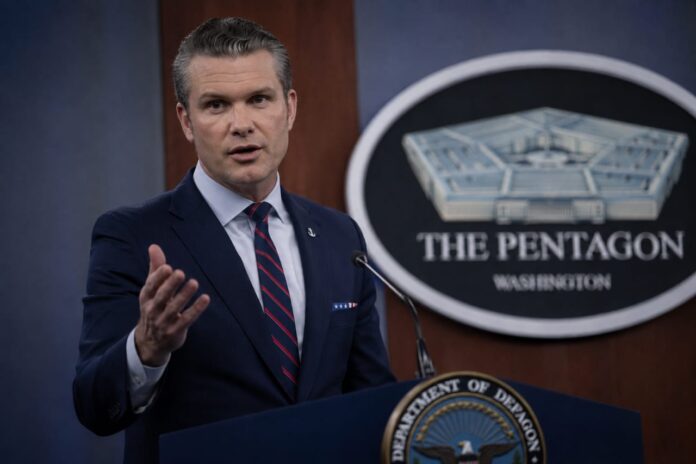
Story Highlights
- Defense Secretary Pete Hegseth has excluded congressional Democrats from classified briefings on Pentagon budget requests
- Senate Republicans, including retiring North Carolina Senator Thom Tillis, are urging the Defense Department to engage Democrats on funding matters
- The Pentagon is seeking $1.5 trillion in congressional appropriations amid ongoing military operations
- GOP senators argue that Democratic support may be necessary to secure passage of defense funding legislation
What Happened
Defense Secretary Pete Hegseth’s approach to communicating Pentagon budget priorities has drawn criticism from within Republican ranks over his apparent exclusion of Democratic lawmakers from classified briefings. The 46-year-old defense chief has been advancing substantial budget requests for his department while reportedly limiting access to sensitive briefing materials to Republican members of Congress. This strategy has prompted concern among fellow Republicans who recognize that securing defense appropriations requires broader legislative support.
The Defense Department is requesting $1.5 trillion in funding as military commitments continue across multiple theaters. Pentagon leadership has emphasized its commitment to working with Congress to ensure adequate resources for warfighters, though the administration’s approach to engaging the legislative branch has become a point of contention.
- Defense Secretary Hegseth has restricted classified briefings primarily to Republican members of Congress
- The Pentagon has requested $1.5 trillion in congressional appropriations
- Multiple Republican senators have expressed concerns about the exclusionary briefing strategy
- Pentagon spokesperson Sean Parnell stated the department remains committed to working with Congress on defense matters
Why It Matters
The tension over briefing access reflects a fundamental challenge in securing defense spending: Republican control of Congress does not guarantee automatic passage of all Pentagon requests without Democratic input on appropriations. Defense funding requires broad legislative consensus, and senators from both parties serve on critical committees that oversee military spending and readiness. By limiting Democratic access to classified threat assessments and budget justifications, the administration may inadvertently complicate its path to securing the full funding it seeks.
Senate Republicans recognize that isolating Democrats from the rationale behind major budget requests undermines the persuasive power of classified intelligence and strategic arguments. When lawmakers lack access to the same information, they cannot make fully informed decisions about supporting defense appropriations. This dynamic becomes especially significant when administration proposals face fiscal scrutiny or when national security priorities must be balanced against competing budgetary concerns.
- Defense appropriations require Democratic support for passage in the Senate
- Exclusion from classified briefings limits Democrats’ ability to evaluate Pentagon requests on full information
- Republican senators fear the current approach could jeopardize funding approval
- Bipartisan engagement strengthens the credibility of national security arguments
Political and Public Context
Senator Thom Tillis, a 65-year-old Republican from North Carolina who has occasionally diverged from the administration on certain issues, emerged as a vocal critic of the Pentagon’s briefing approach. His willingness to voice concern reflects broader Republican sentiment that effective governance requires engaging across party lines on matters of national security. Other GOP senators, including South Dakota’s Mike Rounds and Alaska’s Lisa Murkowski, echoed similar views about the necessity of bipartisan involvement in defense matters.
The criticism carries additional weight given that it originates from the party currently controlling the Senate and the presidency. When Republicans themselves question an administration strategy, it signals that the approach may lack practical viability. Democratic Senator Chris Coons noted that multiple Republican colleagues have privately expressed concern to him about the exclusion and have themselves urged Hegseth to reach out to Democrats on funding discussions. This suggests that concern about the briefing strategy extends beyond Democratic members who might be expected to voice such objections.
- Thom Tillis, a retiring Republican senator, publicly criticized the exclusionary briefing approach
- Mike Rounds and Lisa Murkowski expressed support for bipartisan engagement on defense matters
- Democratic Senator Chris Coons reported receiving encouragement from Republican colleagues to urge Pentagon outreach
- The criticism demonstrates that practical governance concerns transcend partisan differences on defense spending
The defense secretary’s exclusion of Democrats from key briefings could backfire, some Republicans warn.
https://t.co/76MZub9bI2— The Daily Beast (@thedailybeast) August 13, 2026
What Happens Next
The Pentagon faces pressure to adjust its engagement strategy with Congress as the appropriations process moves forward. The Defense Department has indicated its commitment to working with lawmakers on budget matters, and the mounting Republican criticism suggests that substantive changes to briefing practices may be forthcoming. Whether Secretary Hegseth will expand classified briefings to include Democratic members remains an open question that will likely influence the speed and ease with which defense funding legislation advances through the Senate.
The coming weeks will reveal whether the administration responds to Republican concerns by broadening its congressional engagement or maintains its current approach. The success of the $1.5 trillion budget request may well depend on how effectively the Pentagon addresses these complaints about access and transparency. Ongoing military operations and strategic considerations will continue to dominate the defense policy agenda, but the procedural question of how broadly to share classified information could significantly impact the legislative process.
- The Pentagon may expand classified briefings to include Democratic members of Congress
- Defense appropriations legislation will advance through the Senate in coming months
- The $1.5 trillion budget request’s ultimate fate may depend on bipartisan engagement success
- Republican pressure on this issue could lead to policy changes within the Defense Department
