

Story Highlights
- Democratic representative characterizes Republican lawmakers as performative in their approach to party leadership
- Multiple GOP members reportedly express private concerns about the direction of the party while maintaining public alignment
- Senate Republicans increasingly view the current political environment as challenging heading into midterm elections
- Party faces declining approval ratings and public skepticism on key policy areas
What Happened
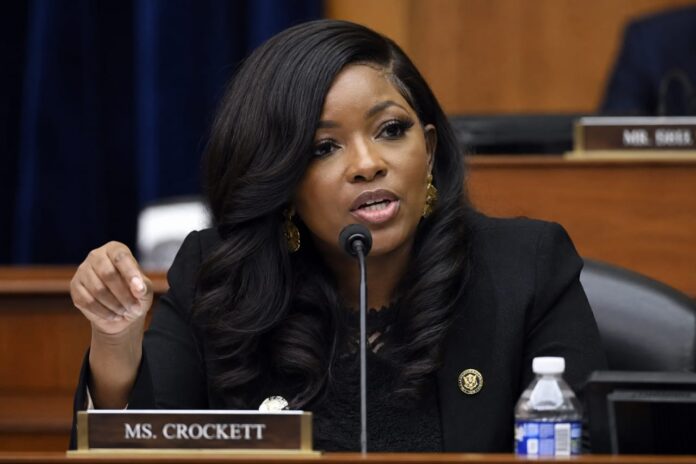
Rep. Jasmine Crockett of Texas made public remarks describing Republican colleagues as exhibiting performative behavior, suggesting that many GOP lawmakers privately harbor reservations about current party dynamics while publicly maintaining their positions. Speaking on a national television program, the Democratic representative described instances where House Republicans allegedly invite her to private settings and propose public confrontations designed to generate media attention.
Crockett’s characterization depicted a party struggling with internal coherence, where members feel compelled to maintain public positions despite private concerns. The comments suggest that political self-preservation drives much of the decision-making within Republican ranks, with lawmakers prioritizing electoral viability over publicly expressing reservations about party direction.
- Rep. Jasmine Crockett made the remarks during a Monday appearance on national television
- Comments addressed what she characterized as performative behavior among House Republicans
- Crockett described private approaches from GOP colleagues seeking conflict for media purposes
- The remarks emerged during a challenging political period for the Republican Party
Why It Matters
The characterization of Republican behavior as performative raises significant questions about party cohesion and authentic leadership direction. If members are prioritizing electoral survival over genuine policy advocacy, this dynamic fundamentally undermines the party’s ability to present a unified governing vision to voters. The apparent gap between private sentiment and public positioning suggests that strategic political calculation rather than substantive conviction may be driving decision-making at multiple levels of the party apparatus.
The broader implications extend to voter trust and party legitimacy. Constituents deserve representatives who authentically champion the policies and principles they campaign on, rather than those who engage in calculated positioning designed primarily for media consumption. The suggestion that lawmakers modify their public behavior to avoid negative consequences from party leaders raises concerns about intellectual honesty in the political process and the degree to which elected officials can freely exercise independent judgment.
- Party credibility suffers when public positions diverge significantly from private sentiments
- Voter confidence depends on authentic representation rather than strategic posturing
- Internal divisions weaken the party’s negotiating position on legislative priorities
- Leadership effectiveness declines when members prioritize self-preservation over policy objectives
Political and Public Context
The comments emerge during a period of significant challenge for Republicans navigating a complex political landscape. National polling data indicates substantial disapproval ratings, with approval figures hovering below 40 percent while disapproval exceeds 55 percent. These metrics suggest that the public remains skeptical of party leadership and direction, creating pressure on individual lawmakers to distance themselves from unpopular positions while maintaining party affiliation.
Senate Republicans have recently expressed concerns about the political environment, indicating that they view current circumstances as increasingly difficult for their electoral prospects. Their public statements have pointed to various policy disagreements and strategic concerns about resource allocation within party structures. This acknowledgment from the upper chamber suggests that internal party tensions are not merely perception but reflect genuine substantive disagreements about strategy, priorities, and effective governance.
The midterm election cycle adds urgency to these dynamics. Candidates facing competitive races often feel pressure to calibrate their public messaging based on district-specific considerations rather than national party orthodoxy. This natural tension between national party leadership and individual candidates’ electoral needs creates the environment for the performative behavior that Crockett described.
- National approval ratings for current Republican leadership remain below 40 percent
- Senate Republicans have publicly expressed strategic concerns about electoral viability
- Midterm election cycle intensifies pressure on individual candidates to calibrate messaging
- Policy disagreements exist regarding resource allocation and strategic priorities within party structures
GOP strategists 'tearing their hair out' as Trump insiders feed him bad data #AlterNet https://t.co/KLjnSaEOr8
— #TuckFrump (@realTuckFrumper) August 14, 2026
What Happens Next
The Republican Party faces a critical period in determining how it will address internal divisions and present a cohesive message to voters. Party leadership must decide whether to acknowledge and directly address the concerns that Crockett and others have identified, or to attempt to maintain unified public positioning despite private reservations among members. The approach taken will significantly influence both the party’s electoral prospects and its long-term institutional health.
Individual Republican candidates will continue navigating the tension between national party positioning and district-specific electoral calculations. As the midterm cycle progresses, this dynamic will likely generate additional public statements and positioning from GOP members attempting to balance these competing pressures. Media outlets will continue scrutinizing any apparent inconsistencies between public and private statements from Republican officials.
The party’s leadership must also address the underlying concerns that drive the performative behavior Crockett described. Whether these concerns relate to policy direction, strategic judgment, or resource allocation, substantive resolution of underlying disagreements would eliminate the incentive structure that produces the behavior she characterized. Without addressing root causes, the appearance of internal division will likely persist and potentially intensify as electoral pressures mount.
- Party leadership must determine how to address internal divisions and their public visibility
- Individual candidates will continue calibrating positions based on district-specific electoral calculations
- Substantive resolution of underlying policy and strategic disagreements remains necessary
- Media scrutiny of apparent inconsistencies between public and private Republican positioning will likely continue
