

Story Highlights
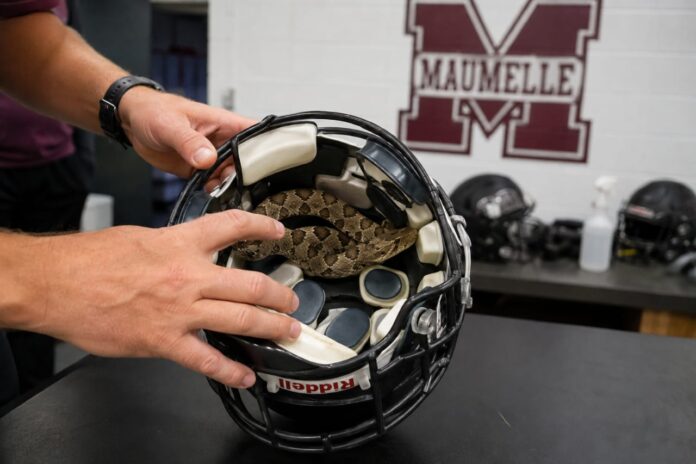
- A Maumelle High School football player in Arkansas discovered a two-foot cottonmouth snake inside his helmet during practice last week
- The player wore the helmet for nearly an hour before noticing unusual movement and bringing it to coaching staff for inspection
- Police officers used water to force the venomous pit viper out of the helmet, after which animal services removed the snake to a wooded area
- The incident has prompted renewed emphasis on equipment safety protocols and thorough pre-practice inspections
What Happened
A high school football player at Maumelle High School in Arkansas encountered an alarming discovery during practice when he detected unusual movement coming from inside his helmet. Following warmups, the student felt something shifting within his headgear and brought the equipment to an assistant coach for examination. Upon inspection, a two-foot cottonmouth snake was found positioned behind the helmet’s padding.
The venomous pit viper proved difficult to remove from its makeshift shelter. Law enforcement officers arrived at the scene and resorted to pouring water into the helmet to force the reluctant reptile out. Once extracted, the snake was secured in a bag. Animal services technicians arrived shortly thereafter, confirmed the identification of the snake as a cottonmouth, and transported it to a remote wooded location far from school grounds to ensure the safety of students and staff.
- Maumelle High School student discovered the snake after practice warmups
- Two-foot cottonmouth found behind padding inside the football helmet
- Police used water to extract the snake; animal services transported it away from campus
- The player had worn the helmet for approximately one hour before the discovery
Why It Matters
This incident raises significant concerns about equipment safety in high school athletics and the potential for dangerous wildlife to inhabit gear stored in outdoor or semi-outdoor facilities. The fact that the player wore the helmet for nearly an hour without being bitten represents an extraordinary stroke of fortune, given the toxicity of cottonmouth venom. Animal services officials have emphasized how unusual and remarkable this situation was, highlighting the unpredictable nature of such encounters and the importance of awareness among athletes and coaching staff.
The discovery underscores the need for comprehensive pre-practice safety protocols, particularly in regions where venomous snakes are present. Cottonmouths rank among the second-most venomous snake species found in Arkansas, making this a genuine health hazard rather than merely an inconvenient discovery. The incident has implications for how athletic programs store, maintain, and inspect equipment, especially during warmer months when snakes are more active and likely to seek shelter in dark, enclosed spaces.
- Player faced serious health risk from one of Arkansas’s most venomous snake species
- Equipment safety protocols need enhancement to prevent similar incidents at other schools
- Athletic departments must implement thorough inspection procedures before equipment use
- Incident highlights broader facility management and storage concerns for outdoor sports programs
Political and Public Context
Wildlife encounters at school facilities have become increasingly notable across the United States, particularly in states with diverse snake populations. Arkansas, located in the southeastern region known for abundant wildlife, experiences regular interactions between humans and reptiles. School administrators and athletic directors have had to develop emergency protocols for handling animal intrusions on campus grounds.
Safety in high school athletics has been a subject of growing attention in recent years, encompassing everything from heat-related illness prevention to concussion protocols. This incident adds a unique dimension to the ongoing conversation about comprehensive athlete safety, including environmental factors that extend beyond the typical scope of sports medicine and injury prevention. The situation at Maumelle High has prompted discussions within the athletics community about standardized equipment inspection procedures and facility management best practices.
- Arkansas experiences regular wildlife interactions due to geographic location and climate
- High school athletic safety protocols have expanded to address multiple risk categories beyond injury
- Equipment storage and inspection standards vary significantly among schools nationwide
- Similar wildlife incidents have been documented at other educational facilities in reptile-prone regions
An Arkansas high school football player discovered a venomous snake in the helmet he was wearing during practicing for almost an hour last week. https://t.co/g8rcKkLRlm
— NBC Bay Area (@nbcbayarea) August 12, 2026
What Happens Next
The head coach at Maumelle High has reinforced expectations that all players examine their equipment thoroughly before use, with particular attention to checking for any insects or other potential hazards. The player involved continued with practice after switching to a different helmet, demonstrating both the player’s resilience and the school’s ability to manage the situation without disrupting the practice schedule.
Athletic programs throughout Arkansas and similar regions will likely review their equipment storage protocols and safety procedures in light of this incident. Coaching staffs may implement more rigorous pre-practice inspection routines, and facilities managers may evaluate storage areas to reduce the likelihood of wildlife accessing equipment. This incident serves as a cautionary reminder of the importance of comprehensive safety awareness in athletic environments and the need for preparedness in dealing with unexpected hazards.
- Coaching staff has emphasized mandatory equipment inspection procedures before practice
- The affected player continued practice with replacement helmet after the incident
- Schools in wildlife-prone areas may adopt enhanced equipment storage and inspection protocols
- Athletic programs will likely communicate safety guidelines to coaches and players regarding environmental awareness
