

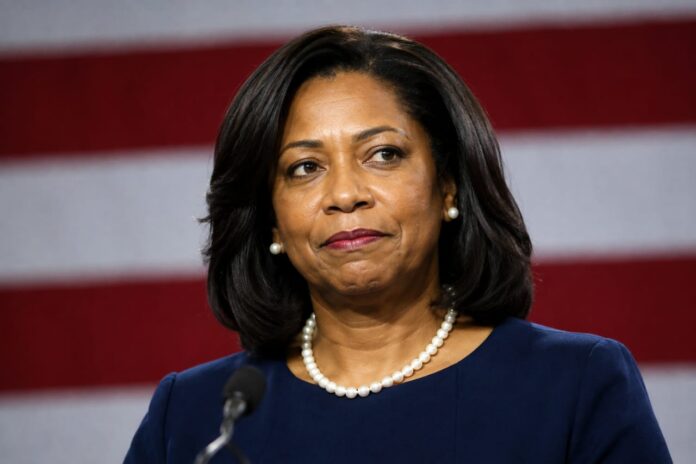
Story Highlights
- Darline Graham failed to secure the Republican nomination outright in South Carolina’s special Senate election, forcing a runoff on August 25
- Graham led the field with 32.8 percent of votes, but fell short of the 50 percent threshold needed to win the nomination
- Questions about her conservative credentials and lack of prior electoral experience undermined her candidacy despite presidential backing
- Her campaign faced scrutiny over past donations and positions on key conservative issues including abortion and diversity initiatives
What Happened
South Carolina’s Republican Senate special election delivered an unexpected result when Darline Graham, the early favorite with strong presidential backing, failed to secure enough votes to win the nomination outright. The Associated Press projected Graham in first place with 32.8 percent of the vote when approximately 48 percent of ballots had been counted. Her performance, while leading the field, fell short of the 50 percent threshold required to claim the GOP nomination without a runoff election.
The race now heads to a runoff scheduled for August 25, where Graham will face the second-place finisher in a head-to-head contest. Representatives Ralph Norman and Russell Fry battled closely for the second spot, with Norman at 23.3 percent and Fry at 22.1 percent respectively. The special election was called to fill the Senate seat left vacant by the passing of Graham’s brother, Senator Lindsey Graham, whose current six-year term extends beyond the 2024 election cycle.
- Graham received 32.8 percent of votes with 48 percent counted; Norman at 23.3 percent, Fry at 22.1 percent
- No candidate reached the 50 percent threshold required for outright nomination victory
- Runoff election scheduled for August 25 between Graham and second-place finisher
- Graham appointed to fill Senate seat after her brother’s passing
Why It Matters
This race demonstrates that even substantial presidential support cannot guarantee political success when voter concerns about a candidate’s authenticity and record take hold. Graham’s struggle highlights the challenges facing first-time political candidates, particularly when questions about their ideological consistency persist. The president had offered Graham his endorsement before she formally announced her candidacy, and his backing came with considerable political capital. Yet despite this advantage and a concentrated campaign effort in the final days, she could not consolidate enough support to avoid a runoff.
The questions plaguing Graham’s campaign centered on her conservative bona fides and the transparency of her positions on issues critical to Republican voters. Her lack of electoral experience became a liability that opponents exploited effectively. Throughout her campaign, she worked to establish her conservative credentials by endorsing various legislative priorities ranging from abortion restrictions to stricter immigration policies. She also voted to confirm an attorney general nominee and pledged support for the White House’s election integrity legislation. These efforts, however, were not sufficient to overcome lingering doubts about where she truly stood on fundamental conservative principles.
- Presidential endorsements cannot guarantee election success when voter concerns about candidate authenticity are significant
- First-time candidates without clear electoral track records face heightened scrutiny on ideological consistency
- Graham’s failure to win outright nomination suggests her conservative messaging did not fully persuade Republican primary voters
- The race outcome provides ammunition to critics questioning her readiness for higher office
Political and Public Context
Graham’s struggles stand out given the president’s decision to back her early and decisively. He held a tele-rally on the eve of election day to encourage voters to support her, describing her as tough and the perfect successor to her brother’s legacy. This direct involvement from the White House underscored his personal commitment to her success. The appointment of Graham to temporarily fill the seat following her brother’s passing gave her an incumbent advantage, yet she could not translate that position into a first-ballot victory.
Her opponents capitalized on questions about her record and statements made before her electoral ambitions crystallized. Representatives Norman and Fry pointed to their own established conservative voting records and public service. Former Representative and Governor Mark Sanford also competed in the primary, offering voters an alternative with a lengthy political resume. The controversy surrounding Graham’s prior donation to a state legislator who had blocked an abortion restriction measure particularly resonated with social conservative voters concerned about her genuine commitment to their priorities. Additionally, her decades of government service drew scrutiny when critics highlighted her involvement with diversity and inclusion initiatives at the state level, at a time when Republicans have mounted sustained campaigns against such programs.
- White House held tele-rally for Graham the day before election to boost her candidacy
- Graham’s appointment to fill Senate seat provided incumbent advantage that failed to ensure primary victory
- Multiple experienced Republicans in field offered voters alternatives with established conservative records
- Prior donation to legislator who blocked abortion ban fueled doubts about her commitment to conservative priorities
Trump-Backed Darline Graham Underwhelms, Faces Ralph Norman in Senate Runoffhttps://t.co/0KIuKeCcLY
— The Semiquincentential Hat (@ThePoliticalHat) August 12, 2026
What Happens Next
Graham now faces a critical runoff election where she must address the concerns that prevented her from winning the nomination outright. The August 25 runoff will pit her against either Norman or Fry, both of whom have demonstrated stronger appeal to a significant portion of the Republican electorate. Graham will need to consolidate support and provide more convincing answers to questions about her ideological positioning and commitment to conservative principles. The White House will likely assess whether additional support could help her secure the runoff victory, particularly given the president’s substantial early investment in her candidacy.
The dynamics of a two-person runoff differ markedly from a multi-candidate primary. Graham may benefit from the elimination of other candidates and the ability to focus her message more sharply. However, her opponent will also have similar opportunities to refine their approach and appeal directly to voters who expressed reservations about her. The outcome of the August 25 contest will determine who represents the Republican Party in the general election and ultimately fills the remainder of Lindsey Graham’s term. Conservative voters will be watching closely to see whether Graham uses the runoff period to provide clearer answers about her positions and to rebuild confidence in her conservative credentials.
- Runoff scheduled for August 25 between Graham and second-place primary finisher
- Graham must address voter concerns about conservative credentials and ideological clarity before runoff
- Two-person runoff format allows both candidates to focus messaging and appeal directly to supporters
- Outcome will determine Republican nominee and ultimate Senate seat holder for remainder of six-year term
