

Story Highlights
- Stacy Librandi arrived in Haiti in January 2010 as an untrained volunteer following the magnitude 7 earthquake, planning to stay one week
- Sixteen years later, she remains in Port-au-Prince leading HERO, Haiti’s largest emergency medical ambulance and medevac service
- Librandi’s work began with organizing supply distribution at the Port-au-Prince airfield, establishing systems that transformed emergency response capacity
- Her journey reflects how individual initiative and local problem-solving can address critical gaps in disaster relief infrastructure
What Happened
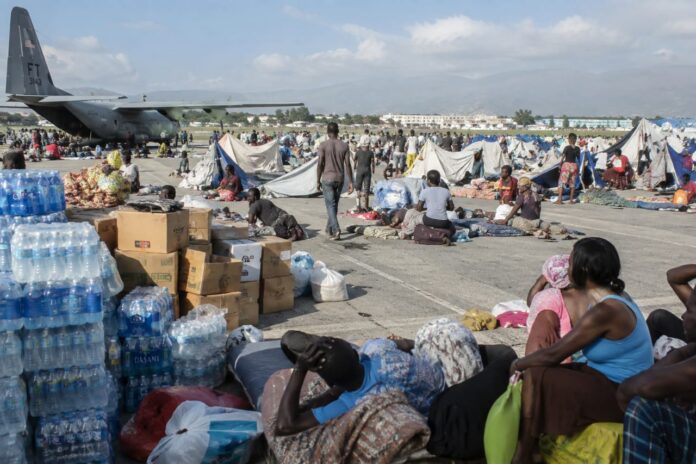
Stacy Librandi arrived at the Port-au-Prince airfield in late January 2010 with minimal preparation for what awaited her. The scene before her reflected the magnitude of the humanitarian crisis unfolding across Haiti following the catastrophic 7.0 magnitude earthquake that had struck the nation days earlier. Approximately a thousand people occupied the airfield, living in temporary shelters amid sweltering Caribbean heat while supplies lay exposed on the tarmac, including food, water, clothing, and medical aid in various states of organization.
Librandi came as part of a volunteer contingent, carrying only a small backpack with camping supplies and initial plans to remain for approximately one week. Her initial observations focused on the inefficiencies in the disaster response system. She noted supplies deteriorating unused while critical needs went unmet in surrounding camps. Rather than departing as scheduled, she remained and began implementing organizational systems to address these gaps. She organized supply distribution efforts, enlisted local assistance including translation services, and coordinated systematic aid delivery to populations in nearby encampments. What began as immediate crisis response evolved into sustained humanitarian work that would define the next 16 years of her life.
- Arrival date: Late January 2010, following the magnitude 7 earthquake in Haiti
- Initial observations: Supplies rotting on tarmac, inefficient distribution systems, unmet humanitarian needs
- First actions: Organized supply distribution using box trucks, established systematic aid delivery with local community participation
- Duration: Extended from planned one week to two weeks, then three weeks, ultimately establishing permanent presence
Why It Matters
The significance of Librandi’s work extends beyond individual humanitarian efforts to represent broader lessons about emergency response systems in developing nations facing catastrophic disasters. Haiti’s healthcare and emergency services infrastructure faced extraordinary strain following the 2010 earthquake, with existing ambulance and medevac capabilities severely inadequate to address mass casualty situations. The development of HERO as the largest emergency medical ambulance and medevac service in Haiti addressed a critical infrastructure gap that threatened lives during medical emergencies and disaster situations.
Librandi’s approach to problem-solving offers insights into effective disaster relief methodology. Her initial organizing efforts demonstrated that systematic coordination and community engagement could overcome obstacles that might otherwise paralyze relief operations. The transition from temporary crisis response to permanent institutional infrastructure reflects how immediate humanitarian action, when sustained with purpose and organization, can transform emergency response capacity. Her work has implications for how voluntary assistance can evolve into professional emergency services that serve entire populations.
The personal trajectory also illustrates resilience and reinvention. Librandi arrived in Haiti having experienced significant personal setbacks, including housing loss, failed business ventures, and family disruptions. Her volunteer work became a transformative experience that provided both purpose and professional development in a completely new field.
- Haiti’s emergency medical infrastructure: Severely inadequate following the 2010 earthquake, with limited ambulance and medevac services available
- HERO’s impact: Now operates as Haiti’s foremost emergency medical ambulance and medevac service, serving the entire nation
- Systemic lesson: Demonstrates how individual initiative and community engagement can build institutional capacity in underresourced settings
- Professional development: Transformed untrained volunteer into leader of Haiti’s largest emergency medical service organization
Political and Public Context
Haiti’s development and humanitarian challenges have drawn international attention for decades, with disaster response capacity remaining a persistent concern across successive administrations and international organizations. The 2010 earthquake represented one of the most devastating natural disasters in recent hemisphere history, killing an estimated 230,000 people and displacing nearly 1.5 million others. The catastrophe exposed critical weaknesses in Haiti’s healthcare, emergency services, and disaster response infrastructure, challenges that persisted well beyond immediate reconstruction efforts.
International humanitarian response to the Haiti earthquake involved numerous organizations, government agencies, and volunteer initiatives from across the Western Hemisphere and beyond. The scale of destruction overwhelmed existing local capacity and required sustained international support. However, as international attention and resources gradually declined in subsequent years, local organizations and committed individuals became increasingly important to maintaining emergency response capabilities and ongoing development work. Librandi’s transition from temporary volunteer to permanent organizational leader reflects this broader pattern of international humanitarian work evolving into locally-based institution building.
The story of individual American volunteers working in Haiti also connects to broader narratives about international development assistance, disaster relief, and the role of non-governmental organizations in addressing humanitarian crises. Haiti’s continued vulnerability to natural disasters, including hurricane seasons and earthquake risks, maintains ongoing need for robust emergency medical services and disaster response infrastructure.
- 2010 earthquake: 7.0 magnitude disaster killing approximately 230,000 people and displacing nearly 1.5 million
- Infrastructure challenges: Haiti’s healthcare and emergency services faced critical inadequacies exposed by the disaster
- International response: Massive initial humanitarian intervention eventually transitioned to locally-based organizations and leadership
- Ongoing vulnerability: Haiti continues facing natural disaster risks including hurricanes and seismic activity
What Happens Next
HERO’s continued operations and potential expansion remain central to Haiti’s emergency medical response capacity. As the nation’s largest ambulance and medevac service, the organization faces ongoing resource challenges typical of healthcare infrastructure in developing nations. Sustaining and expanding capabilities requires consistent funding, equipment maintenance, staff training, and coordination with other health sector institutions.
Librandi’s ongoing leadership role in Haiti positions her to influence emergency response development as the nation continues rebuilding and strengthening healthcare systems. Questions remain about how local organizations like HERO can achieve financial sustainability, expand service reach to underserved regions, and maintain equipment and training standards. The model she has developed may offer insights for other nations and regions facing emergency response capacity gaps.
The broader question of how international humanitarian work transitions from emergency response to permanent institutional capacity remains relevant not only for Haiti but for disaster-affected regions globally. Librandi’s experience suggests that individual commitment combined with systematic organization can create lasting institutional change, though the long-term sustainability of such efforts depends on adequate resources, local community support, and continued organizational focus.
- Service expansion: Potential growth of HERO’s ambulance and medevac capabilities to serve more regions of Haiti
- Sustainability questions: Addressing funding, equipment maintenance, and staff development for long-term operations
- Training and standards: Ensuring emergency medical personnel maintain professional certification and response readiness
- Institutional development: Establishing HERO as permanent cornerstone of Haiti’s emergency medical infrastructure
