

Story Highlights
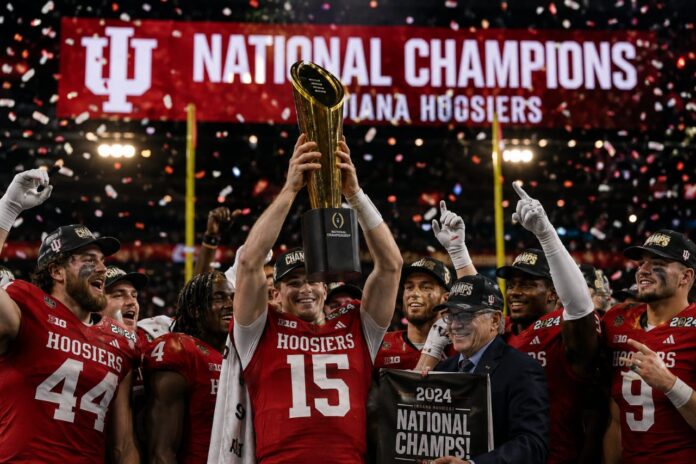
- Indiana University’s football program completed an undefeated season and won the first CFP National Championship in school history
- Head coach Curt Cignetti implemented a strategy emphasizing production over potential through strategic transfer portal recruiting
- The program transformed from having over 700 losses historically to becoming a symbol of success on campus
- Former players describe a dramatic shift in campus culture and atmosphere surrounding the football team
What Happened
Indiana University’s football program has undergone a dramatic transformation, culminating in an undefeated season and the program’s first-ever CFP National Championship victory. This achievement marks a striking contrast to the program’s historical struggles, during which it accumulated over 700 losses and held the distinction of being the losingest program in major college football history. The turnaround represents one of college sports’ most remarkable reversals in recent years.
The success stems largely from the strategic approach implemented by head coach Curt Cignetti, who prioritized recruiting players demonstrating proven performance rather than focusing on raw potential. Cignetti utilized the transfer portal extensively, bringing in experienced players from programs outside the highest-ranked teams in the NCAA. A significant advantage in executing this strategy came from an NCAA rule change that eliminated the requirement for transferred players to sit out a year before competing. This regulatory shift effectively created what has been described as free agency for college football, allowing rapid roster adjustments.
- Indiana University completed an undefeated season and won the first CFP National Championship in program history
- Head coach Curt Cignetti emphasized recruiting players with demonstrated production over potential
- The program utilized the transfer portal to build the roster with experienced players from lower-ranked programs
- NCAA rule changes eliminated the one-year waiting period for transfer eligibility, enabling rapid roster construction
Why It Matters
This championship represents far more than a single sports achievement; it signifies a fundamental shift in how a major university can rebuild and revitalize its athletic program. The success demonstrates that sustained losing streaks can be reversed through deliberate strategic planning, targeted recruitment, and cultural transformation. For Indiana University, the victory provides validation of new approaches to team building that prioritize demonstrated track records over untested talent.
The championship has generated tangible effects on campus culture and community engagement. Campus atmosphere regarding the football program has shifted dramatically, with former players noting an electric environment and increased enthusiasm among the student body and broader university community. This cultural transformation extends beyond athletics, potentially affecting institutional pride, enrollment interest, and overall university visibility. The program now serves as a point of pride and unity for the Indiana University community after decades of underperformance.
The achievement also influences broader conversations within college football about recruitment strategies and the value of the transfer portal. Other programs may examine Indiana’s approach as a model for roster construction, particularly regarding the emphasis on player production history and the utilization of available transfer opportunities.
- Demonstrates that sustained losing streaks can be reversed through strategic planning and cultural change
- Generated dramatic shift in campus atmosphere and community engagement with the athletic program
- Provides model for other programs regarding transfer portal utilization and recruitment strategy
- Increases university visibility and institutional pride following decades of poor performance
Political and Public Context
Indiana University’s football turnaround occurs within a broader context of significant changes in college athletics. The evolution of the transfer portal has fundamentally altered how programs construct rosters, creating opportunities for programs outside traditional powerhouses to compete effectively. The removal of transfer restrictions has democratized player movement and allowed programs with strong coaching vision and organizational clarity to acquire experienced talent more readily.
The championship also reflects changing attitudes within college football regarding what constitutes successful program building. Historically, major programs relied heavily on high school recruiting rankings and developmental prospects. Indiana’s success using proven college performers demonstrates an alternative pathway that emphasizes demonstrated ability and work ethic. This approach appeals particularly to players who may have been overlooked by traditional recruiting priorities, creating a team chemistry built around shared experience of being underestimated.
The transformation of Indiana’s program provides context within the broader narrative of American collegiate sports, where institutional investment, strategic vision, and cultural change can overcome historical disadvantages. The success carries particular resonance for communities and institutions seeking examples of organizational turnaround and renewed purpose.
- Transfer portal expansion has altered competitive landscape and enabled non-traditional powerhouses to acquire experienced talent
- Demonstrates alternative recruitment model emphasizing proven performance over high school rankings
- Reflects changing priorities in college football regarding team construction and player development
- Provides example of institutional transformation through strategic leadership and cultural realignment
Indiana head football coach Curt Cignetti responds to the new Purdue AD's comments about IU and championship pedigree: pic.twitter.com/AInnYS8yXx
— CBS4 Indy (@CBS4Indy) August 11, 2026
What Happens Next
Indiana University faces the challenge of sustaining the championship success and maintaining momentum in future seasons. The program must balance continued roster improvement through the transfer portal with developing young talent for long-term competitiveness. Head coach Curt Cignetti will need to manage expectations while continuing the strategic approach that produced the championship season.
The immediate focus centers on maintaining team cohesion and retention of key contributors while addressing any roster changes necessary for continued competitiveness. The program will likely attract increased attention from prospective transfers and recruits interested in joining a winning culture. Additionally, Indiana’s success may influence how other programs approach recruitment and roster construction, potentially creating broader changes in college football strategy.
The university community and national college football observers will watch to determine whether this championship represents a sustainable shift in the program’s trajectory or a singular remarkable achievement. The success of future seasons will provide important context regarding the viability of Indiana’s strategic approach and its potential as a model for other programs seeking to rebuild from historical underperformance.
- Program must sustain championship success while balancing roster development and transfer portal management
- Increased transfer portal interest from experienced players seeking to join winning culture
- National college football programs may adopt similar recruitment and team-building strategies
- Future seasons will determine whether championship represents sustainable program transformation or singular achievement
