

Story Highlights
- President Donald Trump says negotiations with Iran are continuing and a threatened massive U.S. attack may no longer be necessary.
- The president had said one day earlier that he was close to deciding on strikes larger than the opening operation of the war.
- No final attack order had been issued, although American forces remain positioned for a major escalation.
- Oil remains near $100 a barrel as threats to the Strait of Hormuz and Red Sea continue unsettling global markets.
What Happened
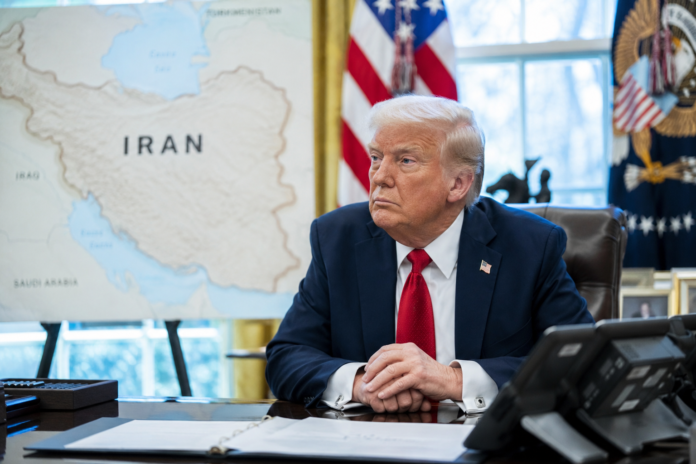
President Donald Trump has left open the possibility of a major new attack on Iran while signalling that continuing negotiations could prevent another dramatic escalation.
The president said the United States remained “locked and loaded,” but indicated that the massive operation he had recently discussed might not be necessary if diplomatic efforts produce results.
The remarks represented a shift from his statement one day earlier, when he said he was close to making a decision on an attack larger than the strikes that opened the conflict.
- No final decision on a new major operation had been announced.
- U.S. officials said no fresh attack orders had been transmitted to the military.
- American and allied forces remain prepared for a rapid expansion of combat.
- Regional mediators continue pressing Washington and Tehran toward an agreement.
The administration is weighing whether continued pressure can force Iran to accept terms addressing attacks on shipping, access through the Strait of Hormuz and the broader regional conflict.
Trump has repeatedly warned that Iran will face severe consequences if it or its regional allies continue targeting American forces, commercial vessels or U.S. partners.
At the same time, the White House has maintained that Tehran still has an opportunity to avoid a larger confrontation by accepting a workable settlement.
Why It Matters
The president’s latest position shows that the administration is attempting to preserve maximum military pressure without closing the door on diplomacy.
Publicly keeping a large attack under consideration strengthens Washington’s leverage while giving Iranian leaders an incentive to accept a negotiated off-ramp.
- The military threat demonstrates that the United States is prepared to escalate.
- Continuing negotiations offer Iran a way to avoid additional destruction.
- The dual approach allows the president to respond quickly if talks collapse.
- A diplomatic agreement could reduce risks to American troops and global energy markets.
The decision carries significant consequences because the conflict has expanded beyond direct U.S.-Iran exchanges.
Iranian attacks have affected Gulf nations hosting American forces, while Houthi operations in the Red Sea have threatened another major shipping corridor.
A larger U.S. operation could target military bases, missile systems, command centres, bridges, power infrastructure or other facilities used to support Iranian attacks.
Such action could weaken Tehran’s operational capacity, but it could also trigger further retaliation against American personnel and regional partners.
Political and Public Context
Trump has faced growing congressional pressure to define the objectives and endpoint of the Iran campaign.
The House has passed another resolution seeking to restrict the president’s war authority, although the measure does not by itself force an immediate end to military operations.
The Senate previously rejected a parallel attempt to limit the administration’s authority.
- Supporters argue the president must retain flexibility to protect American forces.
- Critics want Congress to exercise greater control over an expanding conflict.
- Republican defections show some concern about the duration and cost of the campaign.
- The administration says operational restrictions could benefit Iran during active hostilities.
The White House’s position is that military preparedness and credible threats are necessary to secure a serious diplomatic agreement.
Trump has also argued that Iran cannot be allowed to threaten maritime commerce, attack U.S. personnel or rebuild capabilities that could endanger American allies.
The president’s willingness to reconsider a massive attack if negotiations advance allows him to present restraint as conditional rather than a retreat under pressure.
What Happens Next
Diplomatic contacts will determine whether the United States moves toward a temporary ceasefire or resumes major combat operations.
Regional mediators have been working on proposals involving an immediate pause in fighting and measures to restore commercial movement through the Strait of Hormuz.
The administration is expected to judge any proposal by whether Iran provides enforceable commitments rather than temporary assurances.
- Iran may be asked to halt attacks on U.S. forces and commercial shipping.
- Washington will seek guarantees concerning the Strait of Hormuz.
- The United States may demand limits on missile, proxy or nuclear activities.
- Military action remains possible if Tehran rejects the proposed terms.
Oil and gasoline markets will react quickly to signs that negotiations are succeeding or failing.
A confirmed ceasefire could reduce the risk premium that pushed crude prices above $100 a barrel.
Another large American attack, by contrast, could raise fears of further disruption in both the Persian Gulf and Red Sea.
For now, Trump is keeping both paths available.
The president has demonstrated that the United States is prepared for a much larger operation, but he is also giving diplomacy an opportunity to deliver an agreement that protects American troops, restores shipping and avoids unnecessary escalation.
