

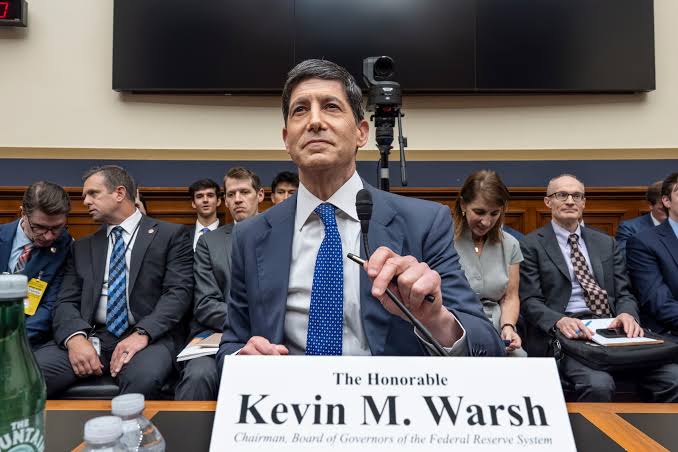
The Federal Reserve’s latest regional business survey found that U.S. economic activity ticked up modestly in recent weeks, employment rose, and businesses and households increasingly believe inflation pressures are easing, according to a report released Wednesday. The findings arrive as new Fed Chair Kevin Warsh prepares to lead his second interest rate-setting meeting in two weeks, a high-stakes moment given the persistent friction between the Trump administration and the central bank over the pace of rate cuts. The data offers a note of cautious optimism after months of uneven signals from the labor market.
Story Highlights
- The Fed’s Beige Book survey found economic activity rising slightly with employment gains across multiple districts
- Businesses and households reported growing confidence that inflation pressures may be moderating
- The report will inform Fed Chair Kevin Warsh’s second policy meeting since taking over the central bank
- June’s jobs report showed only 57,000 new jobs, about half of economist expectations, with May revised down sharply
What Happened
The Federal Reserve released its periodic business conditions survey, commonly known as the Beige Book, on Wednesday, finding that economic activity across the central bank’s regional districts increased slightly in recent weeks. The report also indicated that employment rose modestly, and that a growing share of companies and households believe inflationary pressures may finally be moderating after a prolonged period of elevated price growth that has weighed on consumer sentiment throughout much of Trump’s second term.
The survey carries particular significance because it will directly inform policy deliberations at the Fed’s upcoming interest rate meeting, set to take place in the coming weeks. It will mark the second policy meeting overseen by Kevin Warsh, who was sworn in as Federal Reserve chair earlier this year in a ceremony attended by President Trump at the White House. Warsh’s appointment followed a lengthy and, at times, contentious selection process, as Trump had repeatedly and publicly pressed for a Fed chair more willing to cut interest rates aggressively to stimulate economic growth.
The Beige Book findings follow a mixed run of recent economic data. The June jobs report, released earlier this month, showed nonfarm payrolls increased by just 57,000, roughly half of what economists had forecast, while May’s already modest gain of 172,000 was revised sharply downward to 129,000. That weaker-than-expected labor market performance had fueled speculation that the Fed might move to cut rates sooner rather than later, even as the central bank continues to weigh those signals against still-elevated inflation readings tied in part to tariff-driven price increases and the economic disruption stemming from the ongoing conflict with Iran.
According to the Treasury Department’s own second-quarter economic assessment, average monthly private payroll growth in the first quarter of 2026 surged to more than two and a half times the monthly average recorded in 2025, and business investment rose more than 10 percent during the same period, driven largely by spending on new equipment and intellectual property. Treasury officials characterized the broader economic landscape as favorable, though they acknowledged that geopolitical uncertainty, particularly stemming from the Iran conflict, remains a meaningful upside risk to the inflation outlook going forward.
Why It Matters
The Beige Book findings matter enormously for millions of American households and businesses whose financial decisions hinge on where the Fed steers interest rates over the coming months. A signal that inflation is moderating could pave the way for the rate cuts Trump has long demanded, potentially lowering borrowing costs for mortgages, auto loans, and business financing at a moment when many Americans continue to report financial strain from persistently high prices.
At the same time, the report underscores the delicate position Warsh occupies as Fed chair. Having been appointed in part because of his perceived alignment with Trump’s preference for lower rates, Warsh must still navigate the Fed’s institutional independence and its dual mandate of stable prices and maximum employment. Moving too quickly to cut rates risks reigniting inflation, particularly with energy prices already climbing due to the Iran conflict, while moving too slowly risks drawing continued public criticism from the president and further political pressure on the institution.
The labor market’s uneven performance, illustrated by the weak June jobs figures and steep downward revisions to prior months, adds urgency to the Fed’s deliberations. Sustained softness in hiring, even amid otherwise resilient business investment, could signal underlying fragility in the broader economy that the encouraging inflation data alone cannot offset.
Economic and Global Context
The Beige Book’s cautiously optimistic inflation read comes against the backdrop of an economy still absorbing the effects of the administration’s extensive tariff regime. The Tax Foundation estimates that tariffs imposed during 2025 amounted to an average tax increase of roughly $1,000 per U.S. household, with new Section 122 and Section 232 tariffs expected to add another $700 per household in 2026. The Tax Policy Center similarly projects that once fully phased in, current tariff policy will push the average effective tariff rate to roughly 10.1 percent and generate an estimated $706 billion in federal revenue over an eleven-year window.
These tariff-related costs complicate the inflation picture the Fed must navigate, since price pressures stemming from import duties operate differently than traditional demand-driven inflation and may prove more persistent. Meanwhile, rising energy prices tied to the Iran conflict, with gasoline prices climbing to $3.89 a gallon nationally, add another layer of upward pressure on headline inflation figures that could complicate the more encouraging underlying trends identified in the Beige Book.
Globally, financial markets are closely watching the Fed’s next moves, as U.S. interest rate policy carries significant spillover effects for currency valuations, capital flows, and borrowing costs in economies around the world. A pivot toward rate cuts would likely weaken the dollar and could ease financial conditions in emerging markets that have struggled under a strong dollar environment in recent years.
Implications
For consumers, the coming weeks will be critical in determining whether relief on borrowing costs materializes. If the Fed interprets the Beige Book findings alongside upcoming inflation data as sufficient justification, rate cuts could arrive as soon as the September or December meetings, according to market expectations reflected in futures pricing.
For businesses, particularly those in interest-rate-sensitive sectors like housing and manufacturing, clarity on the Fed’s direction will shape investment and hiring decisions for the remainder of the year. Continued uncertainty, by contrast, risks prolonging the cautious hiring patterns that have already contributed to weaker-than-expected job growth.
For policymakers, the interplay between Fed independence and White House pressure will remain a defining storyline. Warsh’s handling of the coming rate decision will be closely scrutinized as an early test of whether his tenure signals a meaningful shift in the central bank’s traditional posture or a continuation of measured, data-driven policymaking despite political pressure from the administration that appointed him.
Sources
“Economic Activity on the Rise and Inflation May Be Improving, Fed Survey Shows”
