

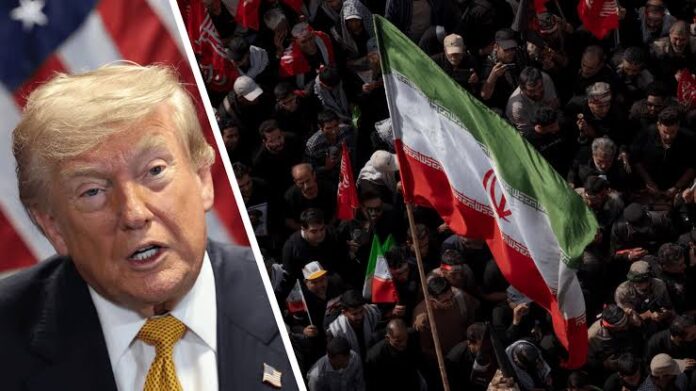
Story Highlights
- President Donald Trump declared that the U.S.-Iran ceasefire was over while keeping diplomatic negotiations available.
- Trump said Iran requested further talks, although Tehran publicly disputed that account.
- Israel reportedly provided Washington with intelligence concerning a new Iranian plot to assassinate Trump.
- Qatari representatives traveled to Iran as regional mediators attempted to prevent another major escalation.
What Happened
President Donald Trump announced that the ceasefire between the United States and Iran was no longer in effect but confirmed that Washington remained willing to continue negotiations with Tehran.
“The Islamic Republic of Iran has asked us to continue ‘talks.’ We have agreed to do so, but the United States has stated to them, in no uncertain terms, that the Cease Fire is OVER!” Trump wrote on Truth Social.
Trump’s declaration followed renewed clashes and disputes over commercial shipping through the Strait of Hormuz. U.S. forces conducted strikes against Iranian targets after attacks on vessels transiting the strategically important waterway.
Iran subsequently launched missile and drone attacks against American facilities and regional partners, raising fears that the conflict could again expand across the Middle East.
- Trump ended the existing ceasefire framework rather than closing diplomatic channels entirely.
- The United States continued discussing possible arrangements through regional mediators.
- Iran denied requesting negotiations directly from Washington.
- Both sides accused the other of violating earlier commitments.
Trump’s approach allows the United States to respond militarily to Iranian aggression without surrendering the possibility of a negotiated settlement.
The president’s message also placed responsibility on Tehran to demonstrate through its actions that further negotiations would be worthwhile.
Iranian officials maintained that they had complied with the earlier agreement and accused Washington of violating provisions concerning military deployments and regional activity.
Why It Matters
Trump’s declaration sends Iran a clear warning that attacks on American interests, regional allies, or commercial shipping will carry consequences.
At the same time, his willingness to continue negotiations gives Tehran a potential pathway away from further military confrontation.
Supporters of Trump’s strategy argue that diplomacy is more effective when backed by credible military pressure. They contend that maintaining talks while refusing to recognize a ceasefire Iran allegedly violated prevents Tehran from using negotiations merely to delay American action.
- The United States is not treating diplomacy as an unconditional concession.
- Iran must weigh the economic and military consequences of continued escalation.
- Regional mediators still have an opportunity to establish a new agreement.
- Trump retains flexibility to negotiate or respond with additional force.
The dispute also affects global commerce because the Strait of Hormuz carries a substantial portion of the world’s oil and liquefied-natural-gas shipments.
Any sustained disruption could increase shipping costs, raise insurance premiums, and place upward pressure on global energy prices.
Political and Public Context
The confrontation became even more serious after Israel reportedly shared intelligence with the United States concerning a new Iranian plan to assassinate Trump.
The reported intelligence has not been publicly detailed or independently verified, but American officials have long treated Iranian threats against Trump and former members of his administration as serious national-security concerns.
Iranian officials and affiliated groups have repeatedly threatened retaliation for Trump’s 2020 decision to order the strike that killed Qassem Soleimani, the commander of Iran’s Islamic Revolutionary Guard Corps’ Quds Force.
The latest reported plot strengthens Trump’s argument that Washington is confronting a government willing to target not only American military interests but also the president personally.
- Israel reportedly provided the intelligence directly to American officials.
- Iran has previously threatened retaliation over Soleimani’s death.
- The alleged plot could lead to additional presidential-security measures.
- Any confirmed attempt against Trump would dramatically increase pressure for a forceful U.S. response.
Trump has warned that Iran would face overwhelming retaliation if it attempted to carry out an assassination against him.
His administration must nevertheless determine whether the reported plan represents an operational plot, an aspirational threat, or part of Iran’s broader intimidation campaign.
The assassination concern makes diplomatic engagement more difficult, but Trump’s decision to keep negotiations available demonstrates that he has not abandoned efforts to secure an agreement that protects American interests.
What Happens Next
Qatari representatives traveled to Iran as Doha attempted to strengthen its mediation role and reduce the risk of further attacks.
The discussions were reportedly coordinated with the United States and were intended to prepare the ground for broader negotiations.
Any new agreement will likely need to address the Strait of Hormuz, attacks on commercial vessels, Iranian missile and drone activity, American military deployments, and the future of Tehran’s nuclear program.
- Qatar may continue carrying messages between Washington and Tehran.
- The United States could conduct additional strikes if Iran attacks American interests.
- Iran may seek sanctions relief or security guarantees in exchange for de-escalation.
- Trump could demand stronger and more enforceable terms before recognizing another ceasefire.
The reported assassination threat will also remain under review by U.S. intelligence and law-enforcement agencies.
For now, Trump has adopted a dual strategy: maximum pressure against Iranian aggression combined with continued access to negotiations.
That position gives Tehran a choice between further confrontation with the world’s most powerful military or serious talks aimed at restoring regional stability.
