

Trump Ends Iran Ceasefire
Story Highlights
- President Trump declared that the U.S. ceasefire with Iran “is over” during the NATO summit in Ankara.
- The U.S. struck more than 80 Iranian targets after accusing Tehran of attacking merchant ships near the Strait of Hormuz.
- Trump warned that American forces will “probably” hit Iran again if Tehran continues escalating.
What Happened
President Donald Trump declared that the U.S. ceasefire with Iran has collapsed, warning that American forces may strike Iranian targets again as soon as Wednesday night.
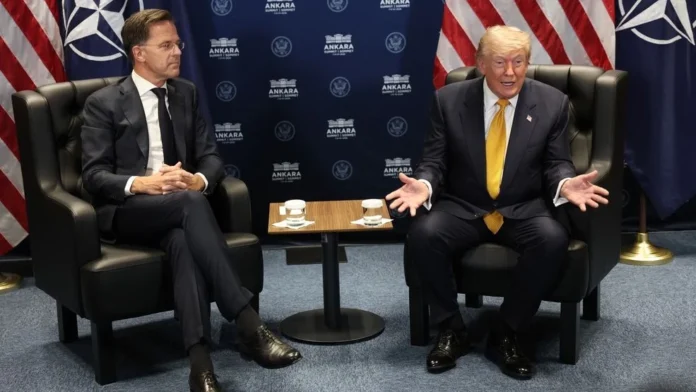
Speaking at the NATO summit in Ankara, Trump said he no longer considers the ceasefire agreement to be active. “As far as I’m concerned, it’s over,” he told reporters, accusing Tehran of bad-faith conduct and renewed aggression.
The comments followed a new wave of American strikes on more than 80 Iranian targets after U.S. officials accused Iran of attacking commercial vessels near the Strait of Hormuz.
- Trump said the ceasefire with Iran is no longer in effect.
- U.S. forces launched strikes on more than 80 Iranian targets.
- The administration revoked a license that had allowed Iranian oil sales under the earlier truce.
The ceasefire had been tied to a broader memorandum of understanding between Washington and Tehran. That arrangement included a 60-day negotiating window over Iran’s nuclear program, sanctions relief, and the release of roughly $12 billion in frozen Iranian assets.
As part of the deal, the U.S. Treasury had issued a general license permitting Iranian oil sales. That license has now been revoked, restoring sanctions pressure that had been temporarily eased.
Iran responded by striking U.S. military sites in Bahrain and Kuwait, according to Iranian state statements. Iranian Parliament Speaker Mohammad Bagher Ghalibaf accused Washington of violating the earlier agreement.
Trump, speaking alongside NATO Secretary General Mark Rutte, said he is considering further military action, including a possible naval blockade. “We’ll probably hit them hard again tonight,” Trump said, adding that he would give Iran “a little warning.”
Why It Matters
The collapse of the ceasefire matters because it puts Trump’s Iran strategy back into a high-pressure military phase.
For Trump and his supporters, the message is clear: Iran cannot attack shipping lanes, threaten U.S. forces, or exploit ceasefire terms without facing consequences. The president is framing the renewed strikes as a necessary response to Iranian escalation, not a retreat from diplomacy.
The Strait of Hormuz is one of the world’s most important oil chokepoints, and any attack on commercial shipping there creates immediate risks for global energy markets and American consumers.
- Supporters say Trump is showing strength after Iran violated the spirit of the ceasefire.
- The Strait of Hormuz is central to global oil shipping and energy prices.
- The renewed conflict could test congressional support for continued military action.
The renewed strikes also raise questions about whether the earlier ceasefire agreement was strong enough. Critics had already questioned whether Iran received sanctions relief without making firm nuclear concessions.
Trump’s position now appears to be that diplomacy remains possible only if Iran stops escalating and negotiates seriously. Otherwise, the administration is prepared to use military force and economic pressure together.
Political and Public Context
Trump’s announcement came during a NATO summit already shaped by tensions over defense spending, Ukraine, and allied support for U.S. military priorities.
The Iran crisis gives Trump another opportunity to press allies on burden-sharing. Some NATO partners have been hesitant to fully back U.S. operations against Iran, and Spain reportedly declined to allow jointly operated bases to be used for offensive action.
For Trump’s base, the renewed strikes reinforce the president’s long-standing argument that Iran responds only to strength. His warning that the U.S. may strike again signals that Washington will not tolerate attacks on shipping or U.S. personnel.
At the same time, the escalation creates political risks. A prolonged conflict could raise fuel prices, trigger war powers debates in Congress, and complicate Trump’s economic message ahead of the midterms.
French President Emmanuel Macron said he still believes talks may continue under the original negotiating window, showing that some allies are trying to keep diplomacy alive even as military action resumes.
Economic and Global Context
Markets reacted quickly to the ceasefire collapse.
Dow futures fell by more than 400 points after Trump’s announcement, while oil prices surged on fears that renewed hostilities could disrupt shipping through the Strait of Hormuz.
Asian markets also moved lower, reflecting global concern that the conflict could widen. Energy traders are closely watching whether Iran or its allies attempt further attacks on tankers, ports, or U.S. military assets in the region.
- Oil prices jumped as the ceasefire collapsed.
- Shipping costs and tanker insurance rates could rise if Hormuz remains unstable.
- Higher crude prices could feed into gasoline costs and inflation pressures.
The revocation of Iran’s oil sales license could further tighten global supply if sanctions enforcement increases. Iran remains a major OPEC producer, and any reduction in its exports could affect global crude availability.
The crisis also comes as NATO leaders are discussing Ukraine, defense spending, and alliance coordination, placing multiple foreign policy challenges on Trump’s agenda at once.
What Happens Next
The immediate question is whether Trump follows through on his warning of additional strikes.
If the U.S. launches another wave of attacks, Iran could retaliate against American military sites, Gulf shipping, or allied interests in the region. That could quickly turn the conflict into a broader regional war.
- The U.S. may launch additional strikes if Iran continues attacking shipping or military targets.
- Congress may demand briefings or hearings on the administration’s Iran strategy.
- Energy markets will remain highly sensitive to developments near the Strait of Hormuz.
For American consumers, the most visible effect could come through higher gasoline prices if oil prices continue rising.
For Trump, the renewed confrontation creates both risk and opportunity. The president can argue that he is defending American interests and global shipping routes, but he must also prevent the conflict from spiraling into an open-ended war.
