

Story Highlights
- President Trump completed a medical exam at Walter Reed National Military Medical Center.
- His physician said the president remains in excellent overall health and capable of carrying out his duties.
- The report also noted Trump’s weight, BMI, and cognitive testing results as public attention on presidential health continues.
What Happened
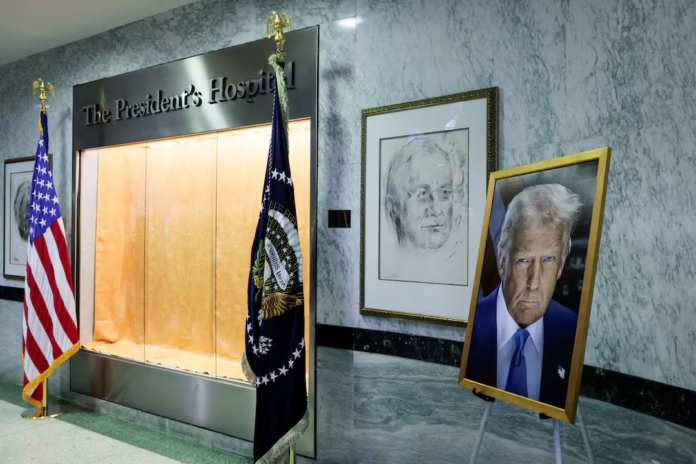
President Donald Trump completed a physical examination at Walter Reed National Military Medical Center, with the White House releasing a summary that described him as being in strong overall health.
The exam included routine preventive medical and dental evaluations, along with blood work, cardiac testing, and other assessments. Trump’s physician, Navy Captain Sean Barbabella, said the president remains physically and cognitively fit to carry out the duties of the presidency.
- The White House described the visit as routine.
- The exam included medical, dental, blood, and cardiac testing.
- Trump’s physician said he remains fit to serve.
Trump celebrated the results publicly, saying the checkup showed everything looked “perfect.” The president has frequently used medical evaluations and cognitive testing results to push back against questions about his age and fitness for office.
The summary noted that Trump scored 30 out of 30 on a cognitive screening test. It also listed his weight at 224 pounds with a body mass index of 28.0, which falls in the overweight range under standard medical guidelines.
- Trump scored 30 out of 30 on the cognitive screening.
- His BMI was listed at 28.0.
- The report gave the White House another positive health update to highlight.
The visit marked another publicly disclosed medical exam for Trump since returning to office for his second term. The White House framed the appointment as routine, while critics and some health commentators have continued to call for greater transparency around presidential medical disclosures.
Why It Matters
Presidential health remains a closely watched issue because the physical and cognitive condition of the commander-in-chief can affect public confidence, political stability, and perceptions of leadership strength.
At 79, Trump faces continued scrutiny over whether he has the stamina and mental sharpness required for the demands of the presidency. His supporters argue that the latest medical summary reinforces his ability to lead, while critics are likely to continue pressing for more detailed information.
- Supporters say the report reinforces Trump’s fitness for office.
- Critics may continue calling for fuller medical transparency.
- The issue is likely to remain part of the political conversation.
The cognitive test result is especially politically important. Trump has repeatedly cited strong cognitive scores as evidence that questions about his age are politically motivated. The White House is expected to use the latest report to support that argument as the country moves deeper into the midterm election cycle.
At the same time, presidential medical summaries are often limited in detail. That means the debate over health transparency is unlikely to end with one report, especially as voters continue evaluating the strength and readiness of national leaders.
Political and Public Context
Trump’s health has become part of the broader political conversation around age, leadership, and fitness for office. The issue grew more prominent in recent years as voters questioned whether older presidents can handle the pressure of the job.
For Republicans, the medical summary gives Trump another argument that he remains capable, active, and prepared to lead the party through a competitive election cycle. For Democrats and Trump critics, the frequency of medical visits and the limited detail in public reports may keep questions alive.
- Republicans are likely to emphasize the positive findings.
- Democrats may focus on Trump’s age and limited disclosure.
- The White House can use the report to push back against fitness concerns.
The White House is likely to emphasize the positive findings, including the physician’s conclusion that Trump remains in excellent health. Opponents may focus instead on the lack of fuller medical records and the president’s age.
What Happens Next
The administration is expected to continue highlighting Trump’s medical results as evidence of his fitness for office. The president is also likely to cite the cognitive test score in future public appearances and campaign-related events.
Questions about presidential health will likely remain part of the political backdrop, especially if Trump continues a busy schedule of rallies, policy events, and international meetings.
- Trump may continue referencing the cognitive test result publicly.
- The White House will likely frame the exam as proof of strong health.
- Health transparency questions may continue during the election cycle.
For now, the White House is presenting the Walter Reed exam as a positive update showing that Trump remains ready to serve.
Sources
White House releases results of Donald Trump’s annual physical
