

Story Highlights
- United States sends a third aircraft carrier to the region
- Move aimed at strengthening military readiness and deterrence
- Reflects continued monitoring of regional developments
What Happened
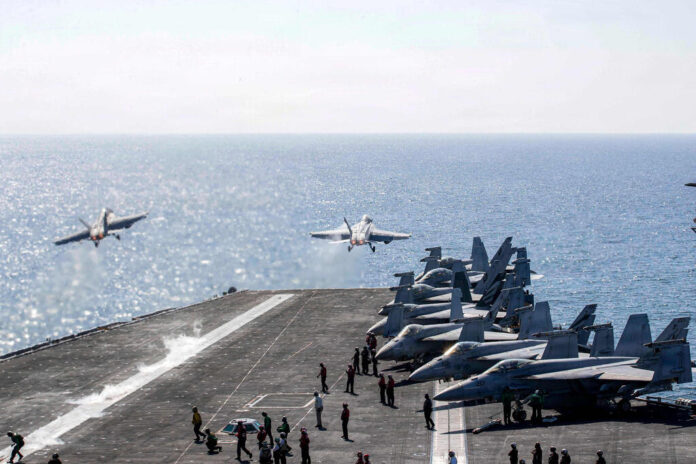
The United States has deployed an additional aircraft carrier strike group to the Middle East, increasing its military presence in the region. This marks the third carrier positioned in response to ongoing tensions and evolving security conditions.
The deployment includes advanced naval assets, support ships, and air capabilities designed to enhance operational readiness. Officials have indicated that the move is part of a broader strategy to maintain stability and ensure rapid response capability if required.
While no immediate escalation has been confirmed, the increase in presence signals that the United States is closely monitoring developments and preparing for multiple scenarios.
Why It Matters
Aircraft carriers are a key element of U.S. military power. Their presence allows rapid deployment of air and naval operations without relying on local bases. This provides flexibility and strengthens deterrence in uncertain situations.
An increased military presence can also reassure allies and partners in the region. It signals commitment to maintaining security and protecting key international routes. At the same time, such moves are often carefully balanced to avoid further escalation.
This development also reflects the importance of preparedness. Even in the absence of direct conflict, maintaining readiness is a critical part of defense strategy.
Political and Geopolitical Impact
From a policy perspective, the deployment shows a continued focus on national security and global presence. It highlights how the United States uses strategic positioning to manage risk and maintain influence.
Geopolitically, the move may influence how other countries respond in the region. Allies may feel more secure, while others may reassess their positions based on increased U.S. activity. However, the neutral stance suggests this is a precautionary measure rather than a direct escalation.
Implications
The deployment strengthens U.S. readiness and supports stability in a sensitive region. While it does not indicate immediate conflict, it reflects ongoing caution. Future developments will determine whether this remains a preventive measure or becomes part of a larger response.
