

Story Highlights
- Trump issues a strong warning against interference in U.S. strategy
- Reinforces clear red lines and consequences
- Signals elevated military readiness and deterrence posture
What Happened
President Donald Trump delivered a firm warning stating that any interference with U.S. strategic actions related to Iran would result in a “big price.” The statement comes amid rising tensions in the Middle East, where reports of weapons movement and regional disruptions have increased uncertainty.
According to administration officials, the warning is part of a broader effort to establish clear boundaries and prevent further escalation. Trump’s language was direct and intentional, signaling that the United States is prepared to respond decisively to any actions that undermine its objectives in the region. The messaging reflects a strategy built around deterrence—making the cost of interference clear enough to discourage it entirely.
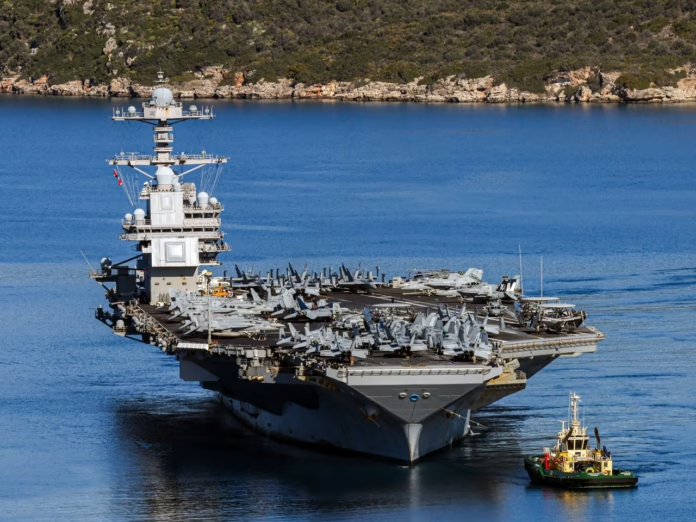
Military readiness has been elevated alongside the rhetoric. U.S. forces in the region remain on alert, with naval and air capabilities positioned to respond quickly if required. While officials emphasize that the goal is to avoid conflict, the preparedness indicates that the administration is not ruling out escalation if its warnings are ignored.
The statement also serves as a signal to multiple actors in the region, not just Iran. By issuing a broad warning, the administration is attempting to control the overall environment and reduce the likelihood of indirect challenges or proxy actions that could complicate the situation further.
Why It Matters
Strong and direct warnings like this play a critical role in shaping geopolitical behavior. They reduce ambiguity and clearly define consequences, which can help stabilize volatile situations. However, they also raise the stakes, as any perceived violation may require a response to maintain credibility.
For global markets, such statements are closely monitored. Even without immediate action, the tone of leadership communication can influence investor confidence, energy prices, and international trade expectations. The situation highlights how closely economic stability is tied to geopolitical signaling.
Additionally, the Middle East remains one of the most sensitive regions in global politics. Any escalation—whether direct or indirect—can have far-reaching effects beyond the immediate area, impacting global alliances and economic systems.
Political and Geopolitical Impact
Trump’s warning reinforces a foreign policy approach centered on strength, clarity, and immediate consequence. Domestically, this aligns with a leadership style that prioritizes decisive action and clear messaging. It strengthens the perception of control and readiness during a period of uncertainty.
Internationally, the response is more complex. Allies may view the clarity as helpful in understanding U.S. intentions, while others may express concern about the potential for escalation. The warning also places pressure on regional actors to carefully evaluate their actions, knowing that any interference could trigger a strong response.
The situation contributes to an already tense geopolitical landscape, where multiple interests intersect. Managing these dynamics requires balancing deterrence with restraint—something that will be closely watched in the coming days.
Implications
If the warning achieves its intended effect, it could help stabilize the situation by discouraging interference and maintaining a controlled environment. Clear boundaries can reduce the likelihood of miscalculation and support a more predictable outcome.
However, if the warning is challenged or ignored, the risk of escalation increases significantly. A response from the United States could lead to a broader conflict, affecting not only the region but also global markets and political relationships.
In the larger context, this moment highlights the importance of strategic communication in international relations. The ability to signal intent clearly—without triggering unintended consequences—remains one of the most critical challenges in global diplomacy.
Sources
“Will Pay a Big Price: Trump’s Warning Over Iran Interference”
