

Story Highlights
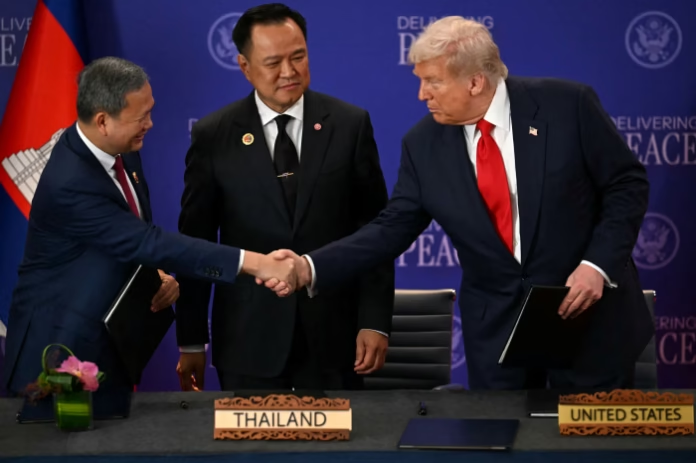
- U.S. advances trade discussions with key Asian economies
- Focus on expanding exports and strengthening partnerships
- Trade strategy aimed at boosting economic growth
What Happened
The United States is signaling progress in ongoing trade discussions with several Asian partners, reflecting a renewed focus on strengthening international economic relationships. Policy direction associated with President Trump emphasizes expanding market access for U.S. goods and services while improving trade balance conditions.
Officials involved in the discussions indicate that negotiations are moving forward on multiple fronts, including tariff adjustments, supply chain cooperation, and investment opportunities. The goal is to create agreements that support both economic growth and long-term stability.
The talks come at a time when global trade dynamics are evolving, with countries seeking to secure reliable partnerships and diversify supply chains. The United States is positioning itself as a key player in shaping these developments through active engagement.
While final agreements have not yet been announced, the progress made so far suggests that both sides are committed to reaching mutually beneficial outcomes. The negotiations are expected to continue as details are refined.
Why It Matters
Trade agreements play a critical role in driving economic growth by expanding market access and increasing export opportunities. Strengthening relationships with Asian economies can open new avenues for U.S. businesses.
For companies, improved trade conditions can reduce barriers and enhance competitiveness in international markets. This can lead to increased production, job creation, and investment.
The development also highlights the importance of supply chain resilience. By building stronger partnerships, the United States can reduce dependence on single sources and improve stability.
Additionally, successful agreements can contribute to overall economic confidence, supporting both domestic and global market conditions.
Political and Geopolitical Impact
Domestically, trade policy remains a central issue in economic discussions, influencing debates around growth, jobs, and competitiveness. Progress in negotiations may shape policy priorities and legislative considerations.
The issue also affects public perception, as trade agreements can have direct impacts on industries and employment.
Geopolitically, stronger trade ties with Asian partners can influence global economic dynamics and strengthen alliances. It may also impact relationships with other major economies.
The strategy reflects a broader effort to position the United States as a leader in global trade and economic cooperation.
Implications
If agreements are finalized, they could enhance economic growth and provide new opportunities for U.S. businesses. Expanded trade relationships may also contribute to more stable global markets.
However, negotiations remain complex, and final outcomes will depend on continued cooperation and compromise. External factors may also influence progress.
In the long term, the focus on trade partnerships underscores the importance of strategic economic engagement. Building strong international relationships will be key to sustaining growth.
Sources
“U.S. signals progress on trade deals with Asian partners amid ongoing talks”
