

Story Highlights
- Trump called Iran’s response “totally unacceptable” and said he did not finish reading the proposal
- Some Trump aides are now more seriously considering a resumption of major combat operations
- Iran’s parliament speaker said Iran would not accept terms amounting to “surrender”
What Happened
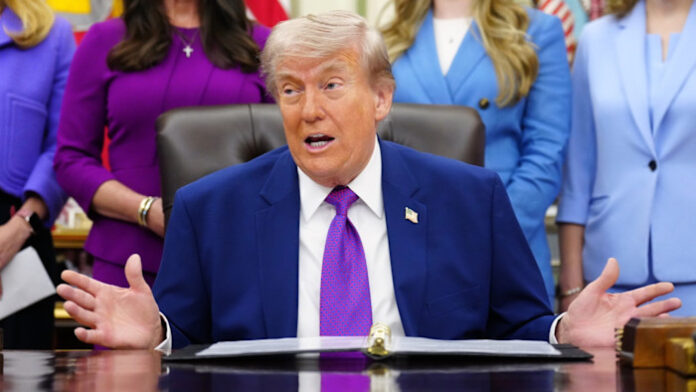
President Donald Trump on Monday declared the ceasefire between the United States and Iran was on “massive life support,” days after Iranian negotiators delivered a formal counterproposal through Pakistani intermediaries that the administration swiftly rejected. Trump said the response was “unbelievably weak” and characterized it as “garbage,” adding that he stopped reading it partway through.
The Iranian counterproposal, reported by state media, included recognition of Iranian sovereignty over the Strait of Hormuz as a precondition for any agreement — a demand the White House dismissed outright. Iran also proposed a staggered, phased approach to negotiations in which a formal end to hostilities and sanctions relief would come first, with discussions about its nuclear program deferred to a later stage.
Trump has insisted that Iran must halt uranium enrichment immediately and surrender its estimated 440 kilograms of highly enriched uranium as part of any deal. He accused Tehran on Monday of reneging on a prior verbal agreement to allow the United States to physically remove nuclear material from Iran’s bombed facilities. “They told me, number one, you’re getting it, but you’re going to have to take it out,” he said from the Oval Office.
Secretary of State Marco Rubio and envoys Steve Witkoff and Jared Kushner have been leading U.S. diplomatic efforts, while Pakistan continues to serve as a mediator. A source familiar with the negotiations told CNN that meaningful progress is unlikely before Trump meets Chinese President Xi Jinping this week, as Beijing is viewed as a potential broker in pushing Iran toward a more cooperative stance.
Some Trump aides now say the president is more seriously considering a resumption of major combat operations than at any point in recent weeks. The war, which began on February 28, 2026, has entered a volatile standoff, with both sides firing shots in the Strait of Hormuz even after the ceasefire nominally took effect in April.
Why It Matters
The collapse of ceasefire talks would have profound consequences for both the United States and the global economy. The Strait of Hormuz, through which roughly one-fifth of the world’s oil and natural gas normally flows, has been effectively shut down since the war began, triggering the largest energy disruption in recorded history according to the International Energy Agency.
The human and strategic costs to the United States are mounting. American consumers have absorbed an estimated $37 billion in additional fuel costs since the war started in late February, according to Brown University’s Iran War Energy Cost Tracker. Gas prices have risen from $2.98 per gallon before the conflict to $4.52 as of this week, approaching the all-time high of $5.02 set in June 2022.
A resumption of full combat operations would almost certainly push energy prices even higher and deepen the economic pain already weighing heavily on American households. Eight in ten Americans report that gas prices are straining their budgets, cutting across party lines in a way that is directly feeding voter discontent ahead of the November 2026 midterm elections.
Analysts note that the fundamental impasse stems from a clash of expectations. Trump wants a quick, decisive win that includes immediate nuclear concessions. Iran, having suffered devastating strikes on its military and nuclear infrastructure, remains determined not to appear to capitulate under fire. A former State Department negotiator described the current situation as “much tougher” than the 2015 nuclear negotiations under the Obama administration.
Economic and Global Context
International benchmark Brent crude oil has remained elevated above $100 per barrel throughout the conflict, with prices surging past $114 per barrel at peak points of tension. West Texas Intermediate has consistently traded above $90. Energy analysts warn that prices could remain high for months even after any eventual deal, due to the backlog of unloaded tankers, damaged port infrastructure, and the time required to clear Iranian mines from shipping lanes.
The disruption has spread far beyond oil. Qatar shut down production at the world’s largest liquefied natural gas facility due to the conflict, and global jet fuel shortages have raised the cost of air travel. Fertilizer prices have surged, threatening food supply chains. Democratic members of Congress estimate that the total economic cost of the Iran conflict to American consumers has already surpassed $32 billion.
Diesel, a critical fuel for truckers, farmers, and freight networks, is now only 18 cents away from its all-time high set in 2022, according to AAA data. The spillover effects on the broader U.S. economy are compounding inflationary pressures that Republicans had promised to address when they won the 2024 election.
China, the world’s largest importer of Iranian oil, faces its own difficult calculations. Beijing has publicly called for a “complete cessation of hostilities” but is unlikely to directly pressure Tehran at Washington’s behest. How Xi Jinping handles the Iran dimension at this week’s summit in Beijing will be closely watched by all parties.
Implications
If Trump follows through on escalation, a return to active combat could produce a full, sustained closure of the Strait of Hormuz, pushing global oil prices to historic highs and causing severe disruption to economies already strained by prolonged energy uncertainty. Allies in Europe, Japan, and South Korea are watching Beijing with particular concern, fearing that any U.S.–China agreement on Iran could come at the expense of their own security commitments.
For Republican lawmakers, a resumed and intensifying war is political poison. Trump’s approval rating on Iran and the economy has fallen sharply since the conflict began, and Democrats are mobilizing around affordability as their central 2026 midterm message. The longer the Strait remains closed, the harder it becomes for the GOP to defend its record.
For Iran, accepting Trump’s demands carries existential political risk at home. Supreme leader succession remains unclear, and hard-line factions within the government have explicitly rejected what they call “surrender terms,” limiting the flexibility of any Iranian negotiating team.
Diplomats from Saudi Arabia and Egypt are expected to be present at the BRICS Foreign Ministers’ meeting this week in Delhi alongside Iran’s Foreign Minister Abbas Araghchi, creating a backchannel opportunity even as the public postures remain far apart. Whether that quiet diplomacy can avert a collapse before Trump leaves Beijing will determine whether the war enters a new and more destructive phase.
Sources
“Trump says Iran ceasefire is on ‘life support,’ calls latest proposal ‘garbage'”
