

Story Highlights
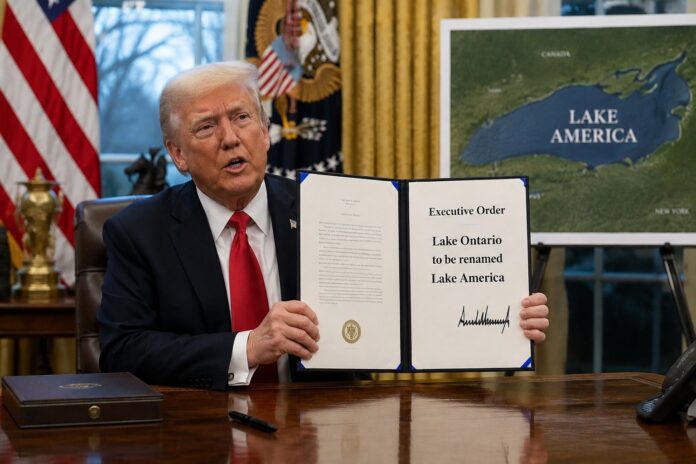
- President Trump signs an executive order to rename Lake Ontario to Lake America.
- The move is seen as a bold assertion of American identity.
- Tech giants like Google and Apple respond to the name change.
- This initiative echoes the ‘Freedom Fries’ era, emphasizing patriotism in modern America.
What Happened
In a significant move that has stirred both support and controversy, President Trump recently signed an executive order renaming Lake Ontario to Lake America. This decision, announced during a press conference at the White House, aims to reinforce American identity and pride in the face of ongoing international relations challenges. The president emphasized that the name change is not merely a symbolic gesture but a reflection of his administration’s commitment to prioritizing American interests in all aspects of governance, including geographical nomenclature.
The announcement has sparked a wave of reactions across various sectors, particularly from tech giants like Google and Apple, who have begun updating their maps and applications to reflect the new name. This swift response indicates the cultural impact of the name change, as it has ignited discussions about national identity and patriotism in contemporary America. The renaming of such a significant geographical landmark is reminiscent of the early 2000s when ‘Freedom Fries’ became a symbol of American defiance against perceived foreign adversaries.
- President Trump signed the executive order on September 1, 2026.
- The announcement was made during a press conference at the White House.
- Tech companies like Google and Apple are updating their platforms to reflect the name change.
- The initiative has drawn comparisons to the ‘Freedom Fries’ movement from the early 2000s.
Why It Matters
This name change is significant for several reasons. Firstly, it serves as a bold statement of American nationalism at a time when many feel that the country’s identity is under threat from globalization and international pressures. By renaming Lake Ontario to Lake America, the president is asserting that American values and identity should take precedence in all discussions, including those related to geography. This move resonates with a large segment of the population that feels a deep connection to their national identity and believes that such symbols should reflect that pride.
Moreover, the cultural implications of this decision cannot be understated. The immediate reactions from major tech companies suggest that the name change will have a lasting impact on how Americans perceive their geography and identity. As these platforms update their maps and services, the new name will become ingrained in the public consciousness, further solidifying the idea of American exceptionalism. This initiative also opens the door for further discussions about other geographical names that may be reconsidered in light of national pride.
- The name change reinforces American nationalism and identity.
- It has sparked discussions about the importance of geographical symbols in reflecting national pride.
- Major tech companies are adapting to the change, indicating its cultural significance.
- This move may lead to further discussions about other geographical names in the U.S.
Political and Public Context
To fully understand the implications of renaming Lake Ontario to Lake America, it is essential to consider the historical context of similar movements. The ‘Freedom Fries’ campaign, initiated in response to France’s opposition to the Iraq War, serves as a poignant example of how food and geography can become intertwined with national identity. During that time, many Americans felt a surge of patriotism that manifested in various forms, including the renaming of French fries in congressional cafeterias. This historical precedent illustrates how symbolic gestures can resonate deeply with the public and influence cultural attitudes.
Furthermore, the current political climate, characterized by increasing polarization and debates over national identity, makes this name change particularly relevant. As discussions about immigration, globalization, and American values continue to dominate the political landscape, the president’s decision to rename a significant body of water serves as a rallying point for those who believe in the importance of maintaining a strong national identity. This context highlights the potential for this initiative to inspire similar movements across the country.
- The ‘Freedom Fries’ campaign serves as a historical precedent for renaming initiatives.
- The current political climate emphasizes the importance of national identity.
- Discussions about immigration and globalization are prevalent in today’s society.
- This name change could inspire similar movements across the United States.
BREAKING: Trump sells “Lake America” hat after executive order to rename Lake Ontario pic.twitter.com/Gw4bnVEtGt
— Kalshi (@Kalshi) September 4, 2026
What Happens Next
Looking ahead, the renaming of Lake Ontario to Lake America raises several questions about the future of geographical nomenclature in the United States. Will this initiative lead to a broader movement to reassess other geographical names that may not align with contemporary American values? As discussions about national identity continue to evolve, it is possible that more names will be reconsidered in light of this new emphasis on patriotism.
Additionally, the response from the public and various organizations will be crucial in determining the long-term impact of this name change. Will there be pushback from those who view this as an unnecessary alteration of history, or will the majority embrace this new identity? The answers to these questions will shape the narrative surrounding American geography and identity in the coming years.
- Future discussions may lead to the reassessment of other geographical names.
- The public’s response will be crucial in determining the name change’s long-term impact.
- This initiative could inspire a broader movement focused on American identity.
- Ongoing debates about national identity will continue to shape the narrative surrounding geography.
