

Story Highlights
- Trump paused “Project Freedom,” the U.S.-led effort to escort commercial vessels through the Strait of Hormuz
- Iran’s Foreign Minister Abbas Araghchi traveled to Beijing for talks with his Chinese counterpart, Wang Yi, marking the first such trip since the war began
- At least 10 sailors have already died as a result of the blockade, according to Secretary of State Marco Rubio
What Happened
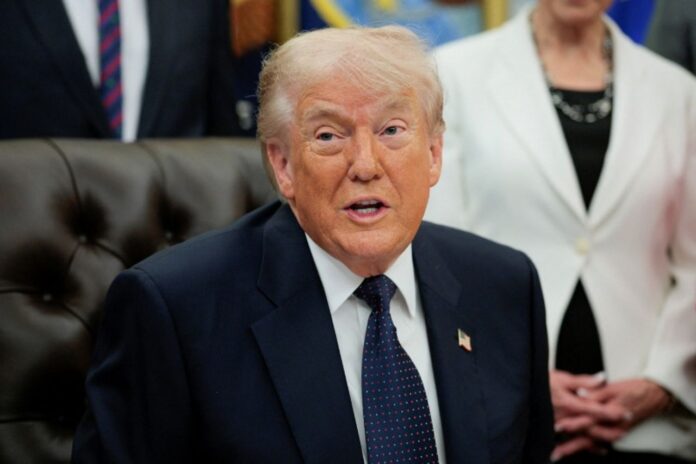
President Donald Trump announced late Tuesday that he was halting the U.S. effort to guide commercial vessels through the Strait of Hormuz, citing what he described as significant progress toward a comprehensive peace agreement with Iran. Trump stated the pause came “on the request of Pakistan and other Countries, the tremendous Military Success that we have had during the Campaign against the Country of Iran,” and the fact that “Great Progress has been made toward a Complete and Final Agreement.”
The announcement followed days of intense military activity in and around the strait. The United States launched “Project Freedom” on Monday, a mission aimed at opening a navigable corridor for commercial shipping through the 21-mile-wide waterway. Iran has effectively shut the strait to most commercial traffic since the war began on February 28, when the United States and Israel launched coordinated strikes against Iranian targets.
The operation saw early results, with two civilian vessels — both U.S.-flagged merchant ships — successfully transiting the newly opened corridor. Shipping company Maersk confirmed that a vehicle carrier it operates exited the strait safely on Monday with U.S. military assistance. However, hundreds of additional vessels remained bottled up in the Persian Gulf, their crews stranded and their cargo undelivered.
Secretary of State Marco Rubio told a White House press briefing on Tuesday that for peace to be achieved, Iran must agree to Trump’s demands regarding its nuclear program and must also consent to formally reopen the Strait of Hormuz to international shipping. Rubio described the overall mission as defensive in nature, emphasizing the humanitarian stakes involved for civilian mariners. He noted that the U.S. military had already sunk six small Iranian boats on Monday that had threatened commercial ships.
Why It Matters
The Strait of Hormuz is the single most important maritime chokepoint for global energy supplies. In peacetime, the narrow passage handles roughly one-fifth of the world’s oil and liquefied natural gas shipments. Its effective closure since late February has sent shock waves through global energy markets, contributing to soaring fuel prices that are compounding Trump’s domestic political difficulties.
The decision to pause the escort mission reflects a complex calculation by the Trump administration. On one hand, pressing forward with “Project Freedom” risked further military escalation with Iran, whose forces had launched drone and missile strikes on the United Arab Emirates — a key U.S. ally — for two consecutive days. On the other hand, a prolonged pause risks signaling weakness and prolonging the humanitarian crisis for stranded seafarers.
The visit by Iranian Foreign Minister Abbas Araghchi to Beijing is widely seen as a pivotal diplomatic moment. China maintains deep economic and political ties with Tehran, giving it unique leverage in any potential mediation. Beijing’s willingness to facilitate talks is a signal that international pressure on Iran to reach a deal may be intensifying, even if the White House offered no specific details about the progress Trump referenced.
For the American public, the stakes are immediate and visible at the gas pump. The Iran conflict has driven energy costs sharply higher, contributing to inflationary pressures that have weighed on consumer confidence and deepened skepticism of Trump’s foreign policy approach.
Economic and Global Context
The economic consequences of the strait’s closure have been severe and wide-ranging. The average price of a gallon of gasoline in the United States rose to $4.30 last week, according to the American Automobile Association, up considerably from pre-conflict levels. In some California markets, prices have exceeded $6 per regular gallon and surpassed $7 for diesel. These price surges have cascaded through the economy, affecting transportation costs, food prices, and manufacturing inputs.
Insurance companies have largely declined to underwrite voyages through the strait, meaning that even a formal U.S. military corridor may not be sufficient to fully restore commercial traffic. Angad Banga, CEO of The Caravel Group, which oversees the world’s second-largest ship management company, noted that it may take time for military initiatives to translate into safe operating conditions for vessels and crews.
Globally, dozens of countries have been forced to implement austerity measures to buffer their economies from surging energy costs. Gulf states, already impacted by the conflict in their immediate neighborhood, face additional instability. The UAE’s Fujairah oil port — a critical facility located just beyond the strait — was struck by Iranian drones and missiles, raising fears about the security of regional energy infrastructure.
Markets have responded with elevated volatility throughout the conflict period. Energy futures have spiked repeatedly in response to developments in and around the strait, and logistical disruptions have begun to affect supply chains well beyond the energy sector.
Implications
Trump’s pause decision creates a narrow but real diplomatic window. If Iran agrees to serious negotiations on both its nuclear program and the reopening of the strait, a cease-fire arrangement could potentially be formalized before the end of May. However, analysts caution that Tehran’s public statements and its military activities — including continued missile strikes on UAE territory — suggest a significant gap remains between the two sides’ positions.
For Republican lawmakers, the conflict is a growing political liability. Trump’s approval ratings have hit record lows in part due to public disapproval of the war and its economic fallout. Any diplomatic breakthrough would provide considerable political relief heading into the fall midterm elections, while a prolonged stalemate or escalation could further damage GOP prospects.
For U.S. allies in the Gulf region, Tuesday’s developments underscore the volatility of their security environment. The UAE, which has hosted significant U.S. military assets, has now absorbed Iranian strikes on two consecutive days. Saudi Arabia and other Gulf Cooperation Council members are watching closely, recalibrating their own security postures in response to the unpredictable pace of the conflict.
For the thousands of civilian mariners still stranded in the Persian Gulf, the pause offers little immediate comfort. Defense Secretary Pete Hegseth emphasized that the American military’s blockade of Iranian ports remains in place regardless of the escort mission pause, meaning the broader strategic pressure on Tehran continues even as diplomacy is given a chance.
Sources
“Trump says he’s paused U.S. effort to guide stranded vessels out of Strait of Hormuz”
