

Story Highlights
- The Trump administration directed ICE agents to assist TSA operations at U.S. airports.
- The move is positioned as a response to staffing shortages and operational strain tied to DHS funding pressures.
- Officials say the goal is to reduce wait times and maintain smooth travel operations nationwide.
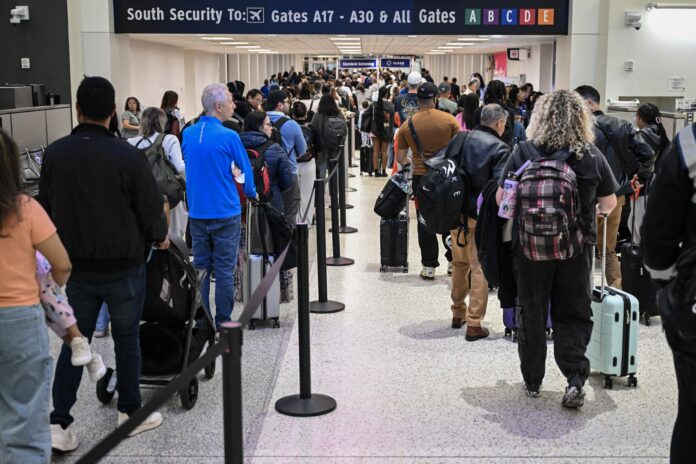
The Trump administration has taken a direct operational step to stabilize airport security by deploying Immigration and Customs Enforcement (ICE) personnel to assist the Transportation Security Administration (TSA). The decision comes amid increasing pressure on airport systems, where staffing shortages and rising passenger volumes have led to longer wait times and potential bottlenecks. By reallocating trained federal personnel instead of expanding the workforce through new hiring, the administration is presenting a practical and immediate solution aimed at keeping travel systems efficient.
From a policy perspective, the move reflects a broader strategy of using existing federal resources more flexibly. ICE agents already operate within the Department of Homeland Security framework and are trained in enforcement and security protocols, making them suitable for temporary reassignment. Officials have emphasized that the deployment is strictly for operational support and not a shift in immigration enforcement policy within airports. This distinction is important in framing the decision as a logistical measure rather than a policy expansion, allowing the administration to address a pressing issue without triggering broader regulatory or legislative changes.
The economic and public-facing implications are significant. Airports serve as critical infrastructure hubs, and disruptions can quickly ripple across tourism, business travel, and supply chains. Long security lines and delays not only frustrate travelers but can also have measurable economic consequences. By stepping in early, the administration is aiming to prevent these disruptions from escalating, ensuring that airport operations remain stable during a period of uncertainty tied to government funding negotiations.
This move also highlights a governance approach focused on responsiveness and efficiency. Rather than waiting for congressional action or budget approvals, the administration is leveraging inter-agency coordination to address immediate challenges. This type of flexibility may become increasingly important as federal agencies navigate operational demands in a constrained fiscal environment. It reinforces the idea that effective governance can sometimes come from reallocating resources rather than expanding them.
Implications
The deployment of ICE agents to support TSA operations underscores a results-oriented approach to maintaining essential infrastructure. If successful, it could reduce delays, improve traveler experience, and demonstrate the effectiveness of cross-agency coordination. More broadly, it signals that the administration is willing to act quickly to address operational challenges, reinforcing a message of efficiency and adaptability in managing national systems.
Sources
