

Story Highlights
- Trump stated that his armada of warships in the region was “loaded to the brim” and military forces “were all set to start” strikes against Iran when he decided to delay.
- Trump set a new timeline for Tehran to produce an acceptable deal to end the war, stating “I’m saying two or three days, maybe Friday, Saturday, Sunday, something, maybe early next week.”
- Gulf countries including Kuwait, Qatar, Saudi Arabia, and the UAE indicated they would likely be more restrictive on when US forces can use military bases in their countries or fly over their airspace if Trump ultimately moves forward with additional strikes.
What Happened
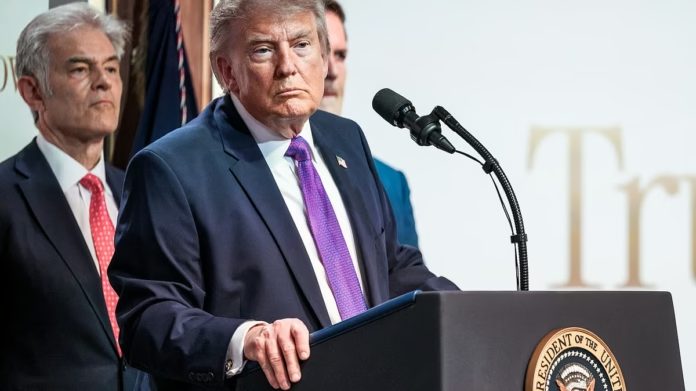
In President Donald Trump’s telling, he was an hour away from ordering new strikes on Iran when he abruptly announced on social media Monday that he would allow more time for diplomacy. The announcement came after weeks of escalating tensions between the United States and Iran, with military forces positioned throughout the Persian Gulf region prepared to execute strikes at presidential order. Trump’s decision to delay represented a significant reversal that surprised many observers within the national security establishment who had expected military action to commence immediately.
Trump stated that his armada of warships in the region was “loaded to the brim” and forces “were all set to start” the strikes. According to Trump’s account, military preparations had reached an advanced stage with assets in position and personnel ready to execute targeting orders. Yet Trump claimed that he decided to pull back to allow Iran one final opportunity to reach a negotiated resolution to the conflict. Whether military action was genuinely imminent or whether Trump was exaggerating the immediacy of the threat remained unclear, as some sources offered contradictory accounts.
The exact timeline for the anticipated strikes generated conflicting accounts among officials and observers. Other sources said renewed strikes were expected to begin at the start of this week — the same timeline Trump offered up — while two additional sources said they were not anticipated until the end of the week. The disagreement over timelines raised questions about the degree of certainty surrounding military action and whether Trump’s last-minute decision had averted something genuinely imminent or whether it was a tactical adjustment to a more flexible military schedule.
Trump’s decision to delay appeared to respond, at least in part, to pressure from Gulf allies. Officials from some Gulf countries, who Trump claimed had urged him to hold off strikes, said they weren’t aware of impending military action. This discrepancy suggested either that Trump had misrepresented the degree of pressure from Gulf leaders or that communication channels had failed to convey the precise military plans to the region’s leaders. Regardless of the explanation, Trump’s pivot toward restraint reflected recognition that Gulf cooperation remained essential for any sustained military campaign. CNN
The regional context for Trump’s decision involved the Islamic holy month of Hajj, during which hundreds of thousands of Muslims travel to Saudi Arabia for pilgrimage. One of the Gulf leaders’ data points was that it is Hajj season — a significant period in Islam that traditionally calls for goodwill and sees thousands of pilgrims traveling to Mecca, in Saudi Arabia. The humanitarian and religious significance of Hajj season made military escalation particularly contentious during this period, and Gulf leaders made clear that military action during Hajj would create severe regional backlash. CNN
Trump’s new timeline for diplomatic resolution proved notably vague. Standing in front of a giant construction pit on the White House South Lawn, the president set a new timeline for Tehran to produce an acceptable deal to end the war, stating “I’m saying two or three days, maybe Friday, Saturday, Sunday, something, maybe early next week.” The imprecision of the deadline—stretching potentially over two weeks—suggested that Trump remained uncertain about how long meaningful negotiations might require. The reference to the South Lawn construction pit appeared to be related to the White House ballroom renovation project that was underway. CNN
Why It Matters
Trump’s decision to delay Iran strikes reflects the profound costs and risks associated with renewed military action. The ongoing Iran-US conflict has already produced significant casualties, created humanitarian consequences, and generated economic uncertainties. Any renewed military escalation would likely extend an expensive, unpopular conflict that has contributed to declining approval ratings for the Trump administration. Trump’s reluctance to authorize additional strikes despite hawkish pressures suggested that political costs of expanded military action had become prohibitive.
The pattern of Trump’s approach to Iran policy demonstrates a broader pattern of brinkmanship followed by tactical retreat. Throughout his presidency, Trump has repeatedly threatened Iran with devastating military consequences, only to step back when actually implementing those threats. This pattern of threats and reversals may have diminished the credibility of Trump’s military threats in Iran’s calculation. If Iran believes that Trump will not ultimately authorize sustained military action, Iranian negotiators may be less willing to make meaningful concessions.
Officials say Trump is reluctant to resume the war, far preferring to strike a deal. This statement clarified that political preferences rather than military judgment was driving Trump’s decision to delay. From a purely military perspective, the armed forces had prepared to execute strikes and might have considered delay tactically disadvantageous. But Trump’s political judgment that the war had become too unpopular to sustain militarily escalation outweighed military recommendations. CNN
The fundamental issue at stake in the Iran conflict remains unresolved. Despite Trump’s claims of advancing negotiations, Iran has not publicly backed off some of its core demands. For Iran to accept a peace agreement, it would likely need to see relief from economic sanctions and recognition of its security interests in the region. Trump has insisted on maintaining sanctions and containment of Iranian power. These incompatible positions suggested that the diplomatic window Trump had opened might prove too narrow to produce actual agreements.
Economic and Global Context
The Iran conflict carries profound implications for global oil markets and economic stability. Any disruption to shipping through the Strait of Hormuz—which Iran had previously closed and threatened to blockade again—would drive oil prices sharply higher and create supply-chain disruptions for worldwide petroleum products. Extended military conflict between the United States and Iran risks exactly such disruptions, making the economic costs of conflict immense.
Several Gulf countries have indicated they will likely be more restrictive on when US forces can use military bases in their countries or fly over their airspace if Trump ultimately moves forward with additional strikes. Kuwait, Qatar and Saudi Arabia are all home to key US air bases in the region and could restrict access going forward. The UAE has also voiced opposition to additional US military operations and may similarly move to limit US base access if strikes resume. The potential loss of basing rights would dramatically limit American military options in the region, making sustained conflict with Iran far more difficult to execute.
Implications
Trump’s decision to delay Iran strikes creates a narrow window in which diplomacy might succeed in resolving the conflict. However, the vague timeline Trump established and the incompatible positions of the negotiating parties suggest that a breakthrough remains unlikely. More probably, the deadline Trump announced will pass without agreement, prompting a decision whether to resume military threats or extend the diplomatic window further.
If Trump ultimately authorizes renewed strikes, the decision will likely occur after the Hajj season concludes, removing one barrier to military action. The delay provides Iran time to prepare enhanced defenses, potentially reducing the effectiveness of any subsequent American strikes. For American military personnel and families of active combatants, the delay has already extended an exhausting and costly conflict beyond what many expected.
For Gulf allies, Trump’s willingness to consult their concerns and delay military action despite his own preparation for strikes represented a reassurance that their security interests held weight in American decision-making. However, the fragile nature of the compromise—merely delaying rather than abandoning military options—provided little permanent reassurance that military escalation could be avoided.
Sources
