

Story Highlights
- Trump outlined core U.S. demands: Iran must commit to never pursuing a nuclear weapon and reopen the Strait of Hormuz with no tolls or restrictions
- Negotiators had reportedly reached a framework pending Trump’s personal approval, including Iran’s obligation to remove all mines from the strait within 30 days
- Iran’s foreign ministry said no final deal was in place, with top negotiator Mohammad Bagher Ghalibaf saying Tehran would judge any agreement by actions, not words
What Happened
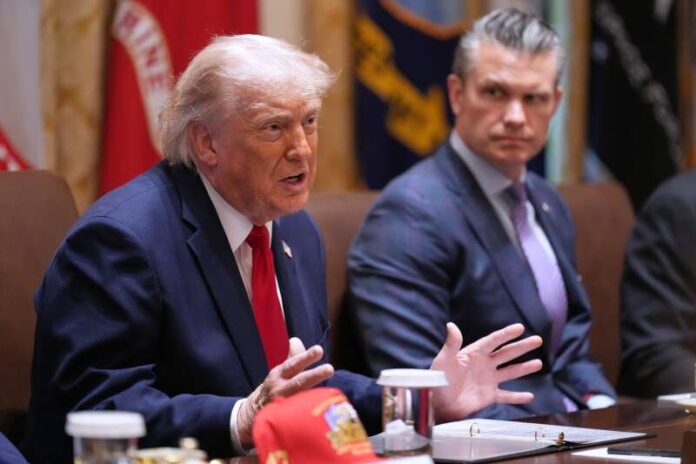
President Donald Trump took to his Truth Social platform on Friday to lay out his conditions for a ceasefire extension with Iran, writing that the Islamic Republic must agree to “never have a Nuclear Weapon or Bomb” and that the Strait of Hormuz must be “immediately open, no tolls, for unrestricted shipping traffic.” He then announced he was meeting with senior advisers in the White House Situation Room to finalize a decision, adding that no financial exchanges would occur “until further notice.”
The potential deal, as outlined by U.S. officials to Axios, would extend the existing ceasefire by 60 days. During that window, shipping through the Strait of Hormuz would be classified as “unrestricted,” and Iran would be required to clear all naval mines from the waterway within 30 days. The United States, in turn, would lift its naval blockade in proportion to the restoration of commercial shipping activity.
Vice President JD Vance told reporters Thursday evening that while he could not guarantee a deal would materialize, “the president will be in a position where he can endorse the agreement.” He was careful to add that final approval remained pending. Hours after Trump’s Situation Room meeting concluded, the White House offered no public confirmation of a decision, leaving the diplomatic outcome in deliberate ambiguity.
Iranian officials responded cautiously. Foreign Ministry spokesman Esmail Baghaei described the framework as an early-stage “memorandum of understanding” and said the country’s position had been getting closer to Washington’s over the past week. However, he emphasized that Iran’s posture on the Strait of Hormuz remained firm: any mechanism concerning the waterway, he said, must be agreed upon by Iran, Oman, and the surrounding nations — and that the United States “has nothing to do” with that process.
The original ceasefire was reached on April 7, following weeks of intense military posturing that included Trump threatening to bomb Iranian infrastructure if Tehran refused to reopen the Strait. The ceasefire held, though Iran’s partial control over the waterway continued to disrupt global oil and shipping flows throughout April and May.
Why It Matters
The Strait of Hormuz is among the most strategically vital waterways on earth, serving as the passage point for roughly 20 percent of the world’s traded oil and a substantial share of liquefied natural gas. Iran’s effective closure of the strait following the February 2026 U.S.-Israeli strikes sent commodity markets into turmoil, contributed to elevated domestic fuel prices, and rattled supply chains across Europe and Asia. A credible, lasting agreement to reopen it would be among the most economically significant developments of 2026.
For the Trump administration, sealing a deal that formally commits Iran to nuclear non-proliferation alongside unrestricted maritime access would represent a historic diplomatic achievement. It would also allow Trump to claim vindication for the military campaign his critics argued was reckless and unnecessary. The administration has framed the entire conflict as a successful exercise of American deterrence.
The stakes are equally high for ordinary Americans. Inflation has been running at elevated levels in part due to fuel and shipping costs tied to the Hormuz disruption. A reopened strait would relieve pressure on gasoline prices, import costs, and broader consumer goods. Policymakers on both sides of the aisle are watching the outcome closely as a potential economic turning point in the second half of 2026.
For lawmakers and national security experts, the depth of mistrust between Washington and Tehran remains a central concern. The U.S. has signaled that if it becomes clear Iran cannot deliver on nuclear commitments, all military and economic options will remain on the table.
Economic and Global Context
The Strait of Hormuz blockade has had measurable economic consequences since it was first imposed following the February 2026 strikes. Oil prices remained elevated through the spring, complicating the Federal Reserve’s efforts to manage inflation. The price of Brent crude, which briefly exceeded $130 a barrel during the height of the conflict, dropped sharply after each ceasefire signal — evidence of how sensitively markets are tracking the diplomatic timeline.
Global shipping insurers have imposed significant surcharges on vessels transiting the region, raising costs for energy importers in Europe, Japan, and South Korea. The International Energy Agency warned in April that prolonged disruption could shave as much as half a percentage point from global GDP growth in 2026.
The deal’s proposed sanctions waivers — which would allow Iran to sell oil more freely on international markets — would also shift the supply-demand balance globally. Increased Iranian crude exports could place modest downward pressure on oil prices, easing inflation in energy-importing nations. However, U.S. allies in the Gulf, particularly Saudi Arabia and the UAE, are watching closely to ensure any arrangement does not unduly strengthen Iran’s regional position.
Domestically, a deal’s economic benefits would depend on implementation speed. A 30-day mine-clearance timeline and proportional lifting of the naval blockade suggest a gradual restoration of shipping rather than an overnight reset.
Implications
If Trump finalizes and signs off on the 60-day memorandum of understanding, it would set the stage for deeper nuclear negotiations during the extension window. American officials have said the first priority in those talks would be addressing the disposition of Iran’s highly enriched uranium stockpile and the future of its enrichment capabilities — the core nuclear red lines the administration has maintained throughout the conflict.
For global energy markets, a deal announcement would likely trigger an immediate and significant drop in oil prices as traders price in restored supply. The downstream effects on inflation, shipping costs, and consumer goods could provide the U.S. economy with meaningful relief heading into the second half of the year.
For Republican lawmakers facing challenging 2026 midterm environments, a genuine peace deal would give the party a concrete foreign policy win to campaign on. Trump’s approval ratings have been under pressure, and a successful diplomatic resolution — coming after the military phase — could provide a meaningful boost at a critical political juncture.
The greatest uncertainty remains Iran’s willingness to fully comply. Tehran’s foreign ministry insists no agreement is finalized, and the history of the ceasefire has been marked by Iranian delays and partial compliance. Whether this time proves different will determine the trajectory of both U.S.-Iran relations and the global economic outlook for the remainder of 2026.
Sources
“Trump says ‘final determination’ to be made on possible Iran deal”
