

Story Highlights
- The federal gas tax is 18.4 cents per gallon; diesel tax is 24.4 cents per gallon
- Gas prices have risen more than 50 percent since the war with Iran began in late February
- Experts warn savings for consumers may be modest — roughly $35 per household over four months
What Happened
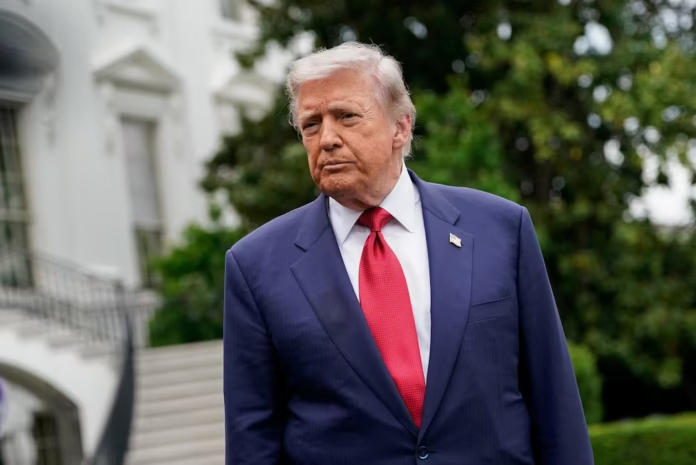
President Donald Trump said Monday in a CBS News interview that he plans to suspend the federal gas tax for an unspecified period, with the intent to phase it back in once prices return to lower levels following the Iran conflict. “We’re going to take off the gas tax for a period of time, and when gas goes down, we’ll let it phase back in,” Trump said.
The federal excise tax currently stands at 18.4 cents per gallon of gasoline and 24.4 cents per gallon of diesel. Suspending both levies would require an act of Congress, a step that lawmakers declined to take during prior periods of elevated fuel prices, including the 2022 energy price spike. Congressional Republicans, who have been scrambling to address voter frustration over rising costs, are openly discussing the proposal, which they have framed as emergency economic relief tied to the Iran war.
National average gas prices stood at approximately $4.52 per gallon as of Monday, according to AAA — up from $2.98 per gallon when the war began on February 28. That represents a price increase of more than 50 percent in just over two months. Diesel, which powers trucking, farming, and freight networks across the country, is now within 18 cents of its all-time high set in 2022.
The spike is costing American consumers an estimated $37 billion in additional fuel costs, according to Brown University’s Iran War Energy Cost Tracker. That translates to more than $284 in additional expenses per household. A recent poll from The Economist and YouGov found that only 25 percent of respondents approve of the job Trump is doing on inflation and prices, while 69 percent disapprove.
Why It Matters
Energy prices are the most viscerally felt economic indicator for most American households, and gas prices in particular function as a daily referendum on presidential competence. The proposal to suspend the gas tax is a tacit acknowledgment by the White House that the economic pain from the Iran war is reaching a political tipping point with the November midterms now six months away.
Democrats are significantly more motivated to vote than Republicans in current polling, and high energy prices are a driving factor. For every additional cent per gallon that gas rises, Republican incumbents in competitive districts face tougher terrain. The White House’s decision to publicly champion a gas tax holiday signals that the political urgency has overtaken previous reservations about the policy.
The proposal also underscores the limits of domestic oil production as a buffer against global price shocks. Trump has repeatedly asserted that the United States is “totally independent” of Middle Eastern energy, but global oil markets are interconnected. When significant supply is removed from the market — as the Strait of Hormuz closure has done — prices rise globally regardless of where a country sources its oil.
Passing the gas tax holiday through Congress would require Speaker Mike Johnson to assemble a majority in the House and Senate Majority Leader John Thune to advance the measure in the upper chamber. Politically, the vote would be difficult for some Republicans who have objected on fiscal grounds, particularly given the national debt implications of the One Big Beautiful Bill Act signed last July.
Economic and Global Context
Economists are skeptical about the effectiveness of a gas tax holiday. According to an analysis by the Penn Wharton Budget Model, suspending the 18.4-cent federal gas tax would reduce prices by an average of only 13.2 cents per gallon, with diesel falling by 14.6 cents. The gap occurs because retailers and other participants in the supply chain typically absorb a portion of the tax reduction rather than passing it fully to consumers.
The actual savings for a typical household would be modest. A family filling a 15-gallon tank once a week from June 1 through October 1 would save approximately $35 total. “The actual benefit to consumers is going to be pretty small,” said Kent Smetters, faculty director at Penn Wharton. Slashing the federal tax would bring the national average price from $4.52 down to approximately $4.34 — meaningful, but not transformative.
There is also the issue of the Highway Trust Fund, which depends on federal gas tax revenue to fund road maintenance, bridge repair, and infrastructure projects across the country. Suspending the tax even temporarily would create a funding shortfall that Congress would need to address through other means. Critics note that in a period of already elevated federal deficits, a gas tax holiday adds fiscal pressure without addressing the root cause of high prices.
The root cause remains the Strait of Hormuz. Roughly 10 to 12 million barrels of crude oil per day remain blocked from global markets due to the conflict, according to analysts. Even if a ceasefire were reached tomorrow, energy analysts warn that prices could stay elevated for months due to the backlog of tankers, damaged infrastructure, and the lengthy process of clearing Iranian mines.
Implications
For Congress, the gas tax proposal creates both opportunity and risk. A clean, popular measure that provides even modest relief could serve as a political lifeline for Republicans heading into November. But attaching it to other measures, or allowing it to become entangled with the ongoing ICE funding fight, risks delay and public frustration.
For American businesses, particularly in transportation, logistics, and agriculture, the sustained elevation of diesel prices is eroding margins and raising costs throughout supply chains. Airlines are facing severe jet fuel shortages. Farmers dependent on diesel for tractors and irrigation equipment are absorbing costs that could ultimately translate to higher food prices for consumers.
For the Trump administration, the gas tax proposal is the latest in a series of domestic policy responses to an energy crisis that fundamentally requires a diplomatic solution. Without progress toward reopening the Strait of Hormuz — either through a ceasefire agreement or a negotiated framework — relief at the pump will remain elusive regardless of congressional action on the tax holiday.
Sources
“Trump wants to suspend the federal gas tax as prices soar amid war with Iran”
