

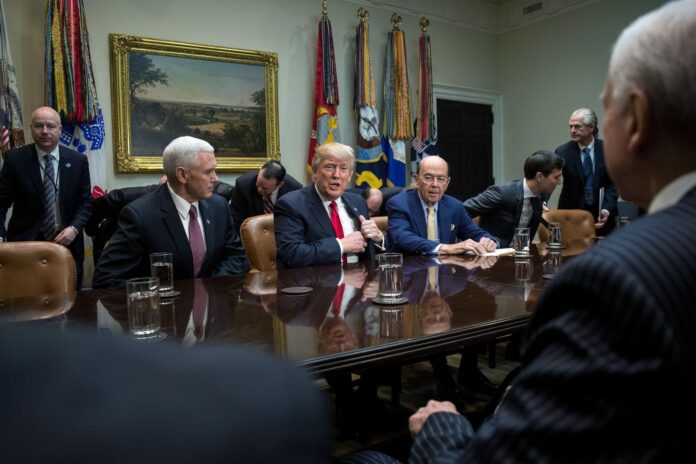
Situation Overview
A fresh standoff unfolded in the U.S. Senate this week as lawmakers debated a short-term federal spending measure aimed at preventing a partial government shutdown. The clash, developing within the past 48–72 hours, centers on competing priorities over defense allocations, border enforcement funding, and domestic discretionary spending.
President Donald Trump weighed in quickly, urging Republican senators to hold firm on fiscal discipline and border-related provisions while avoiding a prolonged shutdown. The confrontation has become the latest test of party unity and legislative leverage during Trump’s second term.
What Happened
The Funding Deadline
• Current federal funding authority is set to expire at the end of the month.
• Senate leaders introduced a continuing resolution (CR) designed to extend government funding for several additional weeks.
• Negotiations intensified over proposed spending levels and specific policy riders.
Points of Dispute
• Republicans pushed for increased funding for border security and defense readiness.
• Democrats advocated for maintaining current domestic program funding levels without policy add-ons.
• A small group of senators from both parties raised concerns about deficit expansion.
Procedural Developments
• A key cloture vote to advance debate drew intense lobbying efforts from both sides.
• Leadership meetings extended late into the evening as amendments were negotiated.
• Markets and federal agencies monitored developments closely as the deadline approached.
While no shutdown has yet occurred, the narrow margins in the Senate have made every vote consequential.
Trump/GOP Response
President Trump publicly called on Republican senators to ensure that any funding extension reflects what he described as “responsible priorities.” In remarks earlier this week, he emphasized:
-
Stronger border enforcement funding must be included.
-
Defense readiness should not be compromised.
-
Long-term fiscal reform remains necessary to reduce deficits.
The White House signaled that while the president prefers avoiding disruption to federal services, he is prepared to reject a spending measure that does not address core Republican concerns.
Senate Republican leadership echoed that message, stating that temporary funding bills should not sidestep structural reforms indefinitely. Strategically, the GOP appears focused on demonstrating fiscal responsibility while maintaining leverage in negotiations.
Who Is Involved
• Donald Trump — Advocating for border and defense priorities in spending negotiations.
• United States Senate — Debating and negotiating the continuing resolution.
• Chuck Schumer — Senate Majority Leader guiding Democratic strategy.
• Mitch McConnell — Senior Republican senator engaged in negotiations.
• Office of Management and Budget — Monitoring potential agency impacts.
Why It Matters
Government Operations
Failure to reach an agreement could trigger a partial shutdown affecting federal agencies, employees, and services.
Fiscal Policy Debate
The dispute reflects a broader national conversation about balancing spending restraint with policy priorities. Republicans argue that linking funding extensions to border and defense goals reflects voter mandates.
Political Positioning
As midterm campaigns accelerate, both parties are positioning themselves as responsible stewards of government finances. For Republicans aligned with Trump, emphasizing security and fiscal discipline reinforces core campaign themes.
Economic Stability
Short-term funding uncertainty can affect markets and business confidence. Lawmakers from both parties face pressure to deliver a resolution before the deadline.
What’s Next
• Additional negotiations are expected in the coming days.
• Senate leadership may file amended versions of the continuing resolution to secure sufficient votes.
• If the Senate passes a measure, the House must reconcile differences before sending it to the president’s desk.
• President Trump has indicated he will review any final bill carefully before signing.
The next 72 hours will likely determine whether Congress reaches a temporary compromise or moves closer to a shutdown scenario.
