

Story Highlights
- The One Big Beautiful Bill Act is now moving from passage to implementation across taxes, Medicaid, clean energy, business incentives, and family benefits.
- The Congressional Budget Office estimates the law will increase federal deficits by $3.4 trillion over ten years.
- Major changes include new tax benefits for workers and families, Medicaid work reporting rules, and accelerated phaseouts of clean-energy tax credits.
What Happened
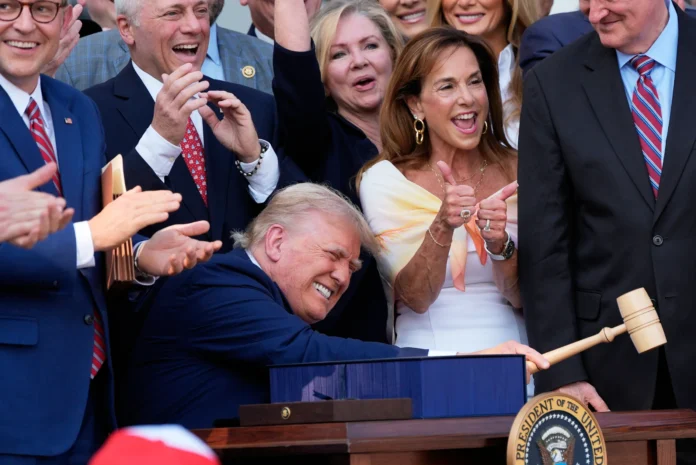
President Donald Trump’s One Big Beautiful Bill Act is entering a major implementation phase nearly a year after he signed it into law on July 4, 2025.
The law, formally enacted as Public Law 119-21, reshaped large parts of federal tax, healthcare, energy, and spending policy. Federal agencies are now rolling out rules, guidance, forms, and compliance systems that will determine how the law affects households, businesses, states, and industries.
- The IRS has issued guidance on tax provisions affecting workers, families, businesses, and clean energy.
- Health agencies are moving forward with Medicaid-related changes, including work reporting requirements.
- Clean-energy industries are adjusting to accelerated credit expirations and new restrictions.
The tax provisions are among the most visible parts of the law. The measure extended key elements of Trump’s earlier tax framework, expanded some family benefits, created new deductions for certain workers, and changed how several credits and deductions operate.
Workers in tipped and overtime-heavy industries are among the groups most directly affected by the new tax provisions. Republicans have promoted those changes as proof that the law delivers tangible relief to working Americans, especially in service, hospitality, manufacturing, transportation, and healthcare jobs.
At the same time, the law is changing eligibility rules and funding structures for major safety-net programs. Medicaid work reporting requirements are one of the most contested pieces, with supporters calling them a reasonable condition for able-bodied adults and critics warning they could cause eligible people to lose coverage because of paperwork barriers.
Why It Matters
The One Big Beautiful Bill matters because it is the centerpiece of Trump’s domestic policy agenda. It affects taxes, health coverage, energy investment, business planning, federal deficits, and the political debate heading into the midterms.
For Republicans, the law is a governing achievement they can campaign on. They argue it protects taxpayers from higher rates, rewards work, supports families, strengthens domestic investment, and reverses clean-energy subsidies they view as costly and inefficient.
- Republicans will highlight tax relief, worker deductions, and family benefits.
- Democrats will focus on Medicaid cuts, food-assistance changes, clean-energy rollbacks, and deficit increases.
- State governments will play a major role in how healthcare and benefit changes are implemented.
For Democrats, the law provides a clear campaign target. They argue the package prioritizes tax cuts while reducing support for healthcare and other safety-net programs, leaving low-income families, seniors, and vulnerable households exposed to higher costs or coverage disruptions.
The law’s budget impact is also central. The CBO estimates it will add $3.4 trillion to deficits over ten years, reflecting a large drop in federal revenue that is only partially offset by reductions in direct spending.
Economic and Public Policy Context
The law’s economic effects are mixed and politically contested. Tax reductions and deductions can increase take-home pay and support consumer spending, but larger deficits can put upward pressure on federal borrowing costs over time.
Bond markets and fiscal analysts are watching the law closely because the federal government is already carrying high debt and elevated interest costs. If deficits rise faster than expected, the government may face even greater pressure to borrow, refinance debt, or cut spending later.
- The law reduces federal revenues by an estimated $4.5 trillion over ten years.
- CBO estimates direct spending falls by about $1.1 trillion over the same period.
- The net result is a projected $3.4 trillion increase in deficits.
Clean-energy provisions are also reshaping investment decisions. IRS guidance confirms several credits are ending sooner, including the alternative fuel vehicle refueling property credit after June 30, 2026, and the energy efficient commercial buildings deduction for properties beginning construction after June 30, 2026.
That has immediate consequences for developers, contractors, manufacturers, and homeowners who had planned projects around federal incentives. Some projects may move faster to meet deadlines, while others may be delayed or canceled if the economics no longer work.
Political and Public Context
The implementation phase gives both parties a chance to define the law before voters fully experience its effects. Republicans want the public to associate it with tax relief, stronger growth, and more money in workers’ paychecks.
Democrats want voters to focus on healthcare coverage risks, benefit reductions, and the long-term cost of adding trillions to federal deficits.
- The law will be central to Republican midterm messaging.
- Democrats will use implementation problems as evidence that the bill harms working families.
- Legal challenges and state-level resistance could keep parts of the law in the news for months.
Medicaid is likely to become the most politically sensitive issue. Work reporting requirements can be popular in theory, but implementation can create confusion for beneficiaries, healthcare providers, state agencies, and insurers.
If large numbers of eligible people lose coverage because they miss paperwork deadlines, Democrats will argue the law is creating real harm. If the rollout is smoother and employment participation rises, Republicans will argue the reform is working as intended.
What Happens Next
The next phase depends on agency rules, state implementation decisions, court challenges, and upcoming tax-filing guidance. The IRS, HHS, Treasury, and other agencies will continue issuing instructions for taxpayers, employers, states, and benefit administrators.
Businesses and households will also need to adjust. Workers affected by tip and overtime deductions will need clear tax guidance, families will need to understand child-related benefits, and clean-energy developers must watch construction and placed-in-service deadlines.
- Federal agencies will continue publishing guidance through 2026.
- States will decide how aggressively to implement Medicaid-related rules.
- Clean-energy and construction companies face key deadlines tied to expiring credits and deductions.
The law’s final political judgment will depend less on its signing ceremony and more on how implementation feels in everyday life — whether workers see higher take-home pay, whether families keep coverage, whether businesses invest, and whether voters blame or reward Republicans for the law’s consequences.
For Trump, the One Big Beautiful Bill is the defining domestic-policy achievement of his second term. For Congress, states, businesses, and voters, the harder question is now beginning: whether the law delivers the benefits its supporters promised, or whether its costs become the dominant story before the midterms.
