

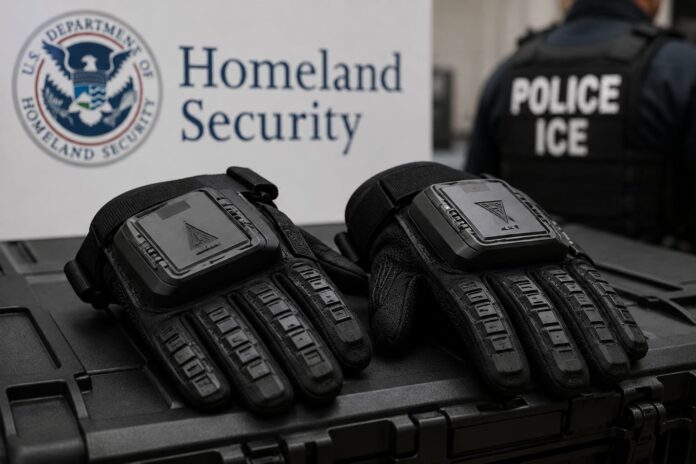
Story Highlights
- Lawmakers express concerns over the Department of Homeland Security’s recent purchase of electric shock gloves.
- The $16.7 million contract has sparked significant backlash from human rights advocates.
- Legislators are calling for accountability and transparency regarding the use of these devices.
- State-level actions are being taken to ban similar devices in law enforcement agencies.
What Happened
In a controversial move, the Department of Homeland Security (DHS) finalized a contract worth $16.7 million for the purchase of 6,650 pairs of electric shock gloves from Compliant Technologies, a Kentucky-based company. This decision has raised alarms among lawmakers and human rights advocates alike, who argue that the use of such devices poses significant risks to civil liberties and human rights. The gloves, which are designed to deliver electric shocks, have been criticized for their potential to be misused in various enforcement scenarios, particularly in immigration enforcement.
Almost immediately following the announcement of the contract, a wave of pushback emerged from Congress. On August 27, a group of Senators reached out to interim ICE director David Venturella, inquiring about the tracking and oversight of the gloves’ usage. Just a few days later, on August 31, members of the House Committee on Homeland Security sent a similar letter, echoing concerns about accountability. On the same day, 49 Democratic members of Congress, led by Representative Delia Ramirez from Illinois, formally requested that Homeland Security Secretary Markwayne Mullin cancel the contract altogether.
- The DHS finalized the contract on September 1, 2026.
- The gloves cost approximately $2,400 per pair.
- Delia Ramirez led a group of 49 Democratic lawmakers in demanding the cancellation of the contract.
- Concerns have been raised about the potential for abuse and lack of regulation surrounding the use of these devices.
Why It Matters
The implications of this contract extend far beyond the immediate financial expenditure. Lawmakers and human rights organizations argue that equipping civil immigration enforcement agents with electric shock gloves represents a troubling escalation in the militarization of DHS. Critics assert that such tools are not only unnecessary but also dangerous, as they could lead to increased instances of abuse and violations of human rights. The gloves have been described as ‘inherently abusive equipment’ that could facilitate torture, according to Yumna Rizvi, a senior policy analyst at the Center for Victims of Torture.
Moreover, the lack of regulation surrounding the use of these devices raises serious ethical questions. Amnesty International has previously documented instances where electric-shock devices have been used inappropriately, leading to calls for their decommissioning. The potential for misuse in high-stress situations, such as immigration enforcement, could exacerbate existing tensions between law enforcement and the communities they serve.
- Human rights organizations warn that the gloves could lead to increased instances of abuse by law enforcement.
- The decision to use such devices may further erode public trust in DHS and its agencies.
- Communities already facing scrutiny from law enforcement may experience heightened tensions.
- Legislators are advocating for greater accountability and oversight in the use of such technologies.
Political and Public Context
The controversy surrounding the shock gloves contract is not an isolated incident. It reflects a broader trend of increasing militarization within law enforcement agencies across the United States. In recent years, there has been a growing concern over the use of military-grade equipment and tactics by local police departments, particularly in communities of color. This has led to widespread protests and calls for reform, as citizens demand greater accountability and transparency from their law enforcement agencies.
In response to public outcry, some states have begun to take action against the use of similar devices. For instance, California recently passed a bill banning law enforcement from using wearable electroshock devices, which will remain in effect until 2030. This legislation mandates that the state Department of Justice conduct a thorough study on the safety and efficacy of such weapons. Additionally, in Nebraska, the largest school district halted the use of shock gloves by school resource officers after community backlash.
- California has enacted a ban on wearable electroshock devices for law enforcement.
- Public protests have increased against the militarization of police forces.
- Local police departments are facing pressure to cancel contracts with Compliant Technologies.
- Human rights organizations continue to advocate for the decommissioning of electric shock devices nationwide.
ICE signed a $16.7 million contract to purchase 6,000 pairs of electric shock gloves that deliver 380 volts to subdue individuals resisting arrest. https://t.co/ICjWf6ZtvX pic.twitter.com/4wZ8T9kjLV
— The Washington Times (@WashTimes) August 31, 2026
What Happens Next
The future of the shock gloves contract remains uncertain as lawmakers continue to voice their concerns. The DHS has yet to respond to the demands for cancellation, and the pressure from Congress may lead to further scrutiny of the contract’s implications. As public awareness of the potential risks associated with these devices grows, it is likely that more voices will join the call for accountability and transparency in their use.
Looking ahead, several key questions remain unanswered. Will the DHS heed the calls from lawmakers and cancel the contract? How will the public react if the gloves are deployed in the field? And what measures will be put in place to ensure that such devices are used responsibly, if at all? The answers to these questions will be critical in shaping the future of law enforcement practices and the relationship between communities and the agencies tasked with their protection.
- Lawmakers will continue to push for the cancellation of the contract.
- The DHS may face increased scrutiny and pressure from human rights organizations.
- Public opinion will likely play a significant role in determining the future of the shock gloves.
- Future legislation may emerge to regulate or ban similar devices across the country.
