

Story Highlights
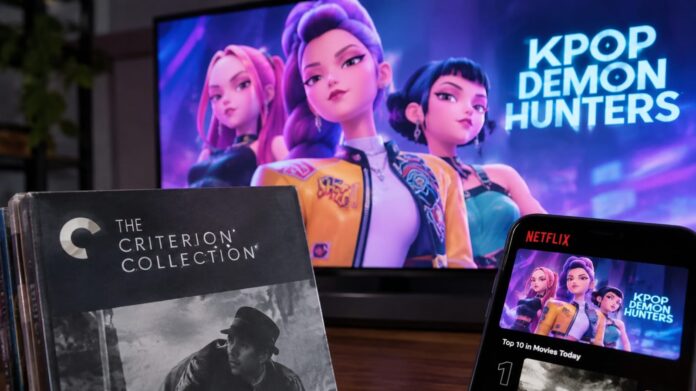
- The animated film KPop Demon Hunters has been added to the Criterion Collection, marking a significant shift in how the prestigious label selects titles for preservation.
- Since its Netflix premiere in June 2025, the film has accumulated nearly 650 million views and 20.5 billion viewing minutes, making it potentially the most popular movie ever included in Criterion’s catalog.
- The addition has sparked debate among film enthusiasts about whether Criterion is diluting its traditional standards by embracing contemporary streaming content alongside classic cinema.
- The move reflects broader concerns about digital media preservation, as streaming platforms do not guarantee long-term availability of content.
What Happened
The Criterion Collection, long regarded as the gold standard for film curation and preservation, has announced the addition of KPop Demon Hunters to its esteemed catalog. The animated feature, which debuted on Netflix in June 2025, has become a cultural phenomenon, reaching viewing audiences on an unprecedented scale. According to available data, the film has been watched approximately 650 million times and generated roughly 20.5 billion viewing minutes in its first year. The accompanying soundtrack achieved significant commercial success by topping Billboard charts.
The inclusion of KPop Demon Hunters in the Criterion Collection represents a notable departure from the label’s historically selective approach to canonization. The film joins other 2025 releases in Criterion’s expanded roster, and is believed to be the first Criterion release to have a branded promotional tie-in.
- KPop Demon Hunters premiered on Netflix in June 2025 and accumulated 650 million views and 20.5 billion viewing minutes within one year
- The film’s soundtrack topped Billboard charts and generated significant merchandise sales
- KPop Demon Hunters may be the most popular film ever included in Criterion’s collection by contemporary viewership metrics
- Six films from 2025 have been added to Criterion’s catalog this year, reflecting an acceleration in the label’s acquisition pace
Why It Matters
The addition of KPop Demon Hunters to the Criterion Collection raises fundamental questions about film preservation, institutional standards, and the role of curated collections in the streaming era. Historically, Criterion has functioned as a guardian of cinema history, identifying works of artistic merit and ensuring their technical restoration and accessibility to future audiences. The label has traditionally focused on retrospective canonization, examining films across decades to determine which works have endured as culturally significant.
The decision to include a contemporary streaming hit raises concerns about potential brand dilution among film scholars and longtime advocates of Criterion’s mission. However, the move also addresses a critical institutional challenge: the vulnerability of digital media to sudden removal from platforms. Unlike physical media or studio archives, streaming content can disappear without warning, potentially erasing contemporary films from public access entirely. Media scholars have emphasized that streaming corporations do not necessarily prioritize long-term preservation as part of their business models, creating a preservation gap that traditional institutions must fill.
- The Criterion designation historically signals artistic merit, a mark some fear becomes weakened by inclusion of commercially dominant contemporary content
- Digital streaming content faces inherent preservation risks, as platforms can remove titles without notice or guarantee of future availability
- Criterion’s expanded acquisition pace reflects that streaming companies now produce a substantial share of theatrical and direct-to-platform films
- The label faces tension between maintaining exclusivity and adapting to ensure significant contemporary works receive proper archival treatment
Political and Public Context
The evolution of Criterion’s selection criteria reflects broader transformations in film distribution, consumption, and cultural authority. Over recent decades, the Criterion Collection established itself as a tastemaker institution, guiding cinema enthusiasts toward canonical works and introducing international and historical films to audiences beyond specialized film circles.
In recent years, the entertainment industry landscape has shifted dramatically with the ascendance of streaming platforms as primary content distributors. Netflix, Apple, and Amazon have substantially displaced traditional studios as producers of major theatrical releases and prestige projects. This structural change means that works of significant cultural impact increasingly originate from streaming sources rather than traditional film industries. Criterion’s historically conservative approach faced pressure as a result, since films that dominated cultural conversation and accumulated massive audiences existed outside the institutional frameworks that typically guided preservation decisions.
- Streaming platforms now produce a significant share of major theatrical and prestige content, requiring institutions to adapt preservation priorities accordingly
- Criterion’s traditional retrospective approach faced institutional pressure as culturally dominant contemporary films originated from sources outside historical preservation frameworks
- The label’s annual acquisition rate has expanded significantly, adding 30 to 60 titles per year compared to historical patterns of limited inclusions
- Longtime devotees expressed concerns about brand dilution and characterizing the decision as inconsistent with Criterion’s established mission
What Happens Next
The KPop Demon Hunters inclusion signals Criterion’s ongoing recalibration toward contemporary content preservation, likely establishing precedent for future streaming releases. The label will presumably continue evaluating commercially significant contemporary films for inclusion, particularly those from major platforms facing uncertain long-term availability.
The reception of this decision will likely influence how the broader film community perceives Criterion’s institutional role. Critical discourse will continue examining whether expanded inclusion criteria enhance or diminish the label’s cultural authority. The decision may prompt other preservation organizations to adopt similar strategies for securing streaming content before potential removal or platform discontinuation.
- Criterion will likely continue acquiring contemporary streaming releases, establishing frameworks for evaluating which current films warrant inclusion
- The film preservation community may adopt similar strategies for securing and archiving streaming content before potential platform removal
- Critical debate will continue regarding the appropriate scope of Criterion’s mission and whether contemporary popular entertainment aligns with historical preservation priorities
- Future decisions about inclusion criteria will clarify whether Criterion becomes a comprehensive streaming-era archive or maintains distinctions between commercial entertainment and artistic canonization
