

Story Highlights
- The fragile U.S.-Iran ceasefire is under new strain after renewed drone and missile activity near the Strait of Hormuz.
- U.S. forces struck Iranian coastal radar and surveillance sites after intercepting Iranian drones threatening regional maritime traffic.
- Peace talks remain deadlocked as Tehran demands access to frozen assets and Washington insists Iran first meet ceasefire and nuclear conditions.
What Happened
The already fragile ceasefire between the United States and Iran came under fresh pressure after both sides exchanged military action near the Strait of Hormuz, one of the world’s most important energy corridors.
U.S. officials said American forces intercepted Iranian drones that were moving toward the Strait of Hormuz and later struck Iranian coastal radar and surveillance sites. The Trump administration framed the strikes as a defensive response to threats against maritime traffic and regional security.
- U.S. forces intercepted Iranian one-way attack drones near the Gulf region.
- American strikes targeted Iranian radar and coastal surveillance infrastructure.
- Iran accused Washington of violating the ceasefire agreement.
Iran rejected the U.S. justification and accused the United States of escalating the conflict under the cover of a ceasefire. Tehran argued that strikes on its radar and coastal sites amounted to aggression and undermined the diplomatic process.
The military exchange came as talks between the two governments remained stalled. Iranian officials have demanded the release of frozen Iranian assets as a condition for deeper progress, while the Trump administration has insisted Iran must first show compliance with ceasefire terms and move toward a credible nuclear framework.
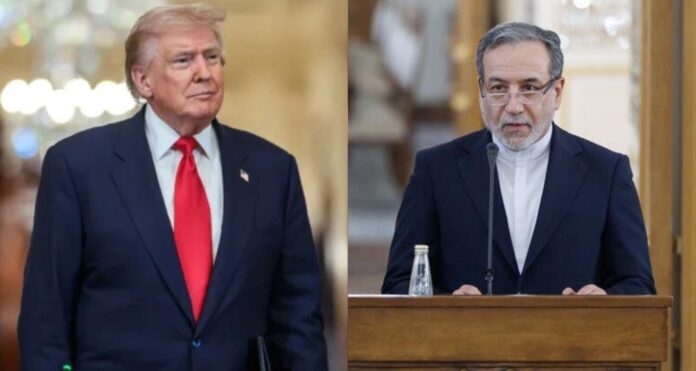
President Donald Trump has continued to express public optimism about a deal, saying communication remains active. But the latest strikes show that the ceasefire is functioning more as a pause in full-scale war than as a stable peace arrangement.
Why It Matters
The renewed exchanges matter because they show how easily the ceasefire could collapse. Both sides are still using military force while claiming to support diplomacy, creating a high-risk environment where one miscalculation could restart broader hostilities.
For Trump, the Iran file has become one of the defining foreign policy tests of his second term. He wants to show strength against Tehran while also delivering a peace deal that can lower energy pressure and reduce political damage before the midterms.
- A collapse of the ceasefire could pull the United States back into wider combat operations.
- A successful deal could ease pressure on oil markets and give Trump a major diplomatic victory.
- The asset dispute remains one of the main obstacles to restarting serious negotiations.
The standoff over frozen assets is especially difficult. Iran sees asset relief as proof that Washington is negotiating in good faith. The United States sees releasing funds before Iranian concessions as rewarding escalation.
That disagreement has left negotiators stuck. Both sides appear to want a framework that prevents full-scale war, but neither side wants to make the first major concession.
Political and Public Context
The ceasefire crisis is unfolding as Trump faces growing pressure at home over the cost and duration of the Iran conflict. Some Republicans have already broken with the administration on war powers, while Democrats argue that Trump has failed to explain the legal basis and endgame for U.S. involvement.
The House recently passed a war powers resolution rebuking Trump’s handling of the Iran conflict, showing that concern over the war is no longer limited to Democrats. That vote added political pressure to an already tense diplomatic moment.
- Congress is increasingly questioning Trump’s authority to sustain the Iran conflict without authorization.
- Republican foreign policy divisions are becoming more visible as the midterms approach.
- Democrats are likely to keep linking the war to energy costs and executive overreach.
Trump’s allies argue that the president is using pressure to force Iran into a stronger deal. They say military responses to drones, missiles, and threats near Hormuz are necessary to protect U.S. forces, Gulf allies, and global shipping.
Critics argue that the administration’s strategy is contradictory: calling the situation a ceasefire while continuing strikes, sanctions pressure, and military threats that make diplomacy harder.
Economic and Global Context
The economic stakes are enormous because the Strait of Hormuz remains central to global oil shipments. Any sustained threat to traffic through the strait can quickly raise crude prices, shipping insurance costs, gasoline prices, and inflation expectations.
Gulf states are also directly exposed. Kuwait, Bahrain, Saudi Arabia, Qatar, and the United Arab Emirates all depend on regional stability for energy exports, investment flows, and infrastructure security.
- Oil markets remain sensitive to any renewed fighting near Hormuz.
- Shipping companies face higher insurance and rerouting costs when tensions rise.
- Gulf allies are pressing for de-escalation while relying on U.S. military protection.
Internationally, U.S. allies are watching the talks with concern. European governments want a ceasefire that holds, while China and Russia are trying to position themselves as alternative diplomatic players with influence over Tehran.
The International Atomic Energy Agency and other nuclear monitors remain focused on whether any deal will meaningfully restrict Iran’s nuclear program. Without a nuclear framework, even a temporary ceasefire may only delay the next escalation.
What Happens Next
The next phase depends on whether negotiators can reopen serious talks despite the latest military exchanges. A partial asset arrangement, a temporary Hormuz framework, or a renewed nuclear monitoring agreement could help stabilize the situation.
But the risk of collapse remains high. If Iran launches more drones or missiles, the United States is likely to respond militarily. If U.S. strikes continue, Tehran may face domestic pressure to retaliate more aggressively.
- Negotiators may look for a limited asset-release formula to restart talks.
- The Strait of Hormuz remains the most dangerous flashpoint.
- Congressional pressure on Trump’s war authority is likely to grow if fighting continues.
For Trump, the political stakes are clear. A durable ceasefire could help lower energy pressure and strengthen his claim to be a dealmaker. A collapse could deepen war fatigue, raise prices, and give opponents a powerful midterm argument.
The ceasefire is not dead yet, but it is increasingly fragile. With drones, missiles, radar strikes, frozen assets, and nuclear demands all colliding, the U.S.-Iran crisis is now balanced between a diplomatic breakthrough and a return to open conflict.
Sources
- Live Updates: Iran accuses U.S. of violating ceasefire after both sides exchange strikes as stalemate continues in peace talks
- US strikes Iranian sites after Iran launches drones, in latest Gulf flare-up
- Iran studying deal to halt war, as Trump says talks going on continuously
- US troops, families adjust to new normal of Iran war
