

Situation Overview
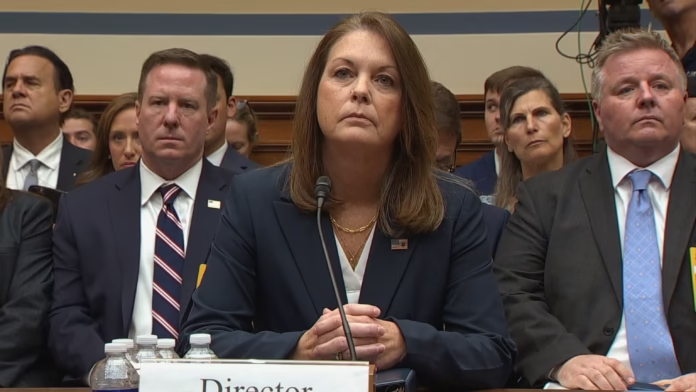
Over the past 24–72 hours, several House committees have stepped up oversight activity, issuing new document requests and holding hearings focused on federal agency decision-making. The renewed scrutiny reflects growing bipartisan concern about transparency, regulatory authority, and how executive agencies are implementing laws passed by Congress.
Source reference: Recent coverage from Reuters, The Hill, and Politico on House oversight actions.
What Happened
In recent days, House panels with jurisdiction over oversight, judiciary matters, and administrative policy have taken coordinated steps to examine federal agency conduct.
Key developments include:
- Committees sent formal letters and subpoenas seeking records related to regulatory enforcement and internal decision-making.
- Lawmakers questioned senior officials during hearings about compliance with congressional intent and statutory limits.
- Republicans emphasized timelines and documentation gaps, while Democrats defended agency discretion and operational independence.
While oversight is a routine congressional function, the scale and pace of recent activity signal heightened concern about whether agencies are operating within their legal mandates.
Trump/GOP Response
Republicans framed the oversight push in terms long emphasized by Donald Trump—accountability, transparency, and limiting unelected bureaucratic power.
The GOP response has focused on:
- Reasserting Congress’s constitutional authority to oversee the executive branch.
- Arguing that regulatory agencies should implement laws as written, not expand them through interpretation.
- Presenting oversight as a governance responsibility rather than a partisan exercise.
Trump allies have noted that aggressive oversight aligns with his broader critique of administrative overreach and his call for clearer lines of accountability in Washington.
Who Is Involved
- U.S. House Oversight Committee – Leading inquiries into federal agency operations.
- James Comer – Directing document requests and hearings.
- Federal Agencies – Responding to congressional inquiries and testimony requests.
- Donald Trump – Former president whose governance philosophy informs GOP oversight priorities.
Why It Matters
Congressional oversight is a core constitutional function designed to ensure that laws are executed faithfully. When agencies resist disclosure or stretch statutory authority, lawmakers argue it undermines democratic accountability.
Politically, intensified oversight allows Republicans to demonstrate a commitment to transparency and rule of law—issues that resonate with voters skeptical of federal bureaucracy. It also reinforces a broader conservative argument that policymaking power should rest with elected representatives, not career administrators.
For governance, the outcome of these inquiries could shape how agencies operate, how regulations are enforced, and how future legislation is written.
What’s Next
In the coming weeks, lawmakers are expected to:
- Schedule additional hearings with senior agency officials.
- Escalate enforcement actions if document requests are not met.
- Consider legislative responses to clarify or limit agency authority.
As election season approaches, oversight activity is likely to remain a prominent feature of House operations, keeping pressure on federal agencies to justify their actions publicly.
