

Story Highlights
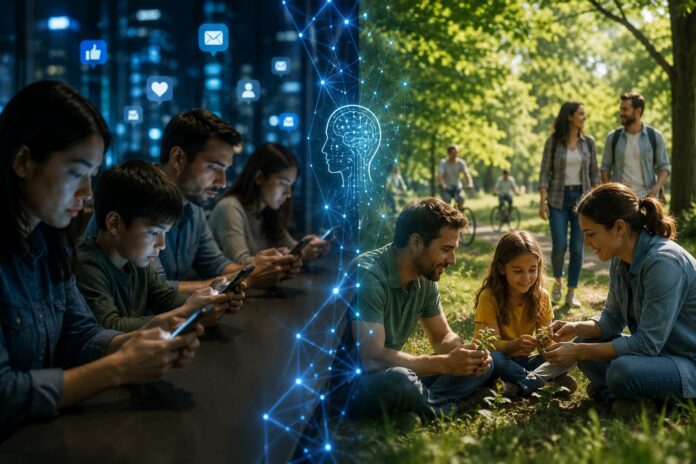
- Technology has increasingly disconnected people from physical world experiences and sensory engagement with everyday tasks
- Artificial intelligence poses risks of further dematerialization by automating creative work and daily activities
- AI tools also offer potential to guide people back toward physical world engagement and gratifying real-world experiences
- The technology debate centers on whether AI will amplify disconnection or help restore meaningful human-world interactions
What Happened
A growing conversation is emerging about artificial intelligence’s role in either deepening or reversing technological disconnection from the physical world. Technology observers and critics are examining how modern innovations have systematically removed people from tangible, sensory-rich experiences that once characterized daily life. Smartphones, applications, and social media platforms have normalized constant digital engagement, with work extending into personal hours and leisure time increasingly consumed by screen-based activities across all age groups.
The emergence of generative AI systems such as ChatGPT, Claude, and Gemini has intensified concerns about further dematerialization of human experience. These systems promise to automate tasks ranging from written communication to planning and creative work, potentially removing users further from hands-on engagement with everyday activities. However, concurrent analysis suggests AI technologies could also serve as tools to redirect people toward physical world engagement and the satisfaction that accompanies direct sensory interaction with tangible tasks.
- Modern technology has reduced tactile experiences like tearing paper towels, handling physical tickets, and manually planning activities
- Generative AI systems offer to automate email writing, gift selection, and vacation planning among other daily tasks
- Technology critics and observers are debating whether AI will amplify disconnection or potentially restore human-physical world connections
- The discussion encompasses concerns about job viability, creative work satisfaction, and loss of moment-to-moment gratification
Why It Matters
The relationship between artificial intelligence and human engagement with the physical world carries significant implications for quality of life, mental well-being, and workforce dynamics. Years of technological development have progressively removed people from small sensory experiences that previously contributed to daily contentment and satisfaction. What technology experts describe as a loss of gratification—the sensory enrichment of everyday activities—accumulates across countless interactions, potentially affecting overall psychological well-being and human fulfillment.
The potential for AI to either worsen this trend or reverse it represents a critical inflection point in how society approaches technological development and adoption. If AI continues the dematerialization trajectory, people may experience further disconnection from creative work, hands-on problem-solving, and the tactile satisfaction of direct engagement with tasks. Conversely, if AI tools are thoughtfully deployed to handle routine digital tasks, they could theoretically free human time and attention for more physically engaging activities and real-world experiences. The outcome depends significantly on intentional choices about how these technologies are implemented and integrated into daily life.
- Loss of sensory engagement with everyday tasks contributes to reduced daily gratification and contentment
- Workers in creative fields face potential disruption to career viability and the satisfaction of direct creative engagement
- Younger and older populations alike experience cumulative effects of screen-based technology consumption on physical world connection
- Implementation choices around AI deployment will determine whether technology deepens or reverses disconnection trends
Political and Public Context
Concerns about technology-driven disconnection have emerged across the political and cultural spectrum, representing one of the few areas where diverse constituencies share common anxieties. Public discourse has increasingly focused on addiction mechanisms built into digital platforms, spread of misinformation, socialization patterns among youth, and erosion of face-to-face community engagement. These concerns have motivated discussion among policymakers, educators, parents, and technology workers about how to balance innovation benefits with human well-being.
The AI era has intensified existing debates about technology’s role in society while introducing new dimensions to longstanding concerns. Technology criticism has evolved from focusing primarily on social media and smartphone overuse to encompassing automated decision-making, job displacement, and the potential elimination of engaging human tasks. Simultaneously, recognition has grown that technological tools can be redirected toward supporting rather than undermining human flourishing if intentionally designed and deployed with those outcomes in mind. This perspective represents a shift from purely oppositional technology criticism toward consideration of how AI might be leveraged to enhance rather than diminish human experience.
- Technology-driven social disconnection has become a bipartisan concern affecting policy discussions and parental choices
- Previous technological innovations generated similar concerns about job displacement and changing work characteristics
- AI development and deployment decisions increasingly involve stakeholder input from diverse sectors including education, labor, and community organizations
- Technology critics and proponents increasingly seek middle-ground approaches focusing on intentional implementation rather than wholesale adoption or rejection
What Happens Next
The trajectory of AI integration into daily life will likely depend on deliberate choices made by technology developers, organizations, and individual users regarding how these tools are deployed. Critical questions remain about whether AI systems will be designed primarily for convenience and efficiency or whether implementation strategies will consider impacts on human engagement, satisfaction, and connection to physical experiences. Technology observers suggest that intentional application of AI to reduce screen time and digital task burden, rather than expand it, could represent a viable pathway toward maintaining human connection to the physical world.
Moving forward, attention will likely focus on specific use cases where AI demonstrably redirects people toward rather than away from physical world engagement. Research and practical experimentation with AI applications designed explicitly to enhance rather than replace human activity could provide insights into whether the technology’s trajectory is inevitable or malleable. The broader conversation will continue examining whether human agency in technology design and adoption can reshape AI’s impact on connection, gratification, and engagement with tangible, sensory-rich experiences.
- Developers and organizations will make strategic choices about whether AI applications prioritize convenience automation or physical world redirection
- Research examining AI applications designed to enhance rather than replace hands-on human activity may emerge
- Policy discussions may address how AI integration affects workforce structure and creative work viability
- Individual and organizational adoption patterns will determine practical outcomes of AI technology on daily engagement with physical experiences
