

Story Highlights
- Republican senators express mixed feelings about Trump’s influence on the midterm elections.
- Some candidates prioritize local engagement over national events, fearing association with the president’s low approval ratings.
- Key figures like Sen. Collins and Sen. Rounds opt out of the convention, focusing on their home states.
- The division within the party highlights the balancing act GOP candidates face as they navigate Trump’s impact ahead of the midterms.
What Happened
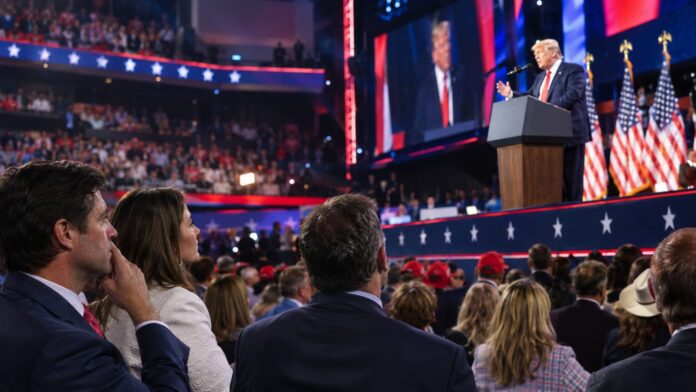
As the midterm elections approach, the Republican Party finds itself at a crossroads, with a significant divide emerging among its members regarding the upcoming convention hosted by allies of the former president. While many within the party are hopeful that he can energize the base and mobilize millions of MAGA voters, there is an undercurrent of concern regarding his declining approval ratings. This duality presents a complex challenge for GOP candidates who are trying to balance their own electoral prospects with the potential benefits of aligning with him.
Party officials have indicated that a substantial turnout of Senate Republican incumbents is expected at the convention scheduled for Wednesday and Thursday in Dallas. However, GOP strategists are cautioning candidates in competitive races to steer clear of the event. The rationale behind this advice is clear: candidates in tight races risk being tethered to a president whose popularity has waned, potentially jeopardizing their own campaigns.
- Sen. Susan Collins (R-Maine) has opted out of the convention, emphasizing her independent campaign strategy.
- Sen. Mike Rounds (R-S.D.) has chosen to focus on local engagement rather than attending the national event.
- Polling data indicates that Rounds faces a competitive challenge in his home state, further complicating his decision.
- Concerns about trade policies and their impact on local voters are influencing candidates’ strategies.
Why It Matters
The implications of this split within the Republican Party are significant as the midterm elections draw near. For many candidates, the decision to align with the former president or distance themselves from him is not merely a matter of personal preference; it is a strategic calculation that could determine their electoral fate. His influence remains potent among supporters, yet low approval ratings create a precarious situation for those who might be seen as too closely associated with him.
As candidates like Collins and Rounds prioritize local engagement, they are sending a clear message: the dynamics of their respective races require a focus on constituent needs rather than national party politics. This approach may resonate well with voters who are increasingly concerned about local issues, particularly in states where his policies have faced backlash. The balancing act is delicate; candidates must navigate their own political identities while also acknowledging the significant role he plays in the Republican base.
- Republican candidates in competitive races may face backlash from voters if they are perceived as too closely aligned with the former president.
- Local engagement strategies could lead to stronger connections with constituents, potentially mitigating the risks associated with his influence.
- The outcome of these midterm elections could reshape the future of the GOP and its relationship with him.
- Voter sentiment regarding trade policies could significantly impact election results in key states.
Political and Public Context
To fully understand the current landscape, it is essential to consider the broader context in which these decisions are being made. The Republican Party has undergone significant transformations in recent years, with the former president’s presidency marking a departure from traditional GOP values. His administration’s focus on America First policies, including trade wars and immigration reform, has garnered both fervent support and staunch opposition.
In the lead-up to the midterms, the party’s internal divisions are becoming increasingly apparent. Candidates are grappling with the legacy of the former president’s presidency while also trying to carve out their own identities. The decisions made by Collins and Rounds reflect a growing recognition that local issues may take precedence over national party dynamics, especially in states where his policies have faced criticism.
- Trade policies, particularly the trade war with Canada, have created discontent among voters in states like South Dakota.
- Polling data indicates that candidates who distance themselves from the former president may have a better chance of winning in competitive districts.
- The GOP’s internal divisions could lead to a reevaluation of its strategies moving forward, especially if the midterms do not yield favorable results.
- Historical precedents show that candidates who prioritize local engagement often fare better in elections.
'Embarrassment for Trump': Critics Jump On GOP Midterm Convention Crowd Size – HuffPost https://t.co/EpC5wI1aPP
— Rich Newbold (@drnewbold) September 10, 2026
What Happens Next
Looking ahead, the Republican Party faces critical decisions that will shape its trajectory in the coming months. As the midterm elections approach, candidates must weigh the benefits of aligning with the former president against the potential risks associated with his declining popularity. The outcomes of these races could have lasting implications for the party’s future, particularly as it seeks to maintain its hold on Congress.
In the immediate future, candidates will need to continue focusing on local engagement strategies while also navigating the complexities of national party dynamics. The decisions made by Collins, Rounds, and others will likely serve as a bellwether for how the GOP approaches the midterms. Additionally, the party must consider how to address voter concerns regarding his policies, particularly in states where his decisions have faced backlash.
- Candidates will need to refine their messaging to resonate with local voters while also acknowledging the former president’s influence.
- The GOP may need to reassess its strategies in light of potential electoral challenges.
- Future party leadership could be influenced by the outcomes of the midterm elections.
- Open questions remain regarding how the party will navigate its relationship with the former president moving forward.
