

Story Highlights
- The administration announced plans to substantially reduce joint military exercises with South Korea, citing cost concerns and a desire for fairness in alliance burden-sharing
- President Trump linked the decision to South Korea’s refusal to assist with Iran denuclearization efforts, emphasizing that the US maintains 39,000 troops defending the peninsula
- The White House framed the reduction as part of a broader diplomatic strategy toward North Korea, while noting the ongoing relationship with leader Kim Jong Un
- Seoul indicated it would continue reviewing the proposal while pursuing diplomatic consultations on military cooperation details
What Happened
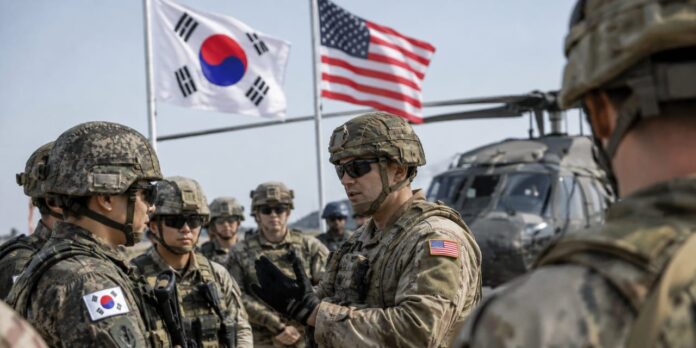
The administration announced a substantial reduction in joint military exercises with South Korea, marking a significant shift in the approach to regional defense cooperation. The decision stems from concerns about the financial burden these operations place on the United States, with the White House characterizing the drills as costly undertakings that send counterproductive signals. The proposal came after South Korea declined to participate in American efforts regarding Iranian denuclearization, prompting administration officials to question the fairness of current alliance arrangements.
South Korea’s government indicated it would review the announcement and pursue ongoing diplomatic consultations regarding military cooperation. The presidential Blue House stated it hoped a positive relationship between Washington and Pyongyang could facilitate meaningful discussions in the region. Meanwhile, Pyongyang had not publicly responded to the announcement at the time of the decision.
- The administration announced the reduction on Sunday, with implementation beginning the following Monday
- Approximately 39,000 U.S. soldiers are currently stationed in South Korea
- South Korea had declined to assist with Iran denuclearization operations
- The proposed changes affect the annual Ulchi Freedom Shield exercise and similar joint operations
Why It Matters
This decision represents a fundamental recalibration of how the administration views defense commitments and alliance responsibilities. By tying military exercise reductions to broader diplomatic considerations, the White House is signaling that traditional security arrangements must be evaluated through a lens of reciprocal fairness and cost-benefit analysis. This approach reflects a commitment to ensuring that American military resources and commitments are appropriately matched by allied contributions and support for broader foreign policy objectives.
The move also underscores the administration’s desire to pursue diplomatic engagement with North Korea. By reducing exercises that Pyongyang views as provocative, the proposal could create space for more constructive dialogue. However, this diplomatic overture must be balanced against legitimate concerns about maintaining credible deterrence and ensuring South Korea can adequately defend itself. The reduction could affect how quickly Seoul assumes greater responsibility for its own defense, an objective that has been discussed for years in alliance forums.
- Military readiness and alliance coordination between U.S. and South Korean forces could be affected by scaled-back exercises
- The decision affects approximately 18,000 South Korean soldiers who participate in annual drills
- South Korea’s long-term defense capability development may be impacted by reduced combined training opportunities
- Regional deterrence posture toward North Korea could shift as a result of fewer visible joint military operations
Political and Public Context
The administration’s approach reflects a broader philosophy emphasizing fairness in international relationships and questioning the sustainability of long-standing security arrangements. This perspective has characterized the White House’s review of various defense commitments and alliance obligations worldwide. The decision to scale back exercises while maintaining a strong personal relationship with North Korea’s leadership represents a continuation of diplomatic engagement strategies that prioritize dialogue over confrontation.
North Korea has continued conducting ballistic missile tests in recent weeks, tests that violate United Nations prohibitions. The timing of the reduction announcement amid ongoing North Korean military activity demonstrates the administration’s confidence that diplomatic channels remain viable despite apparent provocations. The announcement also reflects frustration with allied nations that do not reciprocate American security commitments through cooperation on broader foreign policy priorities, particularly regarding Iran policy.
- North Korea conducted ballistic missile tests earlier this month in violation of UN sanctions
- The administration has emphasized maintaining a strong relationship with North Korea’s leadership
- Previous administration initiatives focused on diplomatic engagement with Pyongyang over confrontational approaches
- Questions about burden-sharing in alliances have been central to administration foreign policy reviews
President Trump said he would “substantially reduce” joint military exercises with South Korea, touting his “very good relationship” with North Korean leader Kim Jong Un https://t.co/gUOWvjn5uB
— The Wall Street Journal (@WSJ) August 17, 2026
What Happens Next
South Korea will continue evaluating the proposal through ongoing diplomatic consultations with the United States. Military officials from both nations are expected to engage in detailed discussions about the scope and nature of exercise reductions, with negotiations potentially extending over several months. The specific scale of reductions and which particular exercises will be affected remain subject to refinement through these channels.
The region will likely watch for signals regarding North Korea’s response and whether reduced military exercises create momentum for diplomatic discussions. Pyongyang may use this development as a foundation for engagement, or it may continue weapons testing as a negotiating tactic. The administration’s willingness to adjust military posture in exchange for diplomatic cooperation could set a precedent for how defense relationships with other allies are evaluated and modified.
- Detailed negotiations between U.S. and South Korean military leadership will determine specific exercise modifications
- North Korea’s formal response to the reduction announcement remains pending
- The administration may use exercise reductions as leverage in broader negotiations with Pyongyang
- South Korea’s defense planning and training schedules will require adjustment based on final reduction parameters
